
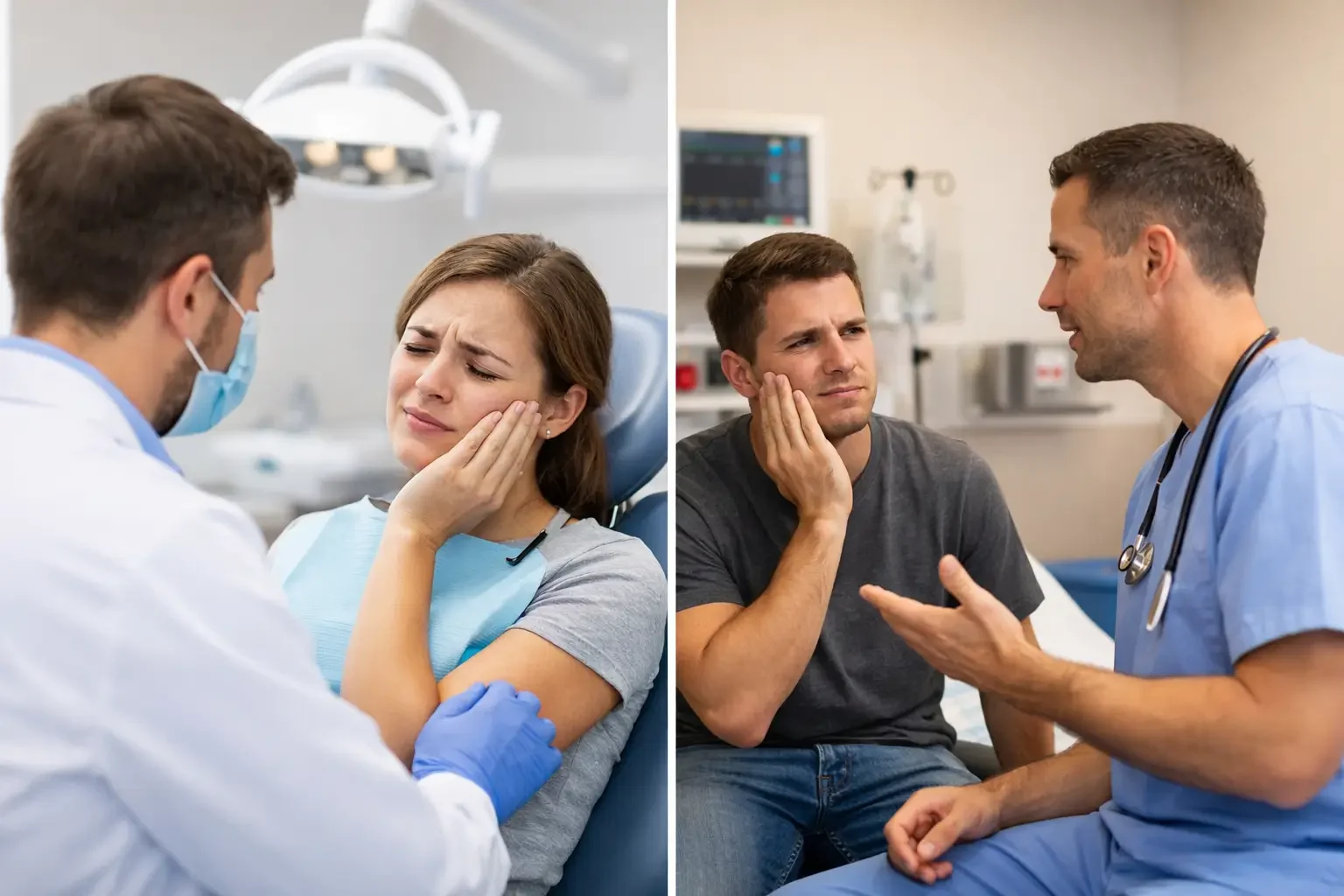
A throbbing tooth can make it hard to think, sleep, work, or eat. When pain starts suddenly, the question of emergency dentist vs urgent care is not just about convenience. Choosing the right place can mean the difference between temporary symptom relief and treatment that saves your tooth.
Urgent care centers can be helpful for certain medical concerns, but most are not equipped to diagnose and repair the dental problem causing your pain. An emergency dentist can evaluate the tooth, gums, bite, and jaw, then provide care designed to stop the problem at its source.
Emergency Dentist vs Urgent Care: The Key Difference
An urgent care clinic focuses on non-life-threatening medical needs. A provider may assess swelling, prescribe medication when appropriate, or help determine whether you need a higher level of medical care. However, urgent care centers typically do not have dental X-rays, dental instruments, or the materials needed to repair a cracked tooth, replace a lost filling, drain a dental infection, or restore a broken crown.
An emergency dentist focuses on dental injuries, pain, infection, and restoration problems. The appointment begins with finding the cause, not simply covering the symptoms. Depending on your needs, treatment may involve dental X-rays, a filling or bonding repair, a crown adjustment, drainage for a localized infection, root canal treatment planning, or an extraction when a tooth cannot be saved.
For most tooth-related emergencies, a dentist is the best first call. The goal is to relieve discomfort while protecting your long-term oral health, bite, and smile.
When to Call an Emergency Dentist
Call an emergency dentist when the problem involves your teeth, gums, restorations, or bite. Severe tooth pain is a clear example, especially if it keeps you awake, worsens with pressure, or comes with sensitivity to heat and cold. Pain can result from decay, a deep crack, an infected nerve, gum disease, or a damaged restoration. Each cause needs a different solution.
A dental office is also the right place for a chipped, cracked, loose, or knocked-out tooth. A cracked tooth may look minor but can expose the inner layers of the tooth to bacteria. Acting quickly can improve the chance of a simpler repair. If a permanent tooth is knocked out, gently hold it by the crown, not the root, rinse it briefly if it is dirty, and try to place it back in the socket if you can do so safely. If that is not possible, keep it moist in milk or saliva and seek immediate dental care.
Lost fillings, broken crowns, dislodged bridges, and painful dentures also need dental attention. These may not always require care in the middle of the night, but delaying too long can lead to pain, shifting teeth, additional breakage, or damage to the remaining tooth structure.
An emergency dental visit is often appropriate for:
- Intense toothaches or pressure that does not improve
- A cracked, broken, loose, or knocked-out tooth
- Swelling around a tooth or gums, especially with pain
- A lost filling, crown, bridge, or veneer that affects comfort or function
- Bleeding from the gums or mouth that does not stop with gentle pressure
At United Dental Specialists, emergency care is centered on prompt diagnosis, pain relief, and a practical treatment plan that supports your health and confidence.
When Urgent Care May Be Appropriate
Urgent care can play a supporting role when a dental problem has broader medical symptoms or when you cannot reach a dental office right away. For example, a clinician may help assess fever, facial swelling, dehydration from an inability to eat or drink, or signs that an infection may be spreading beyond the tooth.
Still, medication from urgent care is rarely the complete answer to a dental infection. Antibiotics may be necessary in select cases, but they do not remove decay, repair a fracture, clean an infected root canal system, or drain a localized infection on their own. Once symptoms are stabilized, you still need to see a dentist promptly.
Urgent care may also be reasonable for a minor mouth injury when there is no tooth damage and you need a quick evaluation. Yet if the injury includes a broken tooth, changes in your bite, a missing tooth, or pain when closing your mouth, a dental examination should follow as soon as possible.
When to Go Straight to the Emergency Room
Some situations require hospital-level care, not a dental office or standard urgent care. Call 911 or go to the emergency room if you have trouble breathing or swallowing, rapidly expanding swelling in the face or neck, severe uncontrolled bleeding, loss of consciousness, or a suspected broken jaw.
These symptoms can signal a serious infection or traumatic injury that needs immediate medical support. Once you are medically stable, an emergency dentist can address any remaining damage to your teeth and gums.
Why Waiting Can Make a Dental Emergency Worse
It is tempting to wait when pain comes and goes or a broken tooth is not visible when you smile. Unfortunately, dental problems rarely repair themselves. A small cavity can advance to the nerve. A hairline crack can deepen when you chew. A loose crown can allow bacteria underneath it. What begins as a manageable repair may become a more complex and costly treatment if left untreated.
Prompt dental care is not only about feeling better today. It can help preserve more natural tooth structure, lower the risk of infection, and avoid interruptions to your work, family schedule, and daily routine. For patients with dental implants, bridges, veneers, or orthodontic treatment, quick professional guidance also helps protect the investment you have made in your smile.
What to Do While You Wait for Your Appointment
Simple first-aid steps can make you more comfortable before you are seen. Rinse your mouth gently with warm water to clear away food particles. If there is swelling, apply a cold compress to the outside of your cheek for short intervals. Over-the-counter pain medication may help when taken as directed and when safe for your health history.
Avoid placing aspirin directly on your gums or tooth. It can irritate the soft tissue and does not treat the cause of the pain. Avoid very hot, cold, sugary, or hard foods if they trigger sensitivity. If a crown has come loose, save it and bring it with you rather than trying to force it back into place.
For a broken tooth, keep any pieces you can find. For a knocked-out tooth, time matters, so seek care immediately. Do not scrub the root or wrap the tooth in a dry tissue.
The Right Choice Depends on the Symptoms
The practical rule is straightforward: if the issue is clearly dental, start with an emergency dentist. You will receive care from a team with the tools and expertise to address both pain and the underlying cause. If symptoms suggest a medical emergency, such as breathing difficulty, spreading facial swelling, major trauma, or uncontrolled bleeding, go to the emergency room first.
Dental emergencies are stressful, but you do not have to guess your way through them. A quick call to a dental team can help you understand how urgently you need to be seen and what to do next. When something feels wrong with your teeth or gums, acting early gives you the best chance to protect your comfort, oral health, and smile.
This article provides general information and does not replace an individual dental evaluation. Options, suitability, costs and outcomes vary by patient. Please consult our team before making decisions about your treatment.
← Back to home
Leave a comment.
Your email address will not be published. Required fields are marked with *.