
Missing one tooth can turn into a daily annoyance faster than most people expect. Chewing feels uneven, smiling becomes more self-conscious, and the longer the gap stays there, the more questions come up about the best fix. When patients ask about dental implants vs bridge, they usually want a clear answer: which option will look natural, feel comfortable, and hold up over time?
The honest answer is that both treatments can restore your smile well, but they work in very different ways. The right choice depends on your oral health, the condition of the teeth next to the gap, your timeline, and your budget. If you understand those trade-offs before you decide, you are far more likely to feel confident about your treatment.
Dental implants vs bridge: the basic difference
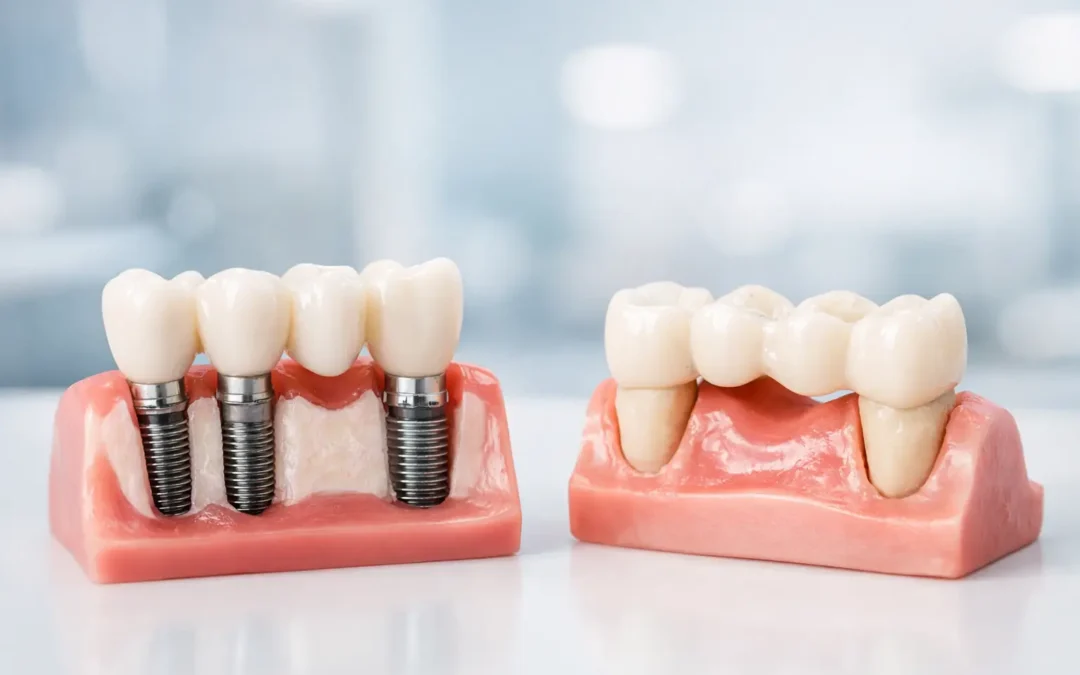
A dental bridge replaces a missing tooth by using the teeth on either side of the space for support. Those neighboring teeth are usually reshaped so crowns can be placed over them, with an artificial tooth attached between them. The bridge literally spans the gap.
A dental implant replaces the tooth at the root level. A small titanium post is placed in the jawbone where the missing tooth used to be, and after healing, a crown is attached on top. Instead of depending on nearby teeth, the implant stands on its own.
That difference matters more than it may seem at first. A bridge is often faster and may avoid surgery, while an implant is designed to act more like a natural tooth and help preserve the bone underneath.
When a bridge may make more sense
For some patients, a bridge is the practical choice. If the teeth next to the missing tooth already need crowns because they are heavily filled, cracked, or worn down, using them to support a bridge can be efficient. In that situation, a bridge may restore the area without sacrificing healthy tooth structure that was not in good shape to begin with.
A bridge can also be appealing if you want a shorter treatment timeline. Once the supporting teeth are prepared, the restoration process is usually more straightforward than implant treatment. If you are looking for a proven option that can be completed relatively quickly, a bridge may fit your goals.
Some patients also prefer a bridge because they want to avoid oral surgery or they are not candidates for implant placement due to medical factors, bone loss, or other concerns. That does not automatically rule out implants forever, but it can make a bridge the more realistic near-term solution.
When an implant may be the stronger long-term option
An implant is often the better choice when the teeth next to the gap are healthy and do not need major dental work. Instead of trimming down two natural teeth to support one missing tooth, the implant replaces the tooth independently. That conservative approach can be a major advantage.
Implants also help stimulate the jawbone. When a tooth is lost, the bone in that area can begin to shrink over time because it no longer has a root to support. A bridge restores the visible part of the tooth, but it does not replace the root. An implant does, which can help maintain the shape of the jaw and gumline.
From a function standpoint, many patients say implants feel more like natural teeth. They are fixed in place, stable while chewing, and easy to brush and floss once fully restored. If longevity and a more natural feel are high priorities, implants deserve serious consideration.
Appearance, comfort, and daily confidence
Both bridges and implants can look excellent when properly planned and placed. The visible result depends on the quality of the restoration, the shape of the gums, and how well the shade and contours match your surrounding teeth.
Where patients often notice a difference is in the feel. Because an implant emerges from the gum much like a natural tooth, it can create a very natural sense of support. A bridge can also feel secure, but some people are more aware of it during cleaning or when flossing underneath the artificial tooth.
Confidence matters here too. Many adults are not only trying to replace a tooth. They want to stop thinking about the gap, stop adjusting how they smile in photos, and get back to eating comfortably in public. The best treatment is the one that fits your health needs and lets you move through daily life without hesitation.
Cost is important, but so is value
Cost is often one of the first questions, and it should be. A bridge usually has a lower upfront cost than a single implant. For patients who need a faster solution and are watching expenses closely, that can make a bridge attractive.
But upfront cost is only part of the picture. Bridges may need replacement over time, and the supporting teeth can develop issues such as decay, wear, or structural problems. An implant generally costs more at the beginning, but it may offer better long-term value because it does not rely on adjacent teeth and can last many years with proper care.
This is where personalized treatment planning matters. The least expensive option today is not always the most cost-effective option over the next decade. A clear exam, imaging, and a conversation about your goals can help you compare real value instead of looking at price alone.
Dental implants vs bridge for durability and maintenance
If you are thinking long term, durability matters. A well-made bridge can serve patients very well for years, but it is still dependent on the health of the supporting teeth. If one of those teeth develops a problem, the entire bridge may be affected.
Implants are not indestructible, but they are designed for long-term stability. The crown on top may eventually need maintenance or replacement, yet the implant itself can remain strong for many years when the gums and bone stay healthy.
Maintenance is slightly different for each option. A bridge requires careful cleaning around and underneath the replacement tooth. An implant is brushed and flossed more like a natural tooth, although it still needs excellent home care and routine dental visits. Neither option is maintenance-free. The key is choosing the one you can realistically care for well.
What your oral health can decide for you
Sometimes the decision is less about preference and more about clinical fit. If you have advanced gum disease, significant bone loss, uncontrolled health conditions, or habits like smoking, implant treatment may require extra planning or may not be the best first step. That does not mean the answer is no forever, but it may mean your dentist wants to stabilize your oral health before moving forward.
On the other hand, if the neighboring teeth are perfectly healthy, placing a bridge may mean removing healthy enamel that would otherwise not need treatment. In that case, an implant may be the more conservative choice.
Bite alignment also matters. If you grind your teeth or place heavy pressure on certain areas when chewing, your dentist will want to evaluate how that affects either option. The goal is not just to replace a tooth, but to do it in a way that protects your whole smile.
How to choose with confidence
The best decision usually comes down to a few straightforward questions. Are the teeth next to the space healthy or already in need of crowns? Do you want the fastest route to replacement, or are you thinking more about long-term preservation? Are you comfortable with a surgical procedure? What matters more to you right now: lower upfront cost or greater independence from neighboring teeth?
For many patients in Doral and Miami Lakes, the right answer becomes clearer after a full evaluation and a direct conversation about goals. At United Dental Specialists, that discussion is centered on function, appearance, comfort, and what makes sense for your budget and timeline, not pressure.
If you are deciding between a bridge and an implant, do not settle for a one-size-fits-all recommendation. A missing tooth affects more than your smile, and the right replacement should support how you eat, speak, and feel every day. The best next step is a personalized exam that gives you a plan you can trust.

Recent Comments