
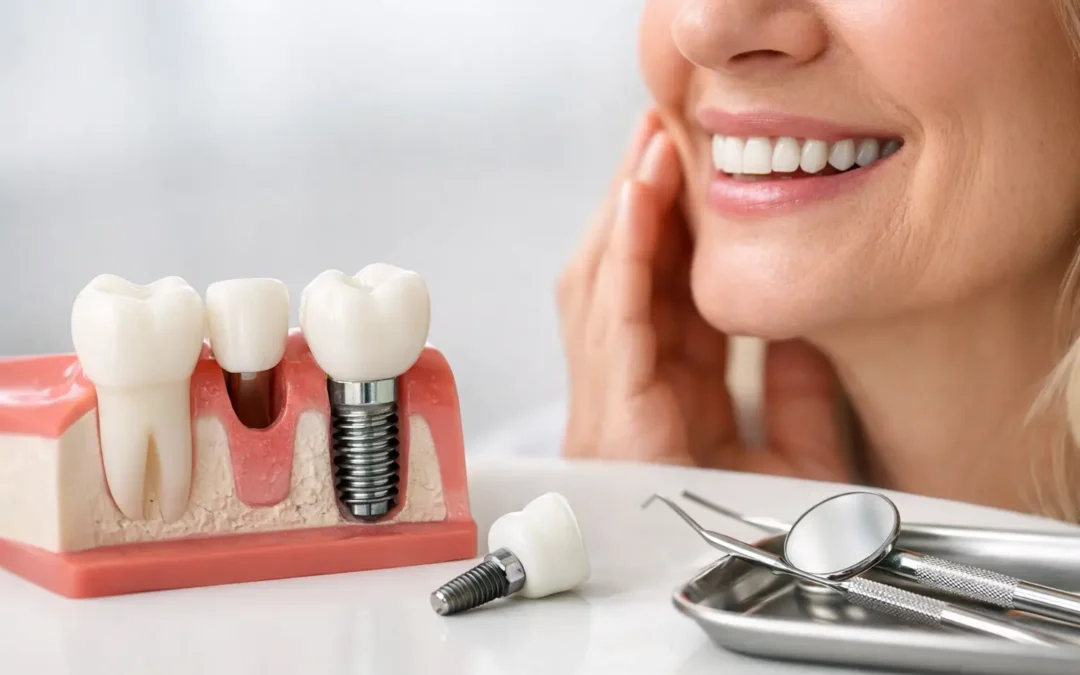
A missing tooth changes more than your smile. It can affect how you chew, how clearly you speak, and how confident you feel in everyday moments like laughing, meeting clients, or sitting down for dinner with family. That is why many patients ask about dental implants for missing teeth when they want a solution that looks natural, feels secure, and supports long-term oral health.
Dental implants are designed to replace the full structure of a missing tooth, not just the visible part above the gumline. Instead of relying on a removable appliance or attaching to neighboring teeth, an implant is placed in the jawbone and topped with a custom restoration. For many adults, that makes implants one of the closest options to having a natural tooth again.
Why dental implants for missing teeth stand out
When a tooth is lost, the problem is not only the gap you can see. The jawbone in that area can begin to shrink over time because it no longer receives stimulation from the tooth root. Nearby teeth may start to shift, your bite can change, and simple daily habits may become less comfortable.
Dental implants address those concerns in a way that traditional tooth replacement methods often cannot. Because the implant post is placed in the bone, it helps support the jaw and creates a stable foundation for the final crown, bridge, or denture. The result is a restoration that is built for function as much as appearance.
This matters for patients who want more than a temporary fix. If your goal is to eat with confidence, avoid slipping appliances, and preserve your smile for the future, implants are often worth a closer look.
What a dental implant actually includes
A dental implant treatment usually has three parts. The first is the implant post, which acts like an artificial tooth root. The second is the connector piece, often called an abutment. The third is the visible restoration, such as a crown for one missing tooth, a bridge for several missing teeth, or a full-arch solution for extensive tooth loss.
That structure is one reason implants feel so secure. They are not simply covering the space. They are rebuilding support from the foundation up.
For patients missing one tooth, a single implant and crown can replace it without altering healthy teeth nearby. For patients missing several teeth, implant-supported bridges may restore multiple spaces. For patients who have lost most or all teeth in an arch, options like implant-supported dentures or All-on-4 treatment can provide a more stable alternative to traditional removable dentures.
Who may be a good candidate
Many healthy adults are candidates for dental implants, but the right answer depends on your oral health, bone support, and overall treatment goals. A thorough exam is the best way to know what is realistic.
In general, good candidates should have healthy gums, enough jawbone to support an implant, and a commitment to keeping up with home care and dental visits. Even if you have been told in the past that you are not a candidate, that may not be the final word. Some patients need preparatory treatment, such as gum therapy, an extraction, or bone grafting, before moving forward.
There are also lifestyle factors to consider. Smoking, uncontrolled diabetes, and certain health conditions can affect healing. That does not always rule implants out, but it can change the timeline or the treatment approach.
The best implant planning is personalized. A careful evaluation should look at your health, your bite, your cosmetic concerns, and your budget, not just the empty space in your smile.
What to expect during treatment
One of the biggest concerns patients have is whether implant treatment will feel overwhelming. In most cases, the process is more manageable than people expect, especially when the plan is explained clearly from the start.
Treatment usually begins with a consultation, exam, and imaging to evaluate the bone and surrounding teeth. If the site is ready, the implant can be placed into the jawbone. After placement, the area needs time to heal and allow the implant to integrate with the bone. That healing phase is what gives implants their long-term stability.
Once healing is complete, the final restoration is attached. Depending on the case, temporary restorations may be used along the way so the smile remains functional and presentable.
The exact timeline varies. Some patients can move through treatment efficiently, while others need additional procedures before the final tooth replacement is placed. If you are balancing work, family, and a busy schedule, it helps to choose a team that maps out each step and keeps the process organized.
The benefits patients notice most
The clinical advantages of implants matter, but most patients judge success by everyday life. They want to know if they will be able to enjoy meals, smile in photos, and stop thinking about the missing tooth every time they talk.
That is where implants often make the biggest difference. They are made to stay in place, so there is no adhesive and no need to remove them at night. They can restore a stronger bite than many removable options. They also tend to blend naturally with the rest of the smile when the restoration is carefully designed.
There is also an emotional benefit that should not be overlooked. Replacing a missing tooth can help patients feel more like themselves again. For many people, confidence returns gradually in small moments – speaking up in a meeting, going out with friends, or smiling without covering their mouth.
Dental implants vs other tooth replacement options
Not every patient needs the same solution, and implants are not the only way to replace missing teeth. A dental bridge may be appropriate in some cases, especially when the neighboring teeth already need crowns. A removable partial denture may be a practical short-term or budget-conscious option.
Still, there are trade-offs. Traditional bridges rely on adjacent teeth for support, which means those teeth may need to be reshaped. Removable appliances can be effective, but some patients find them less stable or less comfortable over time. They also do not provide the same level of jawbone stimulation as implants.
That is why the right choice often comes down to priorities. If you are looking for lower upfront cost, another option may fit. If you are focused on stability, longevity, and preserving bone, implants may offer stronger long-term value.
What if you are missing many or all teeth?
Patients with extensive tooth loss often assume they have missed their chance for a fixed smile. That is not always the case. Implant-supported full-arch treatment can replace a complete upper or lower arch with a more secure and functional solution than conventional dentures.
This can be life-changing for patients who are tired of loose dentures, sore spots, or avoiding certain foods. In some situations, a streamlined approach such as All-on-4 can support a full arch with fewer implants, though candidacy depends on bone structure and treatment goals.
For adults in Doral, Miami Lakes, and nearby communities who want both function and aesthetics in one place, working with a team experienced in restorative and cosmetic planning can make a major difference. When the bite, smile design, and comfort are all considered together, the final result tends to feel more natural.
Caring for implants after treatment
Dental implants do not get cavities, but they still need excellent care. Healthy gums and clean surrounding tissues are essential to protecting the implant over time. That means brushing thoroughly, cleaning around the restoration properly, and keeping up with regular dental checkups and professional cleanings.
Patients sometimes think implants are maintenance-free. They are not. They are low-maintenance compared with some alternatives, but they still depend on good habits and routine monitoring. The good news is that once patients settle into that routine, implant care usually feels very similar to caring for natural teeth.
Questions worth asking at your consultation
If you are considering implants, ask how many teeth can be replaced, whether you have enough bone support, how long treatment may take, and what alternatives make sense in your case. It is also smart to ask about comfort during treatment, healing expectations, and the long-term plan for maintenance.
A good consultation should leave you feeling informed, not pressured. You should understand the benefits, the limits, and the reason one approach is being recommended over another. At United Dental Specialists, that kind of personalized planning is part of helping patients move forward with clarity and confidence.
Replacing a missing tooth is not only about filling a space. It is about restoring comfort, protecting your oral health, and feeling like yourself again. If dental implants are on your mind, the next best step is a conversation with a dental team that listens carefully and builds a plan around your goals.

Recent Comments