
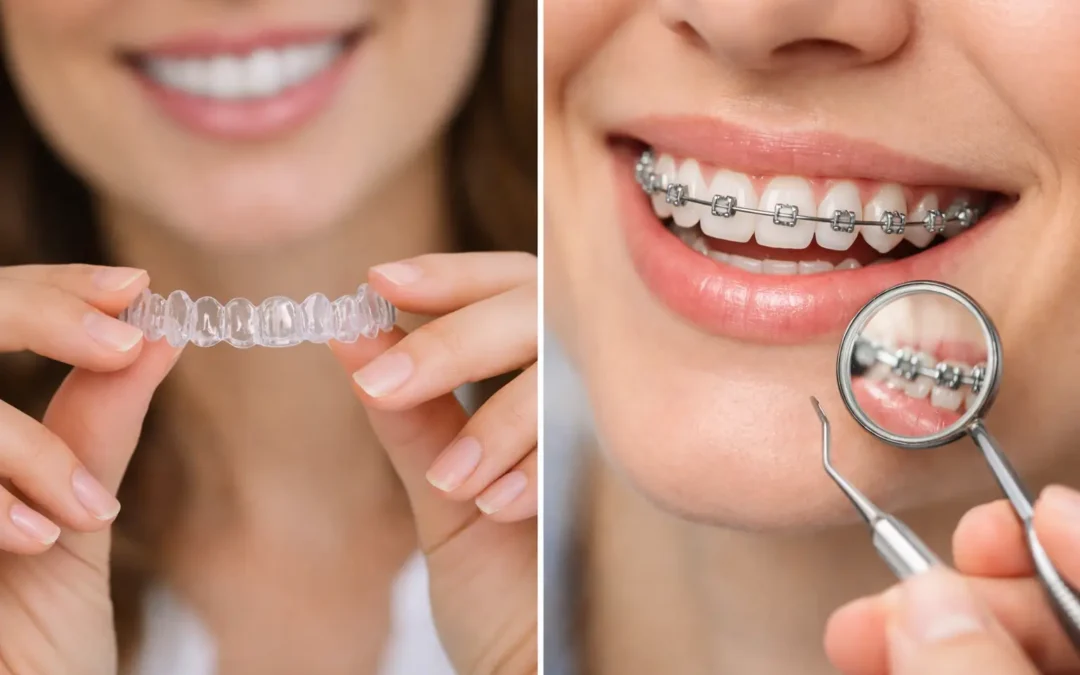
Choosing orthodontic treatment as an adult usually comes down to one practical question: invisalign vs braces for adults – which one actually fits your life? If you are balancing work, social events, family responsibilities, and a budget, the right choice is not just about straight teeth. It is about comfort, appearance, maintenance, treatment time, and how predictable the result will be for your specific case.
For many adults, the decision starts with appearance. Clear aligners are popular because they are discreet. Traditional braces are more noticeable, even with smaller modern brackets. But appearance is only one part of the story. The better option depends on how your teeth move, how disciplined you can be with treatment, and what kind of daily routine feels realistic.
Invisalign vs braces for adults: the biggest differences
Invisalign uses a series of custom clear aligners to shift teeth gradually. You wear them for most of the day, remove them for meals, and switch to a new set on schedule. Braces use brackets and wires fixed to the teeth, allowing steady pressure without needing the patient to remember to put anything back in.
That difference matters more than many people expect. Invisalign gives you flexibility. Braces give you consistency. If you want the freedom to remove your appliance for eating, brushing, and special occasions, aligners can feel much easier to live with. If you know your schedule is hectic and you would rather not think about whether you have worn your trays enough, braces may be the safer path.
Adults also tend to care about professional appearance. If you are in meetings, on camera, or simply prefer a lower-profile option, Invisalign often feels more comfortable socially. On the other hand, many adult patients are surprised by how quickly they stop noticing braces once treatment begins. What seems like a major concern before treatment often becomes a minor one after a few weeks.
Which option works better for your dental needs?
This is where a consultation matters. Some cases are very straightforward. Mild crowding, spacing, or small bite issues can often be treated effectively with Invisalign. Braces can also handle those concerns well, but they may not be necessary if clear aligners are a good fit.
More complex tooth movement can change the recommendation. Teeth that need significant rotation, vertical movement, or major bite correction sometimes respond more predictably to braces. That does not mean Invisalign cannot treat complex cases. It can in many situations, especially with modern treatment planning and attachments. But braces still offer a high level of control, which can make them the better choice when precision is critical.
Adults sometimes come in with older dental work, gum concerns, or wear from years of grinding and bite imbalance. These details affect treatment planning. Orthodontics is not just about lining teeth up for a nicer photo. It has to work with your overall oral health, restorations, and long-term bite stability.
Appearance, comfort, and daily life
For adults comparing invisalign vs braces for adults, lifestyle often drives the decision as much as clinical need. Invisalign is nearly invisible at a conversational distance, which is one reason it appeals to professionals and image-conscious patients. If you have client-facing work or simply want your treatment to stay private, aligners have a clear advantage.
Comfort is more nuanced. Invisalign trays can feel smoother because there are no metal brackets or wires rubbing against the cheeks and lips. At the same time, each new aligner set creates pressure, and some patients notice temporary soreness when switching trays. Braces can also cause soreness after adjustments, and brackets may irritate soft tissue early on, though this usually improves as your mouth adapts.
Eating is another major difference. With Invisalign, you remove the trays before meals, so there are no food restrictions while you eat. With braces, sticky, hard, and crunchy foods can damage brackets or wires, so you need to be more careful. For some adults, that alone makes aligners feel easier. For others, constantly removing trays and brushing before putting them back in becomes inconvenient.
The commitment factor most adults underestimate
Invisalign only works if you wear it as directed, usually 20 to 22 hours a day. That sounds manageable until real life gets involved. Coffee breaks, business lunches, dinners out, and late nights can chip away at wear time faster than people expect. If trays are out too often, treatment can slow down and results may suffer.
Braces remove that variable. Because they stay on your teeth, they keep working around the clock. For adults who want a treatment option that does not depend so heavily on daily compliance, braces can be the more dependable choice.
This is not about willpower alone. It is about honest self-assessment. If you are highly organized and motivated, Invisalign can be an excellent fit. If you want less responsibility and more built-in structure, braces may save you frustration.
Cost and value over time
Adults often expect one option to be dramatically cheaper than the other, but that is not always the case. The cost of Invisalign and braces depends on the complexity of your case, the length of treatment, and the type of corrections needed. In some cases, pricing is comparable. In others, one treatment may be clearly more cost-effective.
What matters most is value. The least expensive option is not the best choice if it is not appropriate for your bite or if you are unlikely to follow through with the process. Likewise, paying more for convenience or appearance may be worthwhile if that makes you more confident and committed during treatment.
A good orthodontic consultation should give you clarity about both treatment suitability and expected investment. Adults appreciate direct answers, and they should get them.
Treatment time and predictability
Every patient wants to know how long treatment will take. The honest answer is that it depends on the starting point and how the teeth respond. Mild cases may move relatively quickly with either braces or Invisalign. More involved corrections take longer regardless of the appliance.
That said, treatment time with Invisalign depends heavily on consistent wear. If aligners are not worn enough, refinements may be needed, and the timeline can stretch. Braces can be more predictable in patients who are concerned about compliance because they continue working whether the day gets busy or not.
Predictability matters to adults because treatment often needs to fit around life events. Weddings, interviews, photos, and professional milestones all affect how patients think about timing. A realistic timeline is better than an overly optimistic one.
Oral hygiene and maintenance
One area where Invisalign often stands out is cleaning. Because the trays are removable, brushing and flossing are more straightforward. That can be a major advantage for adults who already prioritize oral health and want to avoid plaque buildup around orthodontic hardware.
Braces require more effort. Food can get trapped around brackets and wires, and brushing takes more time. Flossing is still possible, but it is less convenient. If oral hygiene is not consistent, the risk of staining, inflammation, and other issues can increase during treatment.
Still, aligners are not maintenance-free. You need to clean the trays, avoid putting them back in after eating without brushing when possible, and keep track of them. Many adults have accidentally wrapped aligners in a napkin at lunch and thrown them away. It happens more often than people think.
So, which is better for adults?
There is no universal winner in the invisalign vs braces for adults decision. Invisalign is often better for adults who want a discreet appearance, removable trays, and fewer food restrictions – and who know they can stay consistent. Braces are often better for adults who need more complex correction, want a treatment that does not rely on self-discipline, or prefer a fixed option with strong control over tooth movement.
The right choice is the one that matches both your dental condition and your lifestyle. A treatment plan should reflect how you live, not just how your teeth look on a scan.
At United Dental Specialists, that conversation starts with listening. Adults want more than a generic recommendation. They want to know what will work, what will feel manageable, and what will give them the healthiest, most confident result.
If you have been putting off orthodontic treatment because you are unsure which option makes sense, that hesitation is understandable. The best next step is not guessing. It is getting a clear evaluation, asking honest questions, and choosing the path you will feel good about following all the way through.

Recent Comments