
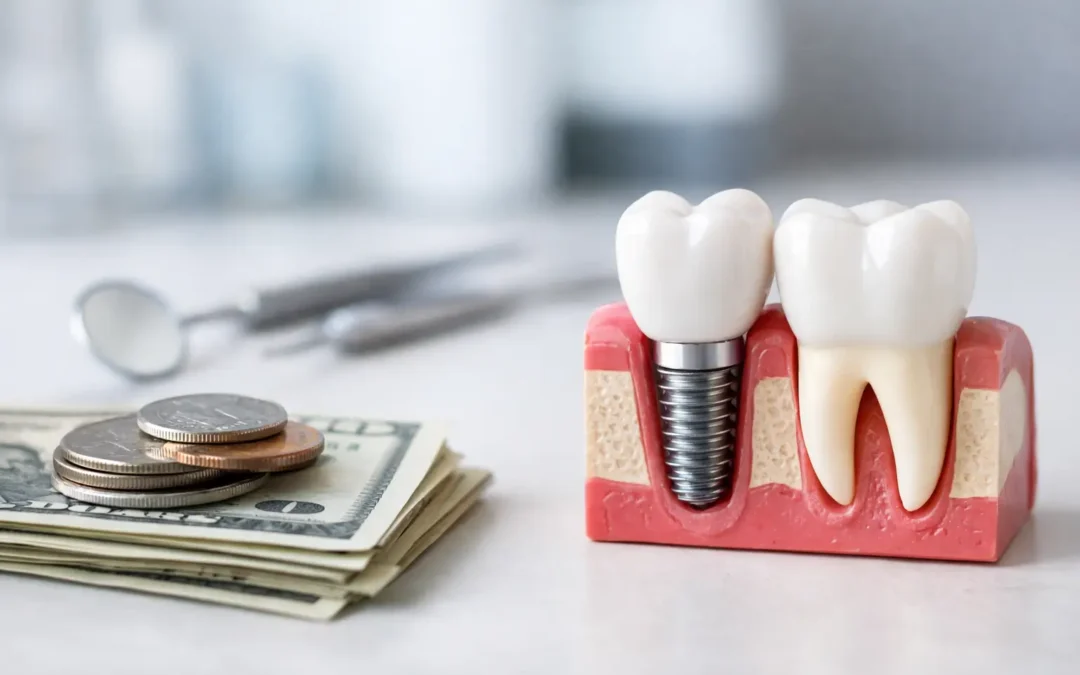
If you are asking how much does it cost to replace a tooth with an implant, you are probably dealing with more than a gap in your smile. For many patients, a missing tooth affects chewing, confidence, speech, and even the way surrounding teeth shift over time. The good news is that dental implants are one of the most dependable long-term solutions available, but the final cost can vary more than most people expect.
How much does it cost to replace a tooth with an implant?
In most cases, replacing one tooth with a dental implant can range from about $3,000 to $6,000 or more, however United Dental Specialists using the latest technology of CBCT/Optical integration can significantly reduce that cost to less than $3000 in many cases. That estimate often includes the implant post, the abutment, and the final crown, but not always. Some offices quote only one part of the process at first, which is why patients sometimes feel surprised when they learn the full treatment cost.
A single number rarely tells the whole story. The price depends on your oral health, the location of the missing tooth, whether bone grafting is needed, the materials used, and the complexity of the procedure. If the missing tooth has been gone for a while, the jawbone may have shrunk in that area, which can add to the treatment plan.
Why implant costs vary so much
Dental implants are not a one-size-fits-all service. They are personalized treatments designed to replace the root and visible portion of a tooth while supporting long-term oral health. That level of customization is one reason the investment is higher than other tooth replacement options.
The implant itself is a small post, usually made of titanium, placed in the jawbone. After healing, an abutment connects the implant to the custom-made crown. Each of those parts has a cost, and the planning behind them matters just as much as the hardware.
Your dentist also needs detailed imaging, careful treatment planning, and precise placement to help the implant integrate properly with the bone. In a practice focused on advanced restorative care, that process is designed to improve both function and appearance, not just fill a space.
The parts that may be included in the total price
When patients compare estimates, it helps to understand what may be bundled together and what may be billed separately. The total cost may include the consultation, digital X-rays or 3D imaging, the surgical placement of the implant, the abutment, and the final crown.
In some cases, sedation, tooth extraction, temporary restorations, or follow-up visits are separate charges. If you are comparing treatment plans from different offices, ask for a full breakdown so you can see whether you are looking at the same scope of care.
What can increase the cost of replacing a tooth with an implant?
The most common reason the cost rises is the need for additional procedures before the implant can be placed safely. Bone grafting is one of the biggest examples. If the jawbone is not thick or strong enough, the implant may need a better foundation first.
A sinus lift may also be needed for upper back teeth if there is not enough bone height. If the damaged tooth still needs to be extracted, that can add another step as well. These procedures are not extras for the sake of it. They are often what make long-term implant success possible.
The location of the missing tooth matters too. Front teeth can require especially careful cosmetic planning so the implant crown matches the shape, shade, and symmetry of your smile. Back teeth may involve more biting force, which can influence material selection and treatment design.
Material and lab choices matter
Not all implant crowns are the same. Some are made from porcelain-fused-to-metal, while others use all-ceramic or zirconia materials for a more natural look. Higher-end materials can cost more, but they may offer better esthetics, especially for teeth that show when you smile.
The quality of the dental lab and the precision of the crown design also affect the final fee. A well-made restoration should fit comfortably, look natural, and function properly with your bite.
Is a dental implant more expensive than a bridge or denture?
Usually, yes. A dental implant often costs more upfront than a bridge or removable partial denture. That said, the comparison should not stop at the initial price.
A bridge may be less expensive at first, but it often requires reshaping the healthy teeth next to the missing one. A partial denture can restore appearance and some function, but it may feel less stable and may need more frequent adjustments or replacement. An implant stands on its own, helps preserve the jawbone, and does not rely on neighboring teeth for support.
For many patients, that long-term value is the reason implants remain such a popular option. They are designed to look, feel, and function more like natural teeth than many alternatives.
Does insurance cover the cost?
Insurance coverage depends on your specific plan. Some dental plans may help with parts of the process, such as the crown or extraction, while not covering the implant itself. Other plans may offer limited implant benefits, and some medical plans may contribute if tooth loss is related to trauma or certain health conditions.
Because coverage rules vary so much, it is worth having your benefits reviewed before treatment begins. A good dental team will help you understand what is covered, what is not, and what financing options may be available if you want to move forward with care.
When a lower price is not always a better deal
It is natural to compare prices, especially for a treatment that can represent a meaningful investment. But with dental implants, lower cost should never be the only deciding factor.
Experience, technology, diagnosis, and follow-through all matter. If implant placement is not properly planned, the result can affect comfort, appearance, healing, and long-term stability. Choosing a provider based on quality, clarity, and personalized planning often saves patients stress and added expense later.
That does not mean the highest fee is automatically the best choice either. What matters most is understanding what you are paying for, whether your case has been evaluated thoroughly, and whether the treatment plan fits your health goals and budget.
How to budget for a single-tooth implant
The first step is a consultation. That visit allows your dentist to evaluate the missing tooth area, check bone support, review imaging, and explain whether additional procedures are needed. Once that information is clear, the office can provide a more accurate estimate instead of a broad online price range.
Many patients also benefit from asking a few direct questions. Does the quote include the crown? Are bone grafting or extraction fees separate? How many appointments are involved? What financing options are available? Simple questions can make the process feel much more manageable.
If you are in Doral or Miami Lakes and want a clear, personalized answer, United Dental Specialists can evaluate your needs and walk you through your options in a straightforward, supportive way. That kind of one-on-one planning matters because no two implant cases are exactly alike.
How much does it cost to replace a tooth with an implant compared with doing nothing?
This is the question many people do not ask soon enough. Leaving a missing tooth untreated may seem like the least expensive choice in the moment, but it can create other costs over time. Nearby teeth can drift, bite problems can develop, and bone loss in the jaw can progress. Those changes may eventually require more complex and expensive treatment.
Replacing a missing tooth early can protect more than your smile. It can support your overall oral health, help you chew normally, and keep your dental work simpler in the future.
If you are weighing the cost, think beyond the procedure itself. Think about comfort, confidence, convenience, and the value of restoring your smile with a solution built to last. The right next step is not guessing from a price range online. It is getting a personalized exam and a treatment plan that makes sense for your needs.

Recent Comments