
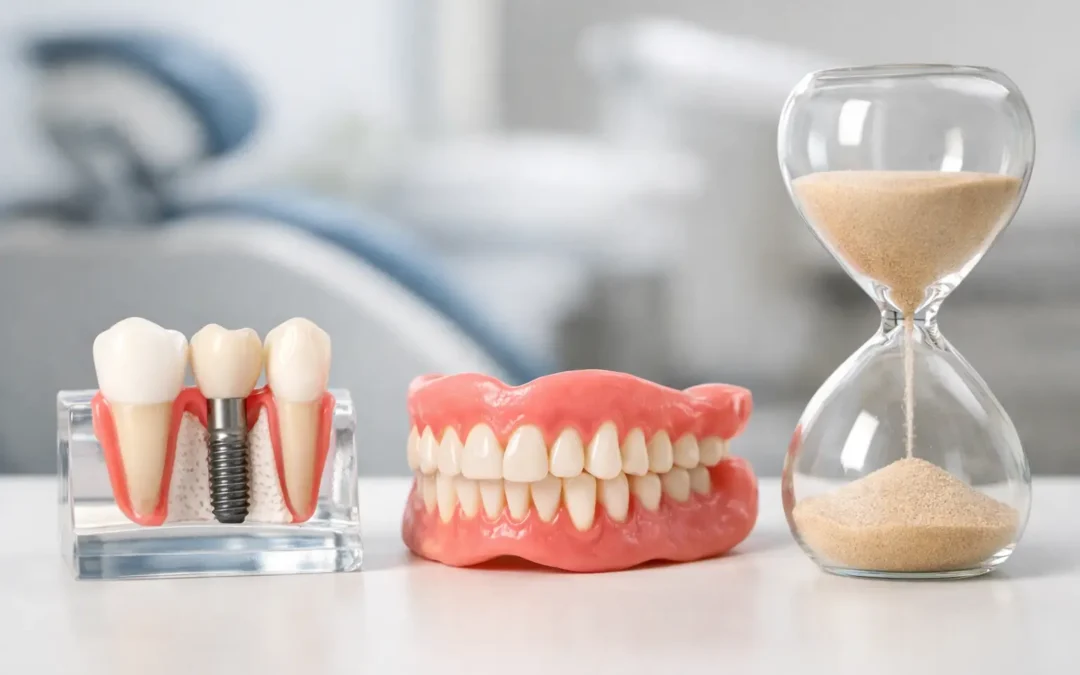
If you are living with failing, missing, or severely damaged teeth, the first question is often not whether implants work. It is how long does it take to replace all teeth with implants, and how soon can you get back to eating, smiling, and speaking with confidence.
The honest answer is that full-mouth implant treatment can take anywhere from one day for a temporary set of teeth to several months for the final result. That range is wide for a reason. Your timeline depends on your bone health, whether extractions are needed, the type of implant treatment you choose, and how your body heals. For many patients, the process moves faster than they expect once they understand the steps.
How long does it take to replace all teeth with implants?
In many cases, patients can leave the office with a fixed temporary set of teeth the same day or within 24 to 72 hours after implant surgery. This is often possible with full-arch solutions such as All-on-4 or similar implant-supported systems.
The final, long-term restoration usually takes longer. Most patients need about 3 to 6 months from surgery to final teeth, although some cases take longer if bone grafting, gum treatment, or complex healing is involved.
So the short version is simple. You may get teeth quickly, but the complete process is usually measured in months, not days.
Why the timeline can vary so much
Two patients can both need a full arch of implants and still have very different treatment schedules. That is because replacing all teeth is not a single appointment. It is a sequence of planning, surgery, healing, and final restoration.
If your mouth is generally healthy and you have enough jawbone, treatment may move efficiently. If you have advanced bone loss, active infection, uncontrolled gum disease, or medical factors that affect healing, more preparation may be needed before implants are placed.
Lifestyle also matters. Smoking, poor blood sugar control, and inconsistent home care can slow healing and affect how predictably implants integrate with the bone. A careful plan at the beginning often saves time and frustration later.
The main stages of full-mouth implant treatment
Consultation and planning
This first stage is where the timeline becomes clear. Your dentist examines your teeth, gums, bite, and jawbone, often with digital imaging. If you are a candidate for full-mouth implants, your treatment plan will outline whether you need extractions, bone grafting, sinus treatment, or immediate temporary teeth.
For some patients, this phase is completed quickly. For others, there may be a short period of additional diagnostics or pre-treatment to improve the health of the mouth before surgery.
Extractions, if needed
If you still have damaged or failing teeth, they may need to be removed before or at the time of implant placement. In some cases, extractions and implants can happen during the same visit. That can shorten the overall process.
However, if there is significant infection or too much bone damage around the existing teeth, your dentist may recommend allowing the area to heal before moving forward. This adds time, but it can improve the long-term outcome.
Bone grafting, when necessary
Not everyone needs bone grafting, but when the jaw has shrunk after tooth loss, it may be recommended. A graft helps create a stronger foundation for implants.
This is one of the biggest factors that can extend the timeline. Some grafting procedures heal in a few months, while larger grafts can take longer before implants are placed safely. If enough stable bone is already present, treatment can move much faster.
Implant placement
This is the surgical phase where the implants are placed in the jaw. For full-mouth treatment, several implants support a full upper arch, lower arch, or both. Depending on the plan, you may receive a temporary fixed bridge right away or shortly after surgery.
This part often surprises patients. The surgery itself may be completed in a single day, even though the total treatment takes longer. In other words, the procedure can be efficient even when healing still lies ahead.
Healing and osseointegration
After placement, the implants need time to fuse with the bone. This process is called osseointegration, and it is the reason the final teeth are not always placed immediately.
For most patients, this healing phase takes about 3 to 6 months. During that time, you may wear a temporary restoration that looks good and lets you function while the implants stabilize. Your dentist will monitor healing and make sure the implants are ready for the final stage.
Final teeth placement
Once healing is complete, impressions or digital scans are used to create your final implant-supported teeth. These are designed for long-term comfort, appearance, and bite function.
The final restoration stage may take a few visits to refine fit, shape, and esthetics. It is worth taking the time to get this right. The final teeth should feel secure, look natural, and support everyday confidence.
Same-day teeth vs. final teeth
One of the biggest sources of confusion around how long does it take to replace all teeth with implants is the phrase same-day teeth. Patients often hear that they can get a new smile in one day, and in many cases that is true. What they are getting, though, is usually a temporary or provisional set of teeth.
That temporary restoration is a major benefit. You do not have to spend months without teeth, and you can leave with a smile that already looks dramatically better. But temporary teeth are not the same as the final prosthetic.
The final set is placed after healing, once the implants have integrated and your bite can be adjusted more precisely. So if your goal is to know when you will look normal again, the answer may be very soon. If your goal is to know when the entire process is complete, expect several months.
What can speed up the process
A healthy mouth and enough existing bone are the biggest advantages. Patients who do not need grafting or staged extractions usually have shorter timelines.
Choosing a full-arch implant solution designed for immediate function can also help. In the right case, this allows implants and temporary teeth to be coordinated efficiently.
Good habits matter too. Following post-op instructions, keeping appointments, eating as directed during healing, and maintaining excellent home care all support a smoother recovery.
What can delay treatment
The most common delays are untreated gum disease, infection, major bone loss, and medical issues that interfere with healing. Smoking is another factor that can affect both healing speed and implant success.
Sometimes delays happen for practical reasons as well. If a patient waits too long between visits or postpones recommended treatment, the process naturally stretches out. A clear plan and steady follow-through usually make a noticeable difference.
Is the longer timeline worth it?
For most patients, yes. Replacing all teeth with implants is not the fastest dental treatment available, but it is often one of the most life-changing. Implant-supported teeth can restore biting power, improve speech, support facial structure, and eliminate the daily inconvenience of removable dentures.
The timeline can feel long at first glance, especially if you are eager for relief. But when treatment is done carefully, the result is built for stability and long-term function. Rushing the healing phase rarely serves the patient well.
What to expect during your consultation
A good consultation should leave you with real answers, not vague estimates. You should understand whether you are a candidate for immediate temporary teeth, whether any preparatory work is needed, and what your likely timeline looks like from start to finish.
This is also the right time to ask practical questions. How many visits will be needed? Will you be without teeth at any point? What foods should you expect to avoid during healing? How will your treatment plan fit your schedule and budget?
At United Dental Specialists, patients looking for full-mouth restoration are guided through these decisions with a personalized approach, because the right timeline is not just about speed. It is about creating a stable, confident result that fits your health needs and your life.
If you are considering full-mouth implants, the best next step is not guessing based on someone else’s case. It is getting a clear evaluation of your own. Once you know what your mouth needs, the path forward usually feels much more manageable.

Recent Comments