
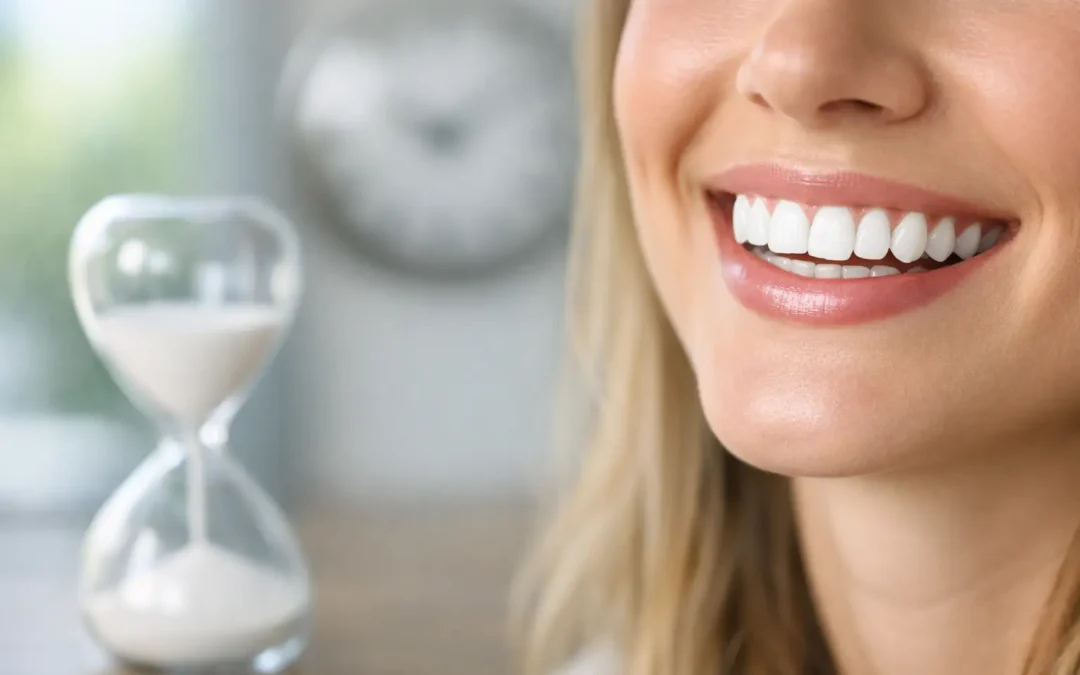
You leave your whitening appointment, catch your reflection, and immediately notice the difference. Teeth look cleaner, brighter, and more polished. The next question is the one almost every patient asks right away: how long does teeth whitening last? The honest answer is that it depends on the type of whitening you choose, your habits, and how well you maintain your results – but in most cases, whitening can last from a few months to up to three years.
That range is wide for a reason. Teeth are exposed to staining every day, and not all whitening methods work the same way. If you want a brighter smile that holds up, it helps to know what affects longevity before you decide on treatment.
How long does teeth whitening last with different treatments?
Not all whitening options deliver the same staying power. Professional treatment performed under a dentist’s supervision generally lasts longer than over-the-counter products because it uses stronger, safer whitening agents and is tailored to your teeth.
In-office whitening often gives the fastest and most visible change. Many patients enjoy results that last anywhere from six months to three years, especially if they avoid heavy staining habits and keep up with regular cleanings. That does not mean teeth stay at their brightest shade forever. Some gradual fading is normal.
Take-home professional trays are another strong option. These usually last longer than drugstore strips because the trays fit your teeth properly and the whitening gel is more effective. Results often last six months to a year, and sometimes longer with occasional touch-ups.
Over-the-counter strips, pens, and whitening toothpastes usually produce more modest results. They can help with surface stains, but the effects tend to fade faster. For many people, those results last a few weeks to a few months.
Whitening toothpastes deserve a quick reality check. They do not change the internal color of the teeth the way bleaching treatments do. They mainly polish away surface stains, so they are better for maintenance than for dramatic whitening.
What makes whitening results fade faster?
The biggest factor is what you eat and drink. Coffee, tea, red wine, dark sodas, tomato sauce, berries, and deeply pigmented foods can all stain enamel over time. If these are part of your daily routine, whitening may not last as long as you hope.
Smoking and tobacco use are also major causes of early discoloration. In many cases, tobacco stains come back quickly even after a successful whitening treatment. If you smoke regularly, your results may fade much sooner than someone who does not.
Oral hygiene matters just as much. When plaque builds up, teeth can start to look dull or yellow even if the whitening itself is still present. Brushing twice a day, flossing daily, and keeping up with dental cleanings helps protect the color you paid for.
Age plays a role too. As we get older, enamel naturally thins, which makes the darker dentin underneath more visible. Whitening can still work very well, but results may not appear or last the same way they do for younger patients.
Why professional whitening usually lasts longer
Professional whitening is designed around your actual teeth, not a one-size-fits-all kit. That matters more than many people realize. Your dentist can evaluate the cause of discoloration, look for issues like cavities or gum irritation, and recommend the right level of treatment.
This is especially important because some stains respond better than others. Yellow-toned stains often whiten more easily than gray or brown discoloration. Stains caused by food and drinks are generally easier to treat than discoloration linked to medication, trauma, or enamel changes.
A professional approach also helps reduce the guesswork. If your teeth are naturally sensitive, if you have crowns or veneers, or if the discoloration is uneven, treatment needs to be planned carefully. Safer treatment often leads to more consistent, longer-lasting results.
How to make teeth whitening last longer
If you want your whitening results to stay noticeable, maintenance makes a real difference. The first 48 hours after whitening are especially important because teeth can be more vulnerable to new stains during that period. Many dentists recommend avoiding dark foods and drinks right after treatment.
Long term, the best strategy is consistency. Drink staining beverages through a straw when possible, rinse your mouth with water after coffee or wine, and do not let plaque sit on the teeth for long stretches. Small habits add up.
Regular dental cleanings help more than patients expect. Whitening lifts stains, but cleanings remove the buildup that can make teeth look darker again. A brighter smile usually lasts longer when routine preventive care is part of the plan.
Touch-ups can also help maintain your shade without starting from scratch. Some patients benefit from occasional take-home whitening trays after an in-office treatment. That approach can be a practical way to extend results while avoiding overuse of whitening products.
When whitening may not last the way you expect
Sometimes the issue is not that whitening failed. It is that the original discoloration was not likely to respond fully in the first place. Intrinsic stains, which are stains inside the tooth rather than on the surface, can be more resistant. Teeth affected by certain medications, past injuries, or developmental changes may not whiten evenly.
Dental restorations are another factor. Crowns, veneers, and tooth-colored fillings do not whiten the same way natural enamel does. If you whiten your natural teeth, existing dental work may start to look darker by comparison. In those cases, a cosmetic plan may need to include replacement of visible restorations for a balanced result.
That is one reason it helps to have a dental exam before whitening. A treatment that looks simple on the surface can involve a few details that affect both appearance and longevity.
Is whitening bad for your teeth if you repeat it?
When performed correctly and at the right intervals, whitening is generally safe. The concern is not usually whitening itself – it is overdoing it, using products too often, or whitening without professional guidance.
Some people assume that if a little whitening looks good, more must be better. That can lead to tooth sensitivity or gum irritation. It can also create an unnaturally chalky look. A better goal is a healthy, bright, natural-looking smile that fits your features.
If your results fade sooner than expected, it does not automatically mean you need a full treatment again. Sometimes a simple touch-up or professional cleaning is enough to refresh your smile.
How do you know which option is right for you?
The best whitening treatment depends on your starting shade, sensitivity level, lifestyle, and goals. If you have an upcoming event and want fast results, in-office whitening may be the best fit. If you prefer a more gradual change, custom take-home trays may be more convenient.
If you have never whitened your teeth before, professional guidance is worth it. A dentist can tell you whether whitening is likely to work well, how long it may last in your case, and whether another cosmetic option would give you a better result.
For patients in Doral and Miami Lakes who want a brighter smile without the guesswork, United Dental Specialists can help create a whitening plan that matches your goals and protects your oral health.
A brighter smile should feel like a boost, not a gamble. With the right treatment and a few smart habits, whitening can last long enough to make the investment feel worthwhile – and keep your smile looking fresh well beyond the first reveal.

Recent Comments