When your teeth have reached the point where eating is frustrating, smiling feels forced, and dentures no longer feel like a real solution, all on 4 full arch restoration becomes a serious option worth discussing. For many adults, this treatment is not just about replacing teeth. It is about getting back daily comfort, speaking clearly, eating with confidence, and feeling like yourself again.
Full-arch tooth loss affects more than appearance. It changes how you chew, how your bite functions, and often how confident you feel in social and professional settings. That is why patients looking for a long-term answer often ask about All-on-4. The concept is simple: a full arch of teeth is supported by four strategically placed dental implants, creating a stable and natural-looking restoration without needing an implant for every missing tooth.
What all on 4 full arch restoration means
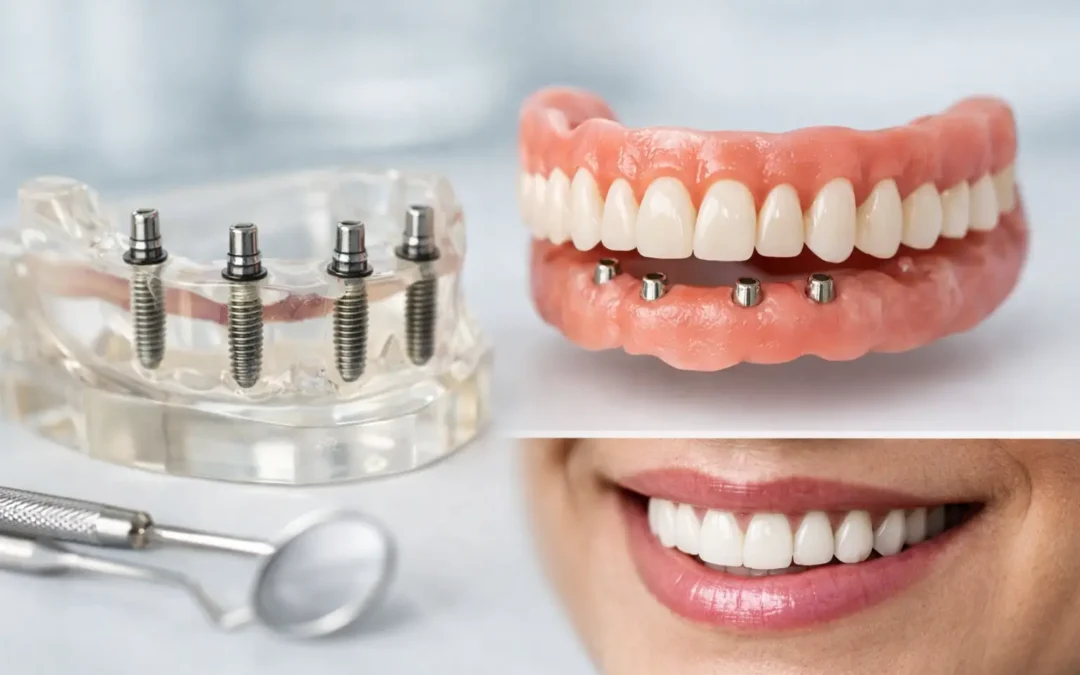
All on 4 full arch restoration is a treatment designed for patients who are missing most or all of the teeth in the upper arch, lower arch, or both. Instead of relying on a removable denture, this approach uses four dental implants to support a fixed set of replacement teeth.
The implants act like artificial tooth roots. Once placed in the jawbone, they provide support for a custom prosthetic arch that is designed to look balanced, feel secure, and restore everyday function. The back implants are often angled to maximize available bone, which is one reason this treatment can work well for many patients who have experienced some bone loss.
For the right candidate, the appeal is clear. You get a more secure solution than traditional dentures, a more efficient approach than replacing every tooth individually, and a treatment plan built around both function and appearance.
Why patients choose All-on-4 over traditional dentures
Traditional dentures can help in some cases, but they come with limits that many patients know too well. They may slip while talking, shift during meals, or require adhesive to stay in place. Over time, they also do not prevent jawbone shrinkage because they sit on the gums instead of integrating with the bone.
All-on-4 solves a different problem. Because the restoration is anchored by implants, it stays in place and provides a stronger bite. Many patients find they can eat a wider range of foods and speak more naturally. Just as important, the restoration is designed to look more like natural teeth and less like a removable appliance.
That said, treatment is not one-size-fits-all. Dentures may still be appropriate for some patients based on health history, budget, or treatment goals. A proper exam is what determines whether implant-supported full-arch care is the better fit.
Who may be a good candidate
Most candidates for all on 4 full arch restoration are adults with extensive tooth loss, failing teeth, severe decay, or advanced gum problems that make saving the remaining teeth unrealistic. It may also be a strong option for long-term denture wearers who want more stability.
Good candidacy depends on several factors, including overall oral health, jawbone condition, medical history, and lifestyle habits. Smoking, uncontrolled diabetes, and certain healing issues can affect implant success, but these do not automatically rule treatment out. They simply mean the case needs closer evaluation and careful planning.
This is where personalized treatment matters. A patient who has been told elsewhere that they are not a candidate may still have options depending on the amount of bone available, the condition of the gums, and the design of the final restoration.
What the treatment process usually looks like
The first step is a detailed consultation. This includes an exam, digital imaging, and a conversation about what you want to change. Some patients are focused on chewing again without discomfort. Others want to stop hiding their smile. Most want both.
If the remaining teeth cannot be saved, they are removed as part of the treatment plan. The implants are then placed in carefully selected positions to support the full arch. In many cases, a temporary fixed restoration is provided so patients do not leave without teeth. That immediate improvement is often one of the most meaningful parts of the process.
Healing takes time. The implants need to integrate with the bone before the final restoration is placed. Once healing is complete, the temporary is replaced with a custom final arch designed for strength, fit, and appearance. The result should feel secure and look natural in proportion to your face.
Timelines vary. Some cases move more quickly than others, especially if extractions, infection, or bone conditions need to be managed first. The right pace is the one that protects long-term success.
The benefits patients notice most
The biggest benefit is stability. Patients who are used to movement, looseness, or discomfort with dentures often notice a dramatic difference right away. A fixed full-arch restoration helps make chewing feel more natural and reduces the everyday worry of teeth shifting out of place.
Appearance also matters. A well-designed All-on-4 restoration can restore facial support and create a healthier, more confident smile. That improvement is not vanity. It affects how many people show up at work, interact socially, and feel in photos.
There is also a practical long-term advantage. Dental implants stimulate the jawbone in a way removable dentures do not, which can help reduce future bone loss. While no treatment stops aging or guarantees permanent results without maintenance, implant support gives patients a stronger foundation.
Trade-offs to understand before saying yes
A good dental team should be honest about the advantages and the limits. All-on-4 is an advanced treatment, but it is still a surgical and restorative process. That means healing time, follow-up visits, and a real commitment to home care.
Cost is another factor. Implant-supported full-arch treatment is a larger investment than a conventional denture. For many patients, the added security, comfort, and longevity make it worthwhile. Still, the right decision depends on your priorities, your oral condition, and what you want your daily quality of life to look like.
It is also important to understand that the restoration is strong, not indestructible. Just like natural teeth, it can be affected by poor hygiene, grinding, or skipped dental visits. Protecting the result is part of the treatment.
Caring for an All-on-4 restoration
One of the biggest misconceptions is that replacing teeth means less maintenance. In reality, implant-supported restorations still need consistent care. Daily cleaning, professional checkups, and routine maintenance help protect both the implants and the surrounding tissues.
Patients are usually shown how to clean under and around the arch using tools designed for fixed restorations. These steps are simple once you get used to them, but they matter. Healthy gums and clean implant surfaces are essential to keeping the restoration stable.
Regular exams also help catch small issues before they turn into expensive ones. Bite pressure, wear on the prosthetic, and gum health should all be monitored over time.
Why experience and planning matter
Full-arch implant treatment is not something patients should choose based on price alone. The quality of planning, imaging, surgical placement, and final prosthetic design has a direct impact on comfort, function, and appearance.
That is why many patients in Doral and Miami Lakes look for a provider that combines advanced implant care with personalized treatment planning. At United Dental Specialists, the goal is to make complex care feel clear, supportive, and achievable from the first consultation forward.
If you are living with widespread tooth loss, failing dental work, or dentures that no longer feel like enough, asking about All-on-4 is a smart next step. The best treatment plans start with a straightforward conversation, an honest evaluation, and a team that understands you are not just replacing teeth – you are rebuilding daily confidence.

Recent Comments