
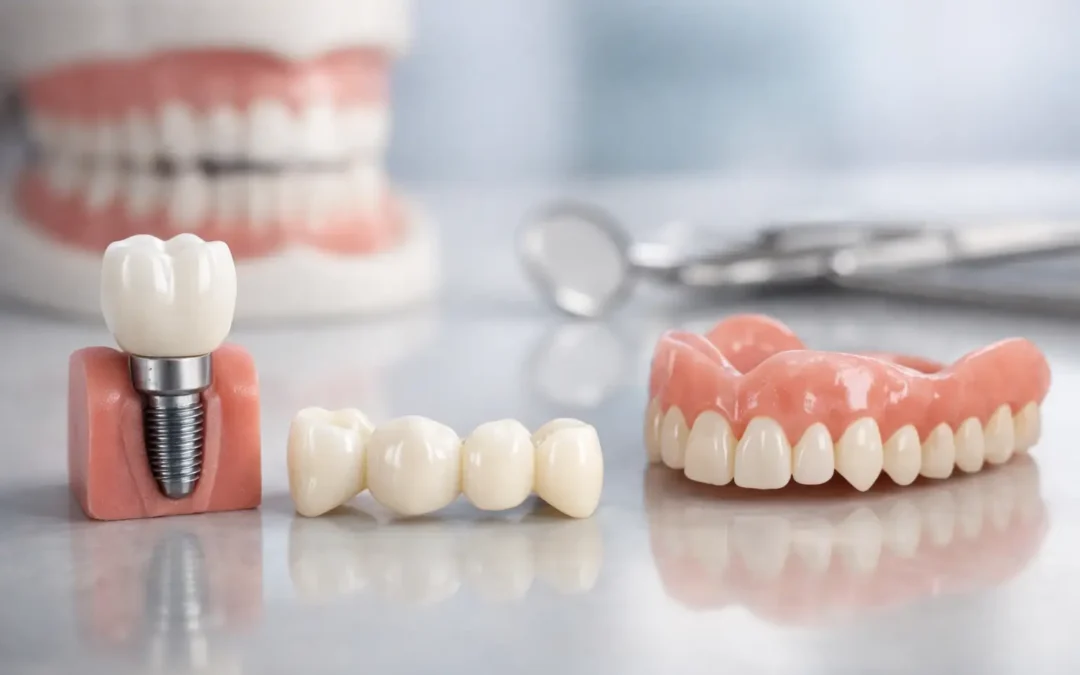
A missing tooth rarely stays a small problem for long. What starts as a gap in your smile can turn into trouble chewing, changes in speech, shifting teeth, and a steady loss of confidence. That is why understanding tooth replacement options adults can choose from matters so much. The right treatment can restore daily comfort, protect long-term oral health, and help you feel like yourself again.
For many adults, the best replacement is not simply the cheapest or fastest one. It depends on where the tooth is missing, how healthy the surrounding teeth and gums are, how many teeth need to be replaced, and what kind of result you want to live with for years. A thoughtful plan makes all the difference.
Tooth replacement options adults should know
There is no one-size-fits-all answer for missing teeth. Some patients want the closest thing to a natural tooth. Others need a practical solution that fits a shorter timeline or a tighter budget. The most common options are dental implants, dental bridges, partial dentures, full dentures, and full-arch implant solutions such as All-on-4.
Each option solves the same basic problem in a different way. The trade-offs usually come down to stability, appearance, cost, treatment time, and whether nearby teeth need to be involved.
Dental implants
Dental implants are often the most natural-feeling option for replacing one or more missing teeth. An implant is placed in the jawbone to act like a tooth root, and a custom crown is attached on top. Because the implant stands on its own, it does not rely on neighboring teeth for support.
Adults often prefer implants because they look natural, feel secure, and help preserve bone in the jaw. That bone support matters. After a tooth is lost, the jawbone in that area can begin to shrink over time. Implants are the only common replacement option that helps stimulate the bone the way a natural tooth root does.
That said, implants are not automatic for everyone. You need healthy gums, enough bone support, and a commitment to good home care. The process also takes longer than getting a bridge or denture. If you want the most stable and long-term solution, though, implants are often worth a serious conversation.
Dental bridges
A dental bridge fills the gap by anchoring an artificial tooth to the neighboring teeth. This can be a strong, effective option when the teeth on either side already need crowns or have enough strength to support the bridge.
Bridges usually take less time than implants and do not require a surgical procedure. Many adults like that they are fixed in place and do not come out at night. They also restore appearance and chewing function well in the right case.
The trade-off is that a traditional bridge typically requires reshaping the adjacent healthy teeth. It also does not replace the root beneath the missing tooth, so it does not prevent bone loss in the same way an implant can. For some patients, that is a reasonable compromise. For others, it is the reason they choose implants instead.
Partial dentures
A partial denture is a removable appliance designed to replace several missing teeth. It can be a practical choice when multiple teeth are missing in different parts of the mouth, especially if a patient wants a lower upfront cost.
Modern partials can look better and feel more comfortable than many people expect. They can improve chewing, support facial appearance, and reduce the shifting of remaining teeth. They are also relatively easy to adjust or modify if dental needs change.
Still, removable appliances take getting used to. Some patients notice movement while eating or speaking, and some do not like taking them out for cleaning. A partial denture can be a very useful solution, but it tends to feel less natural and less secure than a fixed option.
Full dentures
When all teeth in the upper arch, lower arch, or both need to be replaced, full dentures remain a common treatment. They restore the appearance of a full smile and can improve speech and eating compared with having no teeth.
For adults who have extensive tooth loss, dentures can be the fastest path back to function. They are also more accessible financially than full-mouth implant treatment. In some cases, they are an important first step while a patient plans future restorative care.
The challenge is stability. Lower dentures in particular can shift because they rely on the gums and underlying bone for support. Over time, as the jawbone changes, dentures may need relining or replacement. For patients who want greater security, implant-supported dentures may be the better fit.
All-on-4 and implant-supported full-arch options
If you are missing most or all teeth in an arch, full-arch implant treatment can offer a major upgrade in comfort and confidence. In an All-on-4 approach, a full set of replacement teeth is supported by a small number of carefully placed implants.
This option appeals to adults who want a solution that feels more stable than removable dentures and delivers a fuller return to normal eating and speaking. It also tends to provide a very strong cosmetic result. For many patients, it is not just about replacing teeth. It is about restoring quality of life.
Not everyone is a candidate for the exact same full-arch approach, and cost is understandably part of the conversation. But for adults who want security, function, and a more fixed feeling, this category of treatment deserves close attention.
How to choose between tooth replacement options for adults
The best choice depends on your mouth, your goals, and your timeline. If you are replacing one tooth and want the most natural long-term solution, an implant may be ideal. If you need a faster non-surgical option and the adjacent teeth already need treatment, a bridge may make sense.
If several teeth are missing, the decision becomes more personal. Some adults prioritize affordability and flexibility, which can make a partial denture appealing. Others care most about comfort and a fixed feel, which pushes implants higher on the list.
Your lifestyle matters too. If you travel often, speak publicly, work in a client-facing role, or simply want to forget the replacement is there, stability may matter more than anything else. If you are recovering from dental problems and need a phased plan, your dentist may recommend starting with one option and building toward another.
What patients often overlook
Many adults focus first on the visible gap, but the hidden effects of tooth loss are just as important. Missing teeth can change your bite, place extra pressure on remaining teeth, and affect the health of your jawbone and gums. Waiting too long can limit future treatment choices.
Comfort is another factor people underestimate. A restoration may look great in photos, but if it makes eating awkward or speaking feel unnatural, it may not feel like the right solution in daily life. That is why a personalized evaluation matters more than choosing based on price alone.
It is also worth thinking beyond the first appointment. Some options cost less upfront but may require more maintenance over time. Others involve a larger initial investment but offer better long-term stability. The right value is not always the lowest starting number.
Why a personalized consultation matters
Choosing tooth replacement should never feel like guessing. A proper exam looks at your oral health, bone support, bite, cosmetic goals, and budget together. That is how treatment becomes personal instead of generic.
At United Dental Specialists, adults in Doral, Miami Lakes, and the surrounding Miami area can explore replacement options with a team that focuses on both function and appearance. That matters because replacing a tooth is not only about filling space. It is about restoring comfort, protecting the rest of your smile, and helping you move forward with confidence.
If you have been putting off treatment, this is a good time to act. The best tooth replacement is the one that fits your life, protects your health, and gives you a smile you feel good using every day.

Recent Comments