
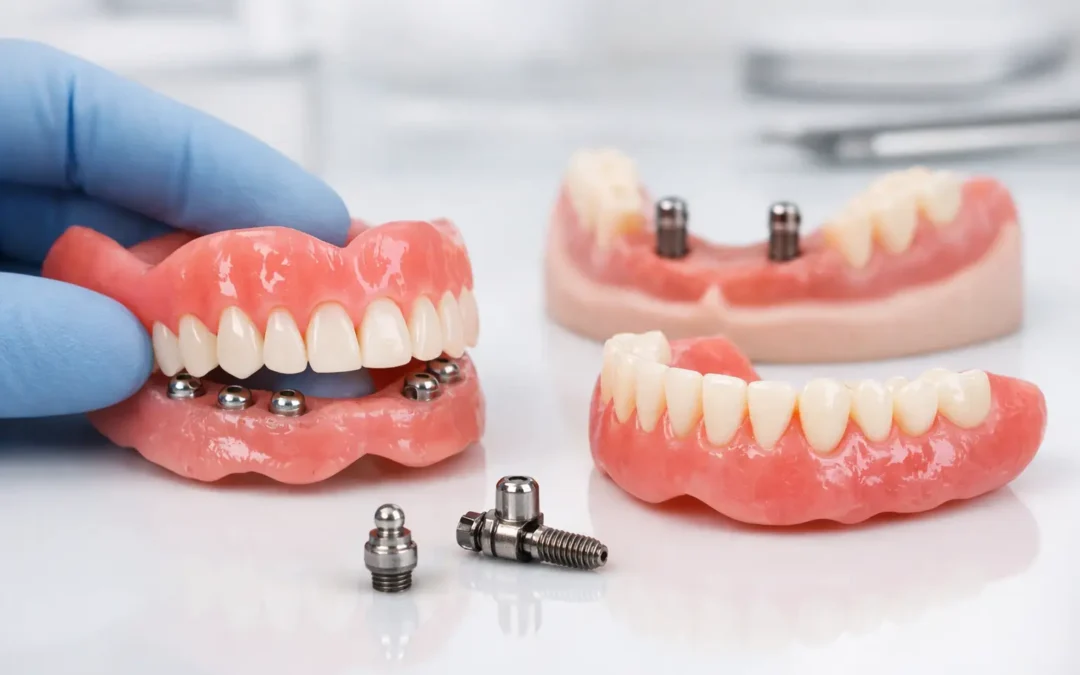
A loose lower denture can turn ordinary moments – ordering lunch, speaking in a meeting, laughing with family – into situations you would rather avoid. A thoughtful snap in dentures comparison starts with the everyday issues that matter most: how securely your teeth stay in place, how natural they feel, what care they require, and whether the treatment fits your health and goals.
Snap-in dentures are a removable tooth-replacement option supported by dental implants. They can offer a meaningful improvement over conventional dentures, but they are not the same as fixed implant bridges or All-on-4 treatment. The right choice depends on your jawbone, the number of teeth you are replacing, your priorities, and the type of smile experience you want each day.
Snap In Dentures Comparison: The Main Options
The most useful comparison is between traditional removable dentures, implant-supported snap-in dentures, and fixed full-arch implant teeth. Each solves missing teeth differently.
Traditional dentures
Traditional dentures rest directly on the gums. A full upper denture often gains some suction from the palate, while a lower denture relies more heavily on the shape of the jaw and surrounding muscles. Adhesives can improve retention for some people, but they do not stop the gradual bone changes that occur after teeth are lost.
This option is usually the least expensive starting point and does not require implant surgery. It can be appropriate for patients who need an immediate solution, have medical limitations, or prefer to avoid surgery. The trade-off is that dentures may shift during meals or conversation, especially on the lower jaw. Some patients also find the bulky palate coverage of an upper denture affects taste or comfort.
Implant-supported snap-in dentures
Snap-in dentures, also called implant-supported overdentures, attach to implants placed in the jaw. Depending on your treatment plan, the denture may connect through locator-style attachments, a bar, or another secure system. You remove it at home for cleaning, but it stays much more firmly in place while worn.
For many patients, this is the balance point between affordability and stability. Implants help anchor the denture so it is less likely to lift, rock, or slip. Because the appliance remains removable, cleaning around the implants and under the denture is generally straightforward.
A lower snap-in denture is often supported by two or more implants. Upper dentures frequently need additional support because the upper jawbone is typically less dense. The exact number is not a one-size-fits-all decision. A clinical examination and 3D imaging help determine what your bone can safely support.
Fixed full-arch implant teeth
Fixed full-arch restorations, including All-on-4 treatment when appropriate, are attached to implants by the dental team. They are not taken out at home. They are designed to feel closer to natural teeth in daily use and may be an excellent choice for patients who want the greatest possible stability and a more streamlined smile design.
Fixed teeth can offer strong chewing function and eliminate the need to remove a denture at night. They also require a greater financial investment and diligent hygiene around the bridge and implants. Specialized brushes, flossing tools, and regular professional maintenance are part of long-term success.
How Snap-In Dentures Feel in Daily Life
The primary advantage of snap-in dentures is stability. Instead of relying only on gum tissue and denture adhesive, the appliance clicks into place on implants. That added retention can make speaking feel more secure and can reduce the worry that your teeth will move at an inconvenient moment.
Chewing is often more comfortable as well. However, snap-in dentures are still a removable prosthesis, and they do not function exactly like natural teeth. Most patients can enjoy a broader range of foods after adapting, but very hard, sticky, or chewy foods may still require care. Fixed implant teeth may be better suited to someone whose top priority is the closest possible experience to having natural teeth.
Comfort also depends on fit. A well-designed denture should distribute pressure evenly and support your facial appearance without creating sore areas. It is normal to have an adjustment period, particularly if you have worn loose dentures for years. Follow-up visits allow your dentist to refine the fit and address pressure points promptly.
Cost: Look Beyond the Denture Itself
A snap-in denture costs more than a traditional denture because it includes implant placement, imaging, surgical planning, attachments, and the restoration itself. Yet comparing only the upfront number can be misleading. A conventional denture may need relines, adhesives, repairs, and eventual replacement as the jaw changes over time.
The cost of implant-supported dentures varies based on the number of implants, whether extractions are needed, the condition of the bone, the attachment system, sedation needs, and whether you are restoring one arch or both. Bone grafting can be necessary in some cases, although it is not required for every patient.
A clear consultation should give you a personalized treatment plan rather than a generic price. Ask what is included in the estimate, what ongoing maintenance may be expected, and what alternatives are clinically appropriate for your smile and budget. Phasing treatment may also be possible for some patients.
Care and Maintenance Requirements
Snap-in dentures require daily care, but the routine is manageable. Remove the denture as directed, brush it with a denture-safe brush and cleaner, and clean the implant attachments, gums, and tongue thoroughly. Your dentist may recommend an oral irrigator or other tools based on the attachment type and your dexterity.
Attachments are durable, but the small retention inserts can wear over time. If the denture begins to feel loose or no longer clicks in as securely, it may simply need maintenance rather than a completely new appliance. Regular dental visits are essential to check the implants, gum health, bite, and condition of the denture.
Fixed implant bridges also need consistent care, but they are cleaned in the mouth. Traditional dentures are removed for cleaning too, though they lack implant components to maintain. No option is maintenance-free. The best option is one you can care for reliably for years.
Who May Be a Good Candidate?
You may be a candidate for snap-in dentures if you are missing most or all teeth in an arch, are frustrated by a loose denture, and have sufficient bone or can safely receive the preparation needed for implants. Healthy gums and good oral hygiene habits support better outcomes.
Certain health conditions, medications, smoking habits, and previous radiation therapy can affect implant planning and healing. That does not automatically rule out treatment. It means your dentist should review your medical history carefully and tailor the plan to protect your health.
Patients who want a removable solution with significantly better retention often find snap-in dentures compelling. Patients who strongly prefer teeth that remain in place at all times may want to discuss a fixed full-arch option. For someone with a limited budget or who cannot undergo implant surgery, a well-made conventional denture can still restore appearance and basic function.
Questions Worth Asking at Your Consultation
A productive consultation should leave you with practical answers, not pressure. Ask how many implants are recommended and why, whether you need bone grafting, what type of attachment will be used, and how long the process may take. It is also reasonable to ask what your temporary teeth will be like during healing and what maintenance costs to anticipate.
Most importantly, discuss what you want to change. Is your biggest concern a lower denture that moves? Do you miss eating certain foods? Are you focused on a more natural-looking smile? Those answers help shape treatment around your life instead of forcing your needs into a standard package.
At United Dental Specialists, a personalized implant consultation can clarify whether snap-in dentures, fixed full-arch teeth, or another restorative option best supports your health, comfort, and confidence. The right replacement teeth should let you focus less on your denture and more on the people and moments in front of you.

Recent Comments