
by Dr. David Bennett | Jun 29, 2026 | Uncategorized |
A dental implant visit can feel very straightforward or unexpectedly overwhelming. The difference usually comes down to preparation. With the right implant consultation checklist, you can walk into your appointment knowing what to bring, what to ask, and how to tell whether a treatment plan truly fits your needs.
If you are replacing one tooth, several teeth, or exploring full-arch options, the consultation is where the most important decisions begin. This is not just a quick look at your smile. It is the appointment that helps determine whether implants are appropriate, what kind of timeline to expect, how much treatment may involve, and what results are realistic for your health, function, and appearance.
Why an implant consultation matters
Dental implants are one of the most reliable ways to replace missing teeth, but they are not one-size-fits-all. Your bone levels, gum health, bite, medical history, and cosmetic goals all play a role in planning. A strong consultation should never feel rushed. It should give you clarity.
That matters because patients often come in with very different priorities. Some want to chew comfortably again. Others are focused on replacing a visible front tooth without compromising appearance. Some are comparing implants to bridges or dentures. The best consultation accounts for all of that and turns a broad goal like I want my smile back into a treatment plan with real next steps.
Implant consultation checklist: what to bring
Before your visit, gather the basics that help your dental team evaluate your case accurately. Bring a list of current medications, details about your medical conditions, and your dental insurance information if applicable. If you have recent dental X-rays or records from another office, those can also be helpful.
It is also smart to bring your questions in writing. Many patients forget what they meant to ask once the appointment starts. A short note on your phone is enough. Include concerns about pain, healing, appearance, cost, and timing.
If you have had tooth loss for a while, mention how long the area has been missing a tooth. Bone changes over time, and that can affect whether you need additional treatment before implant placement. If you wear a partial or denture, let the team know what is and is not working about it. That feedback helps shape a more useful recommendation.
What your dentist will likely evaluate
A complete implant consultation usually includes more than a visual exam. Your dentist will assess the missing tooth area, your gums, your bite, and the condition of nearby teeth. Imaging is often part of the process because implant planning depends heavily on the quantity and quality of available bone.
Your oral health as a whole also matters. If there is active gum disease, untreated decay, or infection, those issues may need attention first. That does not always mean implants are off the table. It means the foundation needs to be stable before moving forward.
Medical history is another key factor. Conditions like diabetes, smoking habits, certain medications, and healing challenges can affect treatment planning. None of this is about disqualifying patients automatically. It is about planning safely and setting realistic expectations.
Questions to ask during your implant consultation
The most useful implant consultation checklist includes questions that go beyond price. Cost matters, but so do long-term function, comfort, and predictability.
Start by asking whether you are a good candidate right now. If the answer is not a simple yes, ask what needs to happen first. Some patients need extractions, bone grafting, gum treatment, or healing time before implants make sense.
Then ask what type of implant solution is being recommended. A single missing tooth may call for one implant and one crown. Multiple missing teeth may be treated with implant-supported bridges. Patients missing most or all teeth may be candidates for full-arch treatment such as All-on-4. The right option depends on your anatomy, goals, and budget.
It also helps to ask:
- What imaging or diagnostics are needed before treatment starts?
- Will I need a bone graft or sinus lift?
- How long will the full process take?
- What will healing be like after each phase?
- Will I have a temporary tooth or temporary restoration?
- How should the final result look and feel compared to natural teeth?
- What risks or limitations apply in my case?
- How do I care for the implant long term?
These questions can tell you a lot about how personalized the planning is. A good consultation should explain not only what is possible, but also what is advisable.
Understanding cost without oversimplifying it
Many patients want one number right away, which is understandable. At the same time, implant cost can vary based on the treatment steps involved. A straightforward single implant case is very different from a case that includes extraction, grafting, temporary restoration, and final crown placement.
That is why a consultation should break costs into parts clearly. You want to know what is included, what may be optional, and what might change if additional treatment is needed. Ask whether the quoted fee covers the implant post, abutment, crown, imaging, follow-up visits, and sedation if relevant.
This is also the time to ask about financing or phased treatment. For some patients, doing treatment in stages makes the process more manageable. The right plan is not always the fastest plan. Sometimes it is the one that balances timing, health needs, and financial comfort.
Red flags to watch for
An implant consultation should leave you feeling informed, not pressured. If you are pushed toward treatment without a clear explanation of why it fits your case, slow down. If no one reviews your health history carefully or discusses imaging, that is another reason to ask more questions.
Be cautious of promises that sound too absolute. Dental implants have an excellent success rate, but every patient heals differently. Sometimes extra procedures are needed. Sometimes timelines shift. Honest providers explain the advantages while also being upfront about variables.
You should also expect a discussion about maintenance. Implants are not immune to problems if oral hygiene and regular care are ignored. A realistic conversation about cleaning, checkups, and long-term follow-up is a sign of thorough planning, not a sales pitch.
How to know if the treatment plan fits you
The right plan should make sense clinically and personally. That means it should address your health, your smile goals, your daily comfort, and your budget. A plan that looks good on paper but does not fit your life is not always the best choice.
For example, a patient who needs a front tooth replaced may care deeply about esthetics and temporary options during healing. A patient with multiple missing back teeth may be more focused on chewing and stability. A full-arch patient may prioritize fewer appointments and a clear path away from removable dentures. These are different goals, and the consultation should reflect that.
It is also reasonable to ask how the plan supports the rest of your mouth. In some cases, replacing a missing tooth with an implant helps protect neighboring teeth from extra stress. In others, untreated bite issues may need attention so the implant is not overloaded later. Good treatment planning looks at the whole picture.
Preparing for the next step after your consultation
Once the consultation is over, take a little time to review what you learned. You should leave with a clear understanding of your diagnosis, recommended treatment, possible alternatives, approximate timing, and expected investment. If anything feels vague, ask for clarification before committing.
This is also the moment to think about logistics. Will you need time off work after any procedure? Do you need someone to drive you home? Are there medical clearances or medication adjustments to coordinate? Practical details can affect how smoothly treatment goes.
At United Dental Specialists, patients often feel more comfortable once they see the full path laid out clearly. That sense of direction matters. Implant treatment is not just about replacing a tooth. It is about restoring confidence in a way that feels safe, personalized, and worth the investment.
A simple implant consultation checklist to keep in mind
If you want one easy way to remember the essentials, focus on four things. Bring your health information, ask how the plan fits your specific case, get clarity on timeline and costs, and make sure you understand what care will look like after treatment. Those four areas cover most of what patients need to feel prepared.
The best consultations do not leave you guessing. They give you answers you can use, options you can weigh, and a treatment path that feels built around your smile rather than borrowed from someone else’s. If you are considering implants, a little preparation before that first appointment can make every decision after it feel a lot easier.
by Dr. David Bennett | Jun 27, 2026 | Uncategorized |
Some patients want a straighter smile. Others want a brighter, more even look fast. When the question is Invisalign vs veneers smile goals, the right answer depends on what you want to change, how quickly you want results, and whether the issue is position, shape, color, or all three.
This is where many people get stuck. Invisalign and veneers can both improve your smile, but they work in completely different ways. One moves teeth. The other changes how teeth look from the front. If you choose based on photos alone, it is easy to end up disappointed. If you choose based on your actual dental condition and long-term goals, you are much more likely to love the result.
Invisalign vs veneers smile goals: what each treatment really does
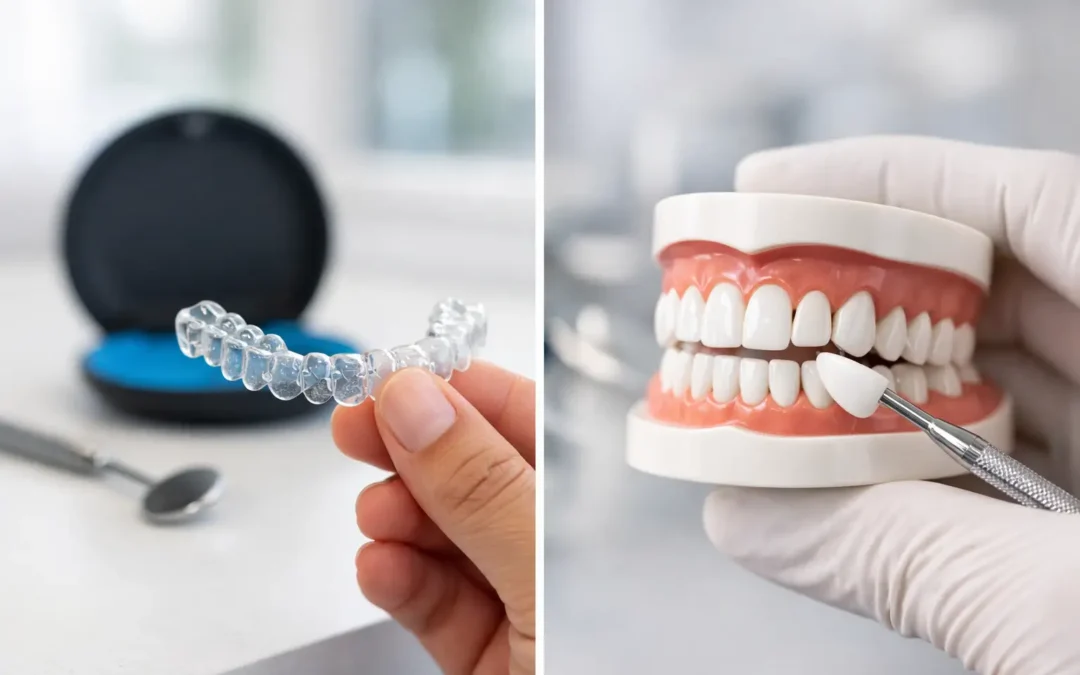
Invisalign is an orthodontic treatment. It uses a series of clear aligners to gradually move teeth into better positions. That makes it a strong option for crowding, spacing, mild to moderate bite issues, and teeth that look uneven because they are out of alignment.
Veneers are thin shells, usually made of porcelain, that are bonded to the front of teeth. They do not move teeth. Instead, they improve the visible appearance of teeth by changing color, shape, size, and surface uniformity. Veneers are often chosen for chipped teeth, worn edges, stubborn discoloration, small gaps, or teeth that look irregular.
That distinction matters. If your main concern is that your teeth are crooked, veneers may make them look straighter in some cases, but they do not correct the underlying alignment. If your teeth are already in a good position and you mostly want a whiter, more polished smile, Invisalign may not solve the cosmetic issue you actually care about.
When Invisalign makes more sense
Invisalign is usually the better choice when the foundation of your smile needs to change. If teeth overlap, twist, drift, or leave uneven spaces, clear aligners can address the root issue rather than masking it.
This often appeals to adults who want a natural improvement without changing the structure of healthy teeth. Because Invisalign works by repositioning your actual teeth, the final result can feel more conservative and health-focused. Better alignment can also make teeth easier to clean, which may support long-term oral health.
There are trade-offs. Invisalign takes time. Some cases finish in months, while others take longer. You also need to wear the aligners consistently, usually 20 to 22 hours a day, to stay on track. For busy professionals and parents, that commitment is manageable, but it does require discipline.
Invisalign is also not designed to whiten deeply stained teeth, cover chips, or change the shape of short or worn teeth. If those cosmetic details matter most to you, straightening alone may leave you wanting one more step afterward.
When veneers are the better fit
Veneers are often the better fit when your smile concerns are mostly visual and centered on the front surfaces of your teeth. They can create a dramatic upgrade in color, symmetry, and overall polish, especially when teeth are stained, uneven, chipped, or naturally small.
For patients who want a faster cosmetic transformation, veneers can be very appealing. Instead of moving teeth over time, veneers can reshape the visible smile in a more immediate way. That is one reason they are commonly associated with smile makeovers.
But veneers are not a shortcut for every problem. If teeth are significantly crooked or your bite is off, placing veneers without addressing alignment first may create compromises in appearance, function, or tooth preparation. A smile can look better in photos and still not be the healthiest long-term choice if the underlying issue was never corrected.
Veneers also require planning around durability and maintenance. Porcelain veneers are strong, but they are still a restoration that may need replacement over the years. They are an investment, and they should be placed with a clear understanding of both the aesthetic payoff and the long-term commitment.
Invisalign vs veneers smile goals by concern
If you are trying to decide between the two, it helps to narrow the question. What exactly bothers you when you look in the mirror?
If the answer is crooked teeth, crowding, or spaces, Invisalign is usually the more appropriate first step. It treats the position of the teeth, which is the real source of the issue.
If the answer is discoloration that whitening cannot fix, chips, worn edges, or uneven tooth shape, veneers may be the stronger option because they directly improve those visible details.
If your answer is all of the above, the solution may not be either-or. Some of the best cosmetic results come from combining treatments in the right order. Invisalign can first create better alignment, then veneers can refine specific teeth that still need shape or color enhancement. That approach is not necessary for everyone, but for some patients it delivers the most balanced and natural-looking result.
The question of speed vs conservation
A lot of cosmetic dental decisions come down to this tension. Do you want the fastest route to a better-looking smile, or do you want to preserve as much natural tooth structure as possible while correcting the cause of the problem?
Invisalign usually leans toward conservation. It uses your natural teeth and changes their position over time. Veneers usually lean toward immediate aesthetic impact. They can produce a noticeable upgrade faster, but they do so by placing a restoration over the front of the tooth.
Neither priority is wrong. It depends on your goals, your timeline, and your comfort level. Someone preparing for a major life event may care most about quick cosmetic improvement. Someone focused on long-term function and minimal intervention may prefer orthodontic correction first.
A good consultation should make space for both priorities instead of pushing one treatment for everyone.
What your dentist looks at before recommending either one
A proper recommendation is never based on looks alone. Your dentist should evaluate tooth position, bite, enamel condition, gum health, existing dental work, and whether habits like grinding could affect the outcome.
That matters because a smile that looks attractive also needs to function well. If you have untreated decay, gum inflammation, or bite stress, cosmetic treatment should be planned carefully around those issues. Sometimes the smartest path is to handle foundational dental needs first, then move into smile enhancement once the mouth is healthy and stable.
This is also where personalized treatment planning becomes valuable. Two patients can both ask for a straighter, whiter smile and still need completely different recommendations. One may be an excellent Invisalign candidate. Another may get better value and satisfaction from veneers. A third may benefit from a staged plan that combines both.
Cost matters, but value matters more
Patients understandably ask which option is more affordable. The answer varies by case, because Invisalign cost depends on treatment complexity and veneers cost depends on how many teeth are treated and what materials are used.
The better question is which option gives you the result you actually want. If you spend less on a treatment that does not fix your main concern, it is not really a better value. A treatment plan should match your priorities, not just a price point.
That is why honest conversations about goals and budget are so important. In many cases, there is more than one path to improvement, but the best path is the one that aligns with your health, appearance goals, and expectations for maintenance over time.
Making the right choice for your smile
If you are comparing Invisalign vs veneers smile goals, start by asking whether your biggest concern is where your teeth sit or how they look from the front. That one distinction often points the conversation in the right direction.
Invisalign is often best for correcting alignment and creating a healthier foundation. Veneers are often best for transforming visible cosmetic details like color, shape, and minor imperfections. When both alignment and aesthetics matter, a customized combination may offer the strongest result.
At United Dental Specialists, that decision starts with listening. The best cosmetic plan is not the trendiest treatment. It is the one that fits your smile, your timeline, and the outcome you want to see every time you look in the mirror.
If you are unsure which option fits your goals, that is completely normal. The most helpful next step is a conversation with a dental team that can evaluate your smile honestly and show you a path that feels right, not rushed.
by Dr. David Bennett | Jun 25, 2026 | Uncategorized |
A tooth that throbs when you bite, keeps you up at night, or flares up with hot coffee usually leaves you with one urgent question – can this tooth be saved, or does it need to come out? When patients ask about root canal vs extraction options, they are usually balancing pain, cost, timing, and long-term health all at once.
The right answer depends on the tooth, the level of damage, your overall oral health, and what happens after treatment. In many cases, saving a natural tooth is the better path. In others, removing the tooth and replacing it may be the more predictable choice. What matters most is getting a clear diagnosis and a treatment plan that protects both your comfort now and your smile later.
Root canal vs extraction options: what each one means
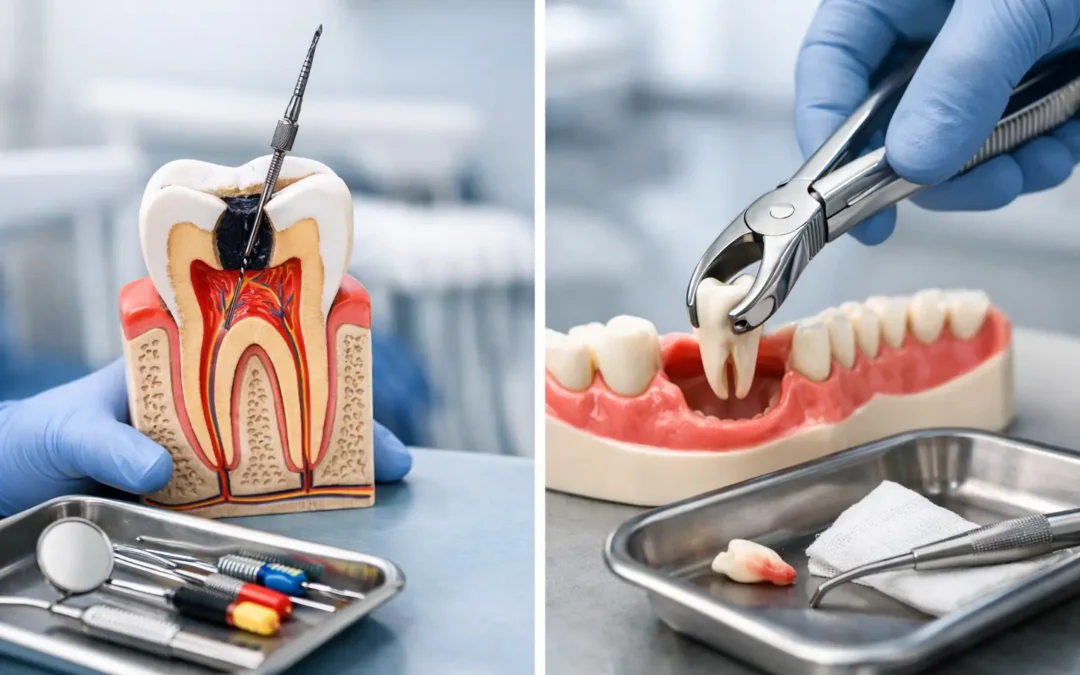
A root canal is designed to save a tooth that has infected or inflamed pulp inside. During treatment, the damaged tissue is removed, the inside of the tooth is cleaned and sealed, and the tooth is usually restored with a filling or crown. The goal is simple – eliminate infection while keeping your natural tooth in place.
An extraction removes the tooth entirely. This may be necessary when a tooth is too broken down, split below the gumline, severely loose from bone loss, or damaged in a way that makes long-term repair unrealistic. Extraction can stop pain and infection, but it also creates a gap that often needs to be addressed with a dental implant, bridge, or another replacement option.
That distinction matters more than many patients realize. One treatment preserves what you already have. The other starts a replacement process.
Why saving the tooth is often the first choice
Whenever a tooth can be predictably saved, most dentists prefer that route. Natural teeth help maintain normal bite force, support jaw alignment, and keep chewing comfortable and efficient. Even the best tooth replacement is still a replacement.
A successful root canal can let you keep your own tooth for many years, especially when the tooth is restored properly and maintained with regular care. For patients who want the most conservative option, this is often appealing. You keep the tooth, avoid an empty space, and usually return to normal function quickly.
There is also a cosmetic advantage in many cases. If the treated tooth is restored with a well-made crown, the result can look natural and blend into your smile. For image-conscious adults, that can be a major benefit.
Still, saving a tooth is not always the right answer just because it is possible. The condition of the tooth structure around the infection is what guides the decision.
When extraction may be the better option
Some teeth are simply too compromised to deliver a reliable long-term result. If most of the visible tooth is gone, if decay extends deep below the gums, or if the tooth has a vertical fracture, a root canal may not solve the real problem. You might remove the infection, but still be left with a tooth that cannot hold a restoration well.
Extraction can also make sense when gum disease has severely reduced bone support, or when repeated treatment has already failed. In these situations, removing the tooth may spare you additional discomfort, added expense, and more time spent trying to rescue a tooth with a poor prognosis.
For some patients, extraction is also part of a bigger restorative plan. If a damaged tooth is being replaced with an implant, and the surrounding bite and bone support make that option more stable long term, removing the tooth may be the smartest move rather than the most aggressive one.
Pain, timing, and recovery
Many patients assume a root canal is the more painful option. In reality, modern root canal treatment is typically done with local anesthesia and is often no more uncomfortable than getting a filling. In fact, most people seek treatment because the tooth is already painful, and the procedure is what relieves that pain.
An extraction can also be straightforward, especially for a tooth that is accessible and not impacted. But recovery is often more noticeable afterward because the body is healing an open socket where the tooth used to be. Soreness, swelling, and temporary chewing limitations are common.
The next question is usually timing. A root canal may require the procedure itself plus a final crown if the tooth needs extra protection. An extraction may feel faster at first, but if you plan to replace the tooth, that timeline becomes longer. Implant treatment, for example, can involve healing periods and multiple appointments.
So if you compare root canal vs extraction options only by the first visit, extraction may look simpler. If you compare the full treatment journey, saving the tooth is often less disruptive.
The cost question patients really want answered
Patients are right to ask about cost, but the fair comparison is not root canal versus extraction alone. It is root canal plus restoration versus extraction plus replacement.
A root canal usually needs a crown on a back tooth to protect it from fracture. That adds to the total cost. But extraction often leads to additional treatment if you do not want a missing tooth, and most patients do not. A dental implant, abutment, and crown can cost significantly more than saving the tooth in the first place. A bridge may be another option, but it has its own maintenance needs and may involve neighboring teeth.
If the extracted tooth is not replaced, there can still be a cost over time. Nearby teeth may drift. Opposing teeth may move. Bite changes can create uneven wear or make chewing less comfortable. What starts as a one-time fix can lead to larger restorative needs later.
This is why a personalized exam matters. The least expensive option today is not always the most cost-effective option over the next five or ten years.
Function, appearance, and long-term health
Your decision should not be based on pain relief alone. It should also reflect how you want your mouth to function in daily life.
Keeping a natural tooth usually helps preserve normal chewing and bite balance. That matters whether you are speaking in meetings, eating with family, or simply trying to avoid dental problems that snowball over time. Root canal treatment supports that goal when the tooth is structurally restorable.
Extraction has a different long-term consideration: bone loss. Once a tooth is removed, the jawbone in that area can begin to shrink over time because it no longer receives stimulation from the tooth root. That can affect facial support, neighboring teeth, and future replacement planning. Dental implants help address this by replacing the root function, which is one reason they are often the preferred replacement after extraction.
Aesthetics matter too. In visible areas of the smile, the urgency to replace an extracted tooth is often much higher. In those cases, treatment planning should consider both health and appearance from the start, not as an afterthought.
How dentists decide between root canal and extraction
The decision comes down to a few practical questions. Is the infection treatable? Is there enough healthy tooth left to restore? Is the bone support strong enough? Is there a crack that makes the tooth unreliable? And what does the patient want in terms of timeline, investment, and long-term goals?
X-rays, an exam, and sometimes additional imaging help answer these questions. What patients often describe as a simple cavity or toothache can turn out to be a deep infection, hidden fracture, or advanced structural damage. That is why guessing is risky, especially when pain comes and goes.
At a comprehensive practice like United Dental Specialists, this evaluation can also include what comes next if the tooth cannot be saved. That matters because treatment should not stop at removing pain. It should restore stability, comfort, and confidence.
The best option depends on the whole picture
If the tooth has a strong foundation and can be restored well, a root canal is often the best way to preserve your smile. If the tooth is beyond repair, extraction may be the healthier and more predictable choice, especially when paired with a well-planned replacement.
Neither option is automatically better in every case. The better option is the one that resolves the problem fully, protects your long-term oral health, and fits your needs without leaving bigger issues behind.
If you are dealing with tooth pain, swelling, or a damaged tooth, do not wait for the problem to decide for you. The earlier you get it evaluated, the more treatment choices you usually have – and the easier it is to move forward with confidence.
by Dr. David Bennett | Jun 23, 2026 | Uncategorized |
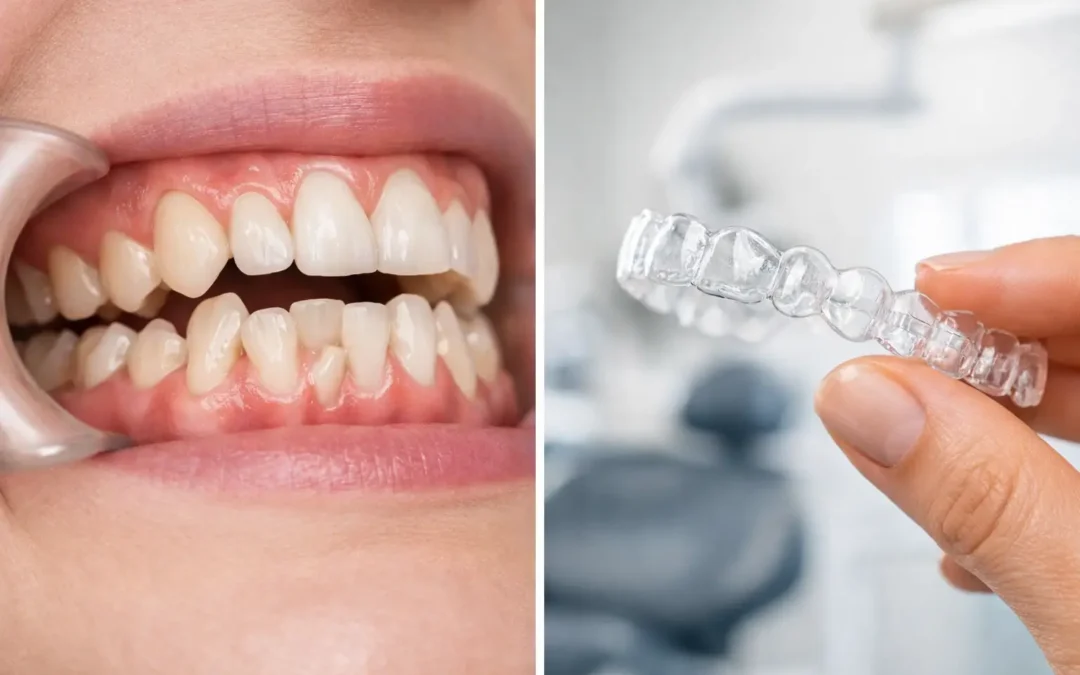
If you avoid photos because your front teeth overlap, or you have a hard time flossing between tight spaces, you may be asking a very practical question: can Invisalign fix crowded teeth? In many cases, yes. Clear aligners can correct mild to moderate crowding and, in some situations, even more complex cases. The real answer depends on how crowded your teeth are, how your bite fits together, and whether your teeth have enough room to move safely.
Crowding is more than a cosmetic concern. When teeth overlap or rotate out of position, they can be harder to clean, which raises the risk of plaque buildup, cavities, and gum irritation. For many adults, treatment is not just about a straighter smile. It is also about making daily oral care easier and protecting long-term dental health.
Can Invisalign fix crowded teeth in every case?
Not every crowded smile should be treated the same way. Invisalign works by using a series of custom-made clear aligners that gradually move teeth into better alignment. This approach is often very effective for patients with mild to moderate crowding, especially when the goal is to create a more even smile line and improve spacing for cleaning.
That said, severe crowding can be more complicated. If there is not enough space in the arch, or if crowding is tied to a significant bite issue, treatment may require additional planning. Some patients may still be candidates for Invisalign, but they might need attachments, enamel reshaping, or other techniques to create space. In the most complex cases, traditional braces may offer more control.
This is why a consultation matters. Two people can both say their teeth are crowded, but their treatment plans may look very different.
What makes someone a good candidate for Invisalign?
A good candidate usually has healthy teeth and gums, realistic expectations, and crowding that can be corrected with controlled tooth movement. Adults often do especially well with Invisalign because they are motivated to wear the aligners consistently. Since aligners need to be worn about 20 to 22 hours a day, patient commitment plays a major role in the final result.
Your dentist will also look at the full picture, not just the front teeth. Crowding may be visible in the smile, but the position of the back teeth and the way your bite closes are just as important. If the bite is unstable, simply straightening the front teeth without addressing function can create problems later.
Patients with gum disease, untreated cavities, or significant jaw discrepancies may need other dental care before starting Invisalign. In those cases, the right first step is to stabilize oral health and then move forward with alignment if appropriate.
How Invisalign creates space for crowded teeth
One of the biggest questions patients have is how teeth can straighten if there does not seem to be enough room. Invisalign treatment does not magically shrink teeth or expand the mouth without limits. Instead, it uses planned movement to make better use of available space.
Sometimes this means gently widening the arch. In other cases, it means rotating teeth so they sit more efficiently. For some patients, small amounts of enamel can be reshaped between selected teeth to create the room needed for alignment. This process is conservative and carefully planned. It is not used in every case, but it can be very helpful when crowding is mild to moderate.
Attachments may also be placed on certain teeth. These small tooth-colored shapes help the aligners grip the teeth more effectively and guide difficult movements. They are a normal part of many Invisalign cases and can make a big difference in the outcome.
Invisalign vs braces for crowded teeth
If you are comparing options, the biggest advantage of Invisalign is convenience. The aligners are removable, nearly invisible, and easier to live with during work, social events, and everyday meals. For many adults in Doral and Miami Lakes, that matters. You can straighten your teeth without the look of metal braces, and brushing and flossing are much simpler because you remove the aligners before cleaning.
Braces, however, still have an important place in orthodontic care. They can be a better choice for severe crowding, major bite problems, or cases where highly precise movement is needed from the start. Because braces stay on 24 hours a day, they also remove the compliance factor. You do not have to remember to wear them.
This is where honest guidance matters. The best treatment is not the one that sounds easiest. It is the one that matches your dental needs, timeline, and goals.
How long does Invisalign take for crowded teeth?
Treatment time depends on the complexity of the case. Mild crowding may improve in as little as several months, while moderate or more involved cases often take 12 to 18 months. Some patients need refinements after the first series of aligners, which means additional trays are used to fine-tune the result.
What speeds treatment up or slows it down is not just biology. It is also consistency. If aligners are worn as directed, teeth tend to move on schedule. If they are left out too often, progress can stall and treatment may take longer than expected.
Most patients change to a new set of aligners every one to two weeks and come in for periodic check-ins. These visits are typically straightforward and shorter than many orthodontic appointments with braces, which is one reason busy adults appreciate the process.
What Invisalign can and cannot do
Invisalign can be excellent for correcting overlapping teeth, mild to moderate crowding, rotated teeth, and certain bite concerns. It can improve smile appearance, reduce hard-to-clean overlaps, and support better oral hygiene. For many adults, it offers a balance of comfort, discretion, and strong results.
Still, there are limits. If crowding is severe, if teeth need major vertical movement, or if there are skeletal jaw issues behind the alignment problem, clear aligners may not be the ideal stand-alone solution. Some patients need a different orthodontic approach, while others benefit from a combined treatment plan.
That does not mean Invisalign is off the table. It means your treatment should be based on clinical reality, not a one-size-fits-all promise.
Why crowded teeth should not be ignored
Many adults assume crowded teeth are just a cosmetic issue they have lived with for years. But even mild crowding can create daily challenges. Tight contact points trap food. Overlapping teeth are harder to brush and floss thoroughly. Some patients notice uneven wear, gum inflammation, or recurring buildup in the same areas.
There is also the confidence factor. When patients feel self-conscious about their smile, they often hide it. Straightening crowded teeth can improve appearance, but the benefit usually goes beyond that. Patients often describe feeling more comfortable speaking, smiling, and showing up confidently in personal and professional settings.
Can Invisalign fix crowded teeth for adults?
Yes, and adults are some of the most common Invisalign patients. Teeth can be moved safely at many ages as long as the surrounding bone and gum tissue are healthy. In fact, many adults seek treatment after years of postponing orthodontic care because they want a less noticeable option.
Adult treatment does require thoughtful planning. Existing dental work like crowns, veneers, implants, or bridges can affect how teeth move and what kind of result is realistic. That is why a personalized exam is so important. A custom plan can account for your current dental health, cosmetic goals, and any restorative work you may need now or in the future.
At United Dental Specialists, that kind of planning matters because the goal is not just straighter teeth. It is a healthier, more confident smile that fits your overall dental needs.
What to expect at your consultation
A consultation should give you clarity, not pressure. Your dentist will examine your teeth, bite, and gums, discuss your goals, and determine whether Invisalign is a strong option for your specific case. Imaging and digital scans may be used to map tooth movement and show what treatment could realistically achieve.
This visit is also the time to talk about concerns such as treatment length, appearance, comfort, and budget. If Invisalign is a good fit, you should leave with a clear sense of the process and what your next steps would be. If it is not the best option, a trustworthy provider will tell you that too.
If you have been wondering whether crowded teeth can be corrected without braces, the best answer starts with a professional evaluation. A smile that looks crowded on the surface may be very treatable with clear aligners, and a custom plan can show you what is possible before you commit. Sometimes the most valuable first step is simply getting a clear, honest answer.
by Dr. David Bennett | Jun 21, 2026 | Uncategorized |
A dental implant is designed to be a long-term solution, so hearing that something went wrong can feel unsettling. The short answer is yes, can dental implants fail is a real question, and while failure is not common, it can happen. The more helpful answer is that implant problems usually have a reason behind them, and in many cases, they can be prevented or treated.
For patients in Doral, Miami Lakes, and the surrounding Miami area, this matters because dental implants are both a health investment and a confidence investment. You want them to feel stable, look natural, and last. Understanding what affects success can help you make better decisions before treatment and respond quickly if something does not feel right afterward.
Can dental implants fail after placement?
Yes, they can fail either soon after placement or years later. Early failure usually happens before the implant fully bonds with the jawbone. Late failure tends to happen after the implant has already been functioning well for some time.
That distinction matters because the causes are often different. An implant that never integrates with the bone may be affected by healing issues, infection, or lack of stability during recovery. An implant that fails later may be dealing with bone loss, gum disease around the implant, bite pressure, or wear on the restoration.
Even so, failure does not always mean the entire treatment was a mistake. Sometimes the implant itself is the issue. In other situations, the crown, bridge, or surrounding tissue is the problem while the implant remains healthy. A proper exam is what separates a true implant failure from a repairable complication.
Why dental implants can fail
Dental implants have high success rates, but success depends on planning, health history, bone support, and aftercare. This is why a personalized treatment plan matters so much.
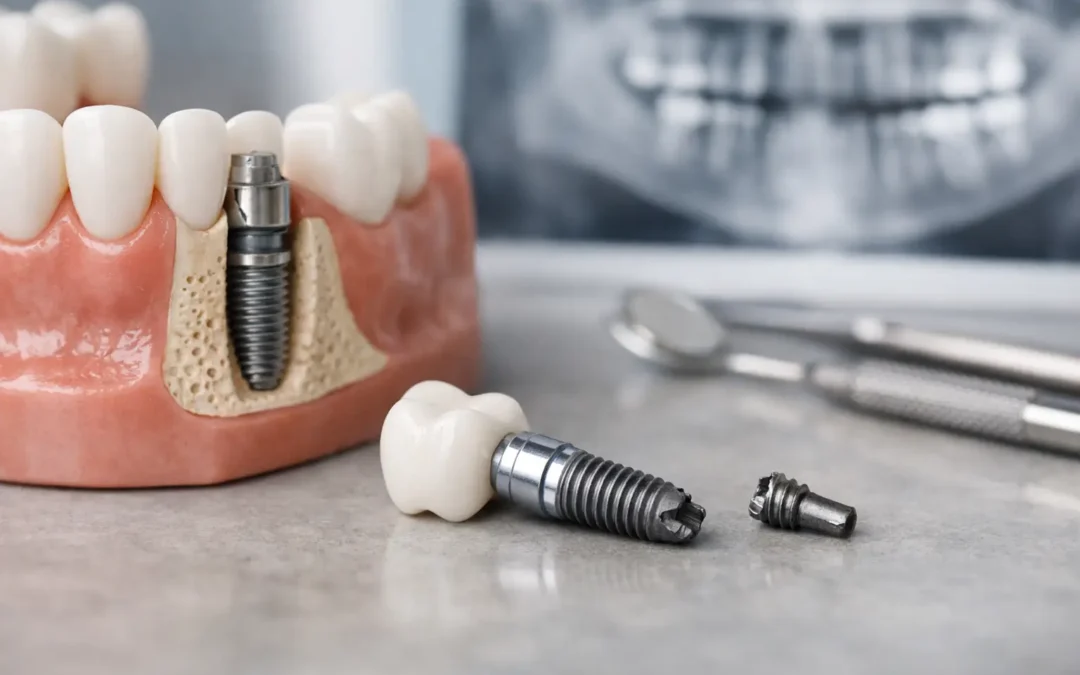
One of the most common reasons for early failure is poor integration with the jawbone. The implant needs time to fuse with the bone in a process called osseointegration. If that bond does not happen correctly, the implant may feel loose or fail to support a restoration.
Infection is another major concern. Bacteria can affect the tissue around the implant, especially if oral hygiene is difficult or inflammation is already present. A more advanced form of this problem, often called peri-implantitis, can lead to bone loss and threaten the implant over time.
Smoking also raises the risk. Tobacco can slow healing, reduce blood flow, and make infection more likely. That does not automatically disqualify someone from treatment, but it does mean the conversation should be honest and the aftercare needs to be taken seriously.
Excess pressure can also create trouble. Grinding, clenching, or an imbalanced bite can overload an implant and the surrounding bone. This is one reason careful placement and restoration design are so important. The implant has to be in the right position, and the final tooth has to distribute force properly.
Then there are health and lifestyle factors. Uncontrolled diabetes, certain medications, autoimmune conditions, and poor oral hygiene can all affect healing and long-term stability. None of these automatically rules out implants, but they can change the treatment approach.
Signs a dental implant may be failing
Some implant issues are obvious, while others start subtly. If an implant feels loose, painful, or different from the way it felt before, it deserves attention.
A healthy implant should feel secure. It should not wobble when you chew or brush. If there is movement, that can point to a problem with the implant, the abutment, or the restoration.
Persistent discomfort is another warning sign. Mild soreness after surgery is expected, but pain that worsens, returns, or lingers beyond the normal healing window should be evaluated. Swelling, bleeding, pus, or a bad taste in the mouth can also suggest infection.
Changes in the gums matter too. Receding tissue around an implant, deep pockets, or redness that does not go away can signal inflammation. Some patients also notice trouble chewing or a bite that suddenly feels off.
Not every symptom means failure, but waiting rarely helps. The earlier a problem is diagnosed, the more options you usually have.
What causes late implant failure?
When an implant has been stable for years and then starts having problems, the cause is often related to the surrounding tissue rather than the original surgery alone. Bone loss is a leading factor. If the bone around the implant begins to shrink, support is reduced and the implant can become compromised.
Peri-implantitis is one of the most common reasons this happens. It is similar to gum disease around natural teeth, but around an implant. Plaque buildup, inflammation, and untreated infection can slowly damage the bone and soft tissue.
Nighttime grinding is another factor that is easy to underestimate. Even a well-placed implant can be stressed by repeated heavy force. A custom night guard may be recommended if clenching or grinding is part of the picture.
Restorations can wear down too. A loose crown or damaged component does not always mean the implant itself has failed, but it can create instability or allow bacteria to collect if left untreated. That is why long-term maintenance is part of implant care, not an extra.
Can a failed dental implant be fixed?
Often, yes. The next step depends on what actually failed.
If the issue is with the crown, abutment, or a loose component, the implant may still be healthy and the restoration can be repaired or replaced. If infection is caught early, treatment may focus on controlling bacteria, improving cleaning access, and protecting the surrounding bone.
If the implant itself has failed and cannot be saved, it may need to be removed. That sounds discouraging, but it does not always mean you are out of options. In many cases, the area can be treated, allowed to heal, and prepared for another implant later. Some patients may need bone grafting first to rebuild support.
This is where experience and planning make a difference. A failed implant case should not be approached with guesswork. The right evaluation looks at the implant, the bite, the gums, the bone, and your overall health before deciding what comes next.
How to lower the risk of implant failure
Good outcomes start before the implant is placed. A comprehensive consultation should assess bone quality, gum health, bite function, medical history, and whether any preparatory treatment is needed. Rushing past those details can create problems later.
After placement, follow healing instructions closely. That includes keeping the area clean, avoiding smoking, sticking to the recommended diet during recovery, and showing up for follow-up visits. Those appointments are not just routine. They help confirm that healing is progressing the way it should.
Long-term care matters just as much. Brush and floss consistently, keep regular dental cleanings, and let your dentist know if anything feels different. If you grind your teeth, wear the appliance recommended for you. If you have a condition like diabetes, keeping it well managed can support better healing and better implant stability.
For patients considering implants, choosing a provider with strong diagnostic technology and a personalized approach can make a real difference. At United Dental Specialists, that means looking at the full picture, not just the missing tooth.
When to call your dentist
If you have an implant and notice looseness, pain, swelling, gum changes, or trouble chewing, do not wait to see if it passes. Some issues are minor when they begin and harder to treat when they are ignored.
The good news is that dental implants remain one of the most reliable ways to replace missing teeth. Most patients do very well with them, especially when treatment is planned carefully and maintained properly. If you are worried about an existing implant or thinking about getting one, the best next step is a professional evaluation that gives you clear answers and a plan you can feel confident about.
A strong smile should feel dependable, and when something seems off, getting help early can protect both your oral health and your peace of mind.


Recent Comments