
A missing front tooth changes more than a photograph. It can make it harder to bite into food, speak clearly, and feel comfortable smiling at work or with family. If you need to replace a missing front tooth, the right treatment should restore a natural appearance while protecting your bite, gums, and surrounding teeth.
The best choice depends on why the tooth is missing, the health of the bone and gums, the condition of nearby teeth, and how quickly you need a solution. A personalized dental exam can turn a stressful situation into a clear, manageable treatment plan.
How to Replace a Missing Front Tooth
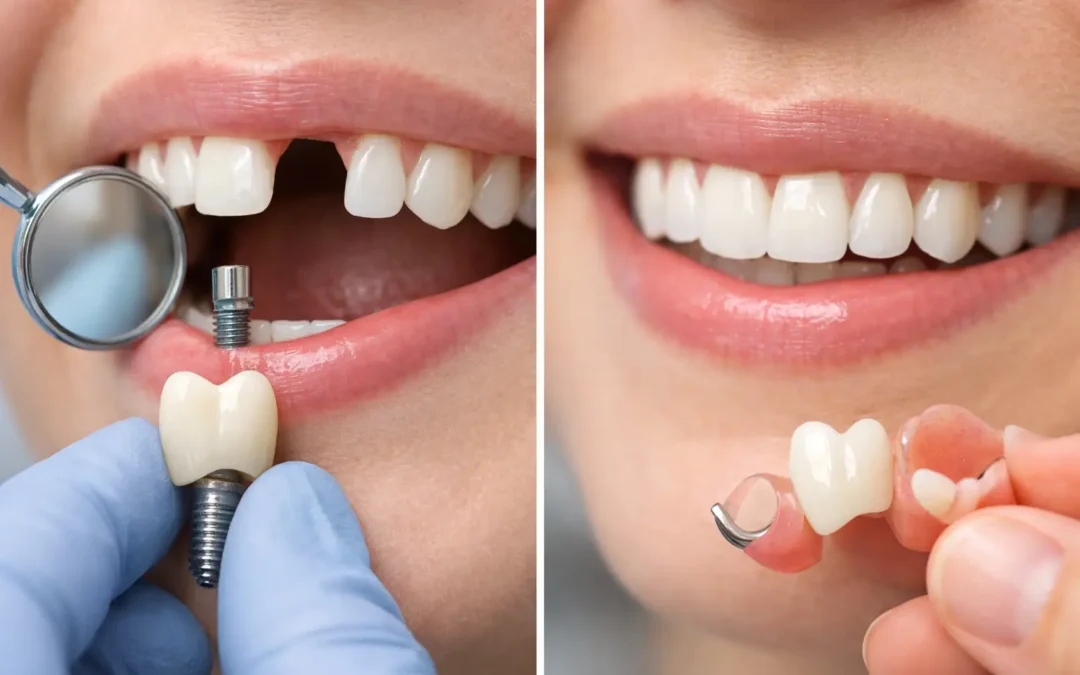
For most patients, there are three primary ways to replace a missing front tooth: a dental implant, a dental bridge, or a removable temporary appliance. Each can improve the appearance of your smile, but they differ in longevity, preparation, cost, and the way they support your oral health.
The most appropriate option is not always the fastest or the least expensive one. Front teeth are highly visible, so the shade, shape, gumline, and position of the replacement matter just as much as function. Your dentist should evaluate the full smile, not simply fill the open space.
Dental implants: the closest replacement to a natural tooth
A dental implant replaces both the visible tooth and its root. A small titanium implant post is placed in the jawbone, where it integrates with the bone over time. Once healed, it supports a custom crown designed to match your surrounding teeth.
For many adults, an implant is the preferred long-term solution because it does not rely on adjacent teeth for support. It can help preserve jawbone in the area of the missing tooth and allows you to floss and brush much like you would around a natural tooth. The final crown is custom-made with careful attention to color, translucency, and shape, which is especially valuable in the smile zone.
The trade-off is timing. Implant treatment may take several months when healing or bone grafting is needed. If a tooth was recently lost and the bone and gum tissue are healthy, some patients may be candidates for immediate implant placement and a temporary tooth. That decision requires careful planning, since front-tooth implants need precise positioning for an attractive, stable result.
Dental bridges: a fixed solution without implant surgery
A dental bridge uses the teeth on either side of the gap to support a replacement tooth called a pontic. With a traditional bridge, the neighboring teeth are prepared for crowns, and the replacement tooth sits securely between them.
A bridge can be an excellent option when the adjacent teeth already have large fillings, crowns, or damage that would benefit from coverage. It is fixed in place, looks natural when properly designed, and is often completed faster than an implant.
However, a bridge does require altering supporting teeth. It also does not replace the missing tooth root, so it does not prevent bone changes beneath the gap in the same way an implant can. With consistent brushing, flossing under the bridge, and routine dental care, a well-made bridge can provide many years of dependable service.
Temporary removable options: restoring your smile while you plan
A removable partial denture or flipper can provide a temporary tooth while you heal, save for treatment, or wait for a final implant or bridge. These appliances are designed to be taken out for cleaning and sleeping.
Temporary options can be helpful after an extraction or dental emergency because they restore the appearance of the smile quickly. They are generally more affordable up front, but they may feel less secure than a fixed option and require more attention when eating and speaking. They are best viewed as a short-term bridge to a lasting plan unless your dentist recommends otherwise.
What Determines the Best Front Tooth Replacement?
A front tooth replacement must look right from every angle, but health and stability come first. Your dentist will assess the area with an exam and digital imaging to understand what is happening beneath the gumline.
Bone volume is a major factor for implant candidates. When a tooth has been missing for a long time, the jawbone can gradually shrink in that spot. A bone graft may be recommended before or during implant treatment to create a stable foundation. Gum health also matters because the gumline frames the final crown and affects how natural it appears.
Your bite is equally important. If you grind your teeth, clench at night, or have a deep bite, the replacement needs to be planned to handle those forces. A nightguard may be recommended to protect an implant crown, bridge, or natural teeth from excessive wear.
The condition of neighboring teeth can guide the decision as well. An implant may preserve healthy adjacent teeth, while a bridge can make practical sense when those teeth already need crowns. There is no one-size-fits-all answer, and a quality treatment plan should explain why a specific option fits your smile.
Replacing a Front Tooth After an Accident or Extraction
A knocked-out, broken, or severely infected front tooth can feel urgent, especially when it affects your appearance and comfort. Contact a dentist promptly. In some cases, saving the natural tooth may still be possible, and early treatment can make a meaningful difference.
If extraction is necessary, ask about a temporary replacement before you leave the office. A temporary tooth can help you feel more at ease during healing and can protect the appearance of your smile while the final restoration is planned.
Do not delay care simply because the tooth does not hurt. A missing tooth can allow nearby teeth to shift, change the way you bite, and make future replacement more complex. Prompt evaluation gives you more choices and can help prevent additional treatment later.
How Long Does It Take to Restore Your Smile?
The timeline depends on the treatment and your oral health. A removable temporary tooth may be available relatively quickly. A bridge often takes a few weeks from preparation to placement. An implant can take several months when healing is needed, although a temporary tooth may be worn during that time.
The longer timeline for an implant is often worthwhile for patients seeking a durable, independent tooth replacement. Still, speed matters when you have an event, professional obligation, or personal reason to restore your smile quickly. Tell your dental team about your timing concerns so they can discuss realistic temporary and final options.
Getting a Natural-Looking Result
Replacing a front tooth is as much cosmetic planning as restorative dentistry. The final tooth should complement your facial features, lip line, surrounding teeth, and gum contour. A crown that is too opaque, too bright, or slightly out of proportion can stand out even when it functions well.
Modern imaging, custom shade selection, and high-quality dental materials allow for highly personalized results. Sometimes whitening surrounding teeth before making the final crown helps create a more balanced shade match. If you have chipped, uneven, or discolored neighboring teeth, cosmetic treatment may also be discussed as part of a broader smile plan.
At United Dental Specialists, patients in Doral, Miami Lakes, and the surrounding Miami area can receive an individualized evaluation focused on both a healthy bite and a confident-looking smile. The goal is to recommend treatment that makes sense for your needs, timeline, and budget, without losing sight of the details that make a front tooth look natural.
Caring for Your New Tooth
Whether you choose an implant, bridge, or removable appliance, daily care protects your investment. Brush twice a day, clean carefully around the gumline, and keep regular professional cleanings. For bridges, special flossing tools can help clean beneath the replacement tooth. For implants, healthy gums and consistent home care are essential to long-term success.
Avoid using your front teeth to open packages, bite nails, or chew hard objects. If you play contact sports, wear a properly fitted mouthguard. These small habits can help protect both your restoration and the natural teeth around it.
A missing front tooth does not have to remain a source of hesitation. With the right evaluation and a thoughtfully designed replacement, you can return to eating, speaking, and smiling with confidence.

Recent Comments