
A bright smile can change the way you show up in photos, meetings, and everyday conversations. But when patients ask about veneers vs teeth whitening, they are usually not asking for the most popular cosmetic treatment. They are asking which option will actually solve their specific concern and feel worth the investment.
That distinction matters. Teeth whitening and veneers can both improve the look of your smile, but they do very different jobs. One is designed to lift stain and brighten natural teeth. The other changes the visible front surface of the teeth themselves, which means it can address color along with shape, size, spacing, and minor cosmetic flaws.
Veneers vs teeth whitening: the real difference
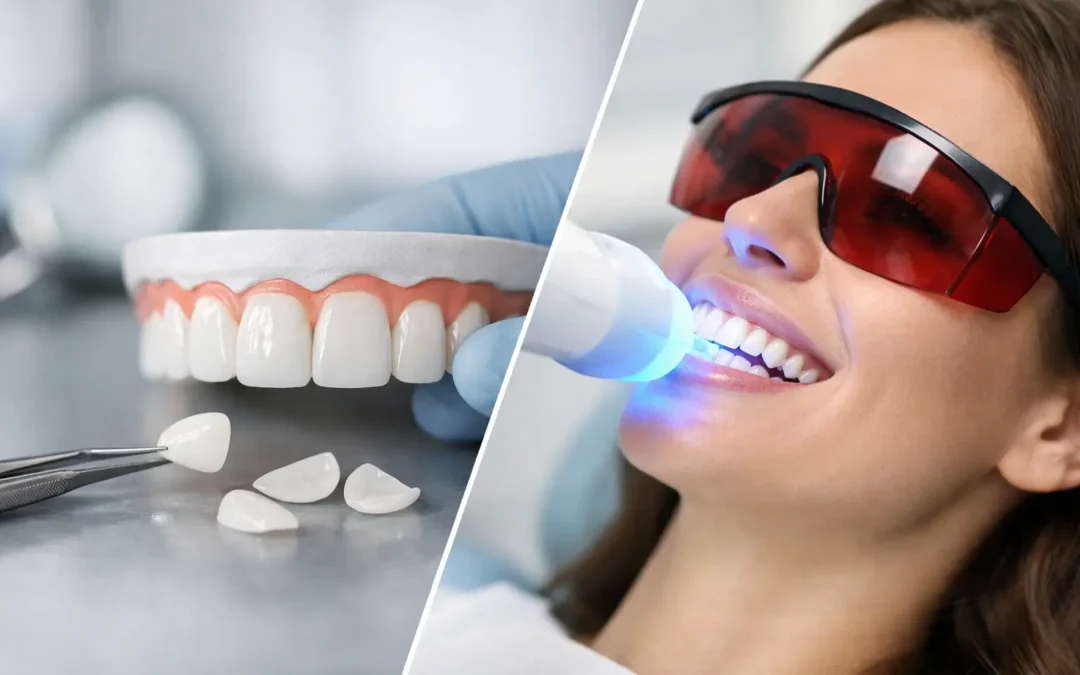
Teeth whitening is the more conservative option. It works by using professional whitening agents to break up stains within the enamel and dentin, helping natural teeth look several shades brighter. If your main concern is yellowing from coffee, tea, red wine, smoking, or age-related discoloration, whitening may be all you need.
Veneers are thin shells, often made of porcelain, that are bonded to the front of the teeth. Because they cover the visible surface, they can create a more dramatic cosmetic change. Veneers are often chosen when a patient wants brighter teeth but also wants to improve chips, uneven edges, worn enamel, small gaps, or teeth that look too short or misshapen.
In simple terms, whitening improves what is already there. Veneers redesign what people see.
When teeth whitening makes the most sense
If your teeth are healthy, generally straight, and you like their overall shape, teeth whitening is usually the first place to look. It is quicker, more affordable, and less invasive than veneers. For many adults, especially those preparing for a wedding, job interview, special event, or just wanting to refresh their appearance, professional whitening can deliver noticeable results without changing the structure of the teeth.
Whitening tends to work best on external staining and natural yellow tones. It can also be an excellent option for patients who want cosmetic improvement but prefer to start with the simplest treatment available.
That said, whitening has limits. It will not change the shape of a tooth. It will not fix a chip or close a gap. It also does not work the same way on every kind of discoloration. Gray, brown, or deeply internal stains can be more resistant, and whitening will not change the color of crowns, bonding, or veneers you already have.
If you have old dental work on front teeth, your smile can end up brighter in some areas than others. That is one reason a cosmetic consultation matters before choosing a treatment.
Benefits of professional whitening
Professional whitening is popular for good reason. It is efficient, safe when supervised by a dental team, and tailored to your enamel, sensitivity level, and smile goals. Compared with over-the-counter products, in-office and dentist-guided whitening usually produces stronger and more predictable results.
It also preserves your natural tooth structure. For patients who are happy with their smile overall and only want a brighter appearance, that is a meaningful advantage.
When veneers are the better choice
Veneers make more sense when color is only part of the issue. If you look at your smile and notice multiple concerns at once, whitening alone may leave you disappointed. A tooth may still look too small. A chipped edge may still draw attention. Uneven spacing may still bother you every time you smile.
Veneers can address several cosmetic concerns in one treatment plan. They are often ideal for patients with stubborn discoloration that does not respond well to whitening, especially internal staining from medications, trauma, or enamel defects. They are also a strong option for people who want a more polished, balanced smile and are ready for a longer-lasting cosmetic upgrade.
Because veneers are custom-designed, the result can be very controlled. Your dentist can plan the shade, contour, length, and symmetry so the smile looks brighter and more refined without appearing artificial.
What veneers can fix that whitening cannot
This is where veneers stand apart. They can improve:
- Deep discoloration that resists whitening
- Chipped or worn teeth
- Small gaps between teeth
- Mildly uneven or misshapen teeth
- Teeth that appear too short or disproportionate
For the right patient, veneers are not just about making teeth whiter. They can make the whole smile look more harmonious.
Cost, longevity, and maintenance
For most patients, the veneers vs teeth whitening decision also comes down to cost and long-term value.
Teeth whitening has a lower upfront cost. It is one of the most accessible cosmetic dental treatments, which makes it attractive for patients who want visible improvement without a major commitment. However, whitening is not permanent. Results fade over time, especially if you regularly drink coffee, tea, red wine, or use tobacco. Many patients need touch-ups to maintain their preferred shade.
Veneers cost more initially because they involve custom design, preparation, and placement. But they also last much longer than whitening results when properly cared for. Porcelain veneers are stain-resistant and durable, though they are not indestructible. Biting hard objects, grinding your teeth, or poor oral hygiene can shorten their lifespan.
Maintenance matters with both options. Whitening requires periodic upkeep. Veneers require excellent brushing, flossing, routine dental visits, and habits that protect your investment.
The better value depends on your goals. If you want a simpler brightness boost, whitening often makes sense. If you want to correct several cosmetic issues at once and invest in a more transformative change, veneers may justify the higher cost.
Which treatment looks more natural?
Both can look very natural when done well. Professional whitening keeps your natural teeth, just in a brighter shade. For patients who already like their smile, this often feels the most authentic because nothing about the tooth shape changes.
Veneers can also look beautifully natural, but the planning matters. The best veneer cases are not about creating an overly white, uniform smile that looks obvious from across the room. They are about choosing proportions and shades that fit your face, lip line, and overall appearance.
This is why provider experience matters so much. Cosmetic dentistry should be personalized, not one-size-fits-all.
How to decide between veneers and whitening
If you are comparing veneers vs teeth whitening, start by asking a more useful question: what exactly bothers you about your smile?
If the answer is mainly color, whitening may be enough. If the answer includes color plus shape, chips, spacing, or uneven teeth, veneers may be the more complete solution.
It also helps to think about timing and commitment. Whitening is faster and easier to start. Veneers require planning and are a bigger decision because the treatment is more involved. Some patients are ready for that level of change right away. Others prefer to start conservatively.
There is also a middle ground. In some cases, patients whiten first and then decide whether they still want veneers on a few visible teeth. That approach can be especially helpful when you want improvement but are not sure how much treatment you actually need.
A consultation gives you the clearest answer
Online research can help you understand the basics, but it cannot evaluate your enamel, existing dental work, bite, or the type of discoloration you have. Those details shape the best recommendation.
A cosmetic consultation should feel straightforward and personal. Your dentist should listen to what you want, examine the health of your teeth and gums, explain your options clearly, and talk honestly about trade-offs. In a practice like United Dental Specialists, that conversation is built around both appearance and long-term oral health, because the best cosmetic result is one that also supports a healthy smile.
Some patients come in convinced they need veneers and learn that whitening will give them the result they wanted. Others start by asking for whitening and realize veneers would solve the issues that have bothered them for years. That is why the right plan is always individual.
The best cosmetic treatment is not the one with the biggest name or the whitest result. It is the one that fits your teeth, your goals, and the way you want to feel when you smile. If you are ready to improve your smile, start with a professional conversation and choose the option that truly matches what you see in the mirror.

Recent Comments