Losing a tooth changes more than your smile. It can affect how you chew, how clearly you speak, and how confident you feel in everyday moments like laughing, eating out, or showing up for work. If you are weighing the best options for replacing teeth, the right choice depends on more than appearance alone. Comfort, durability, long-term oral health, and your budget all matter.
For some patients, a missing tooth is recent and unexpected. For others, it has been a problem for years, and they are finally ready to fix it. Either way, replacing missing teeth is not just cosmetic. When a tooth is lost, nearby teeth can shift, bite alignment can change, and the jawbone in that area can begin to shrink over time. That is why early evaluation matters.
What are the best options for replacing teeth?
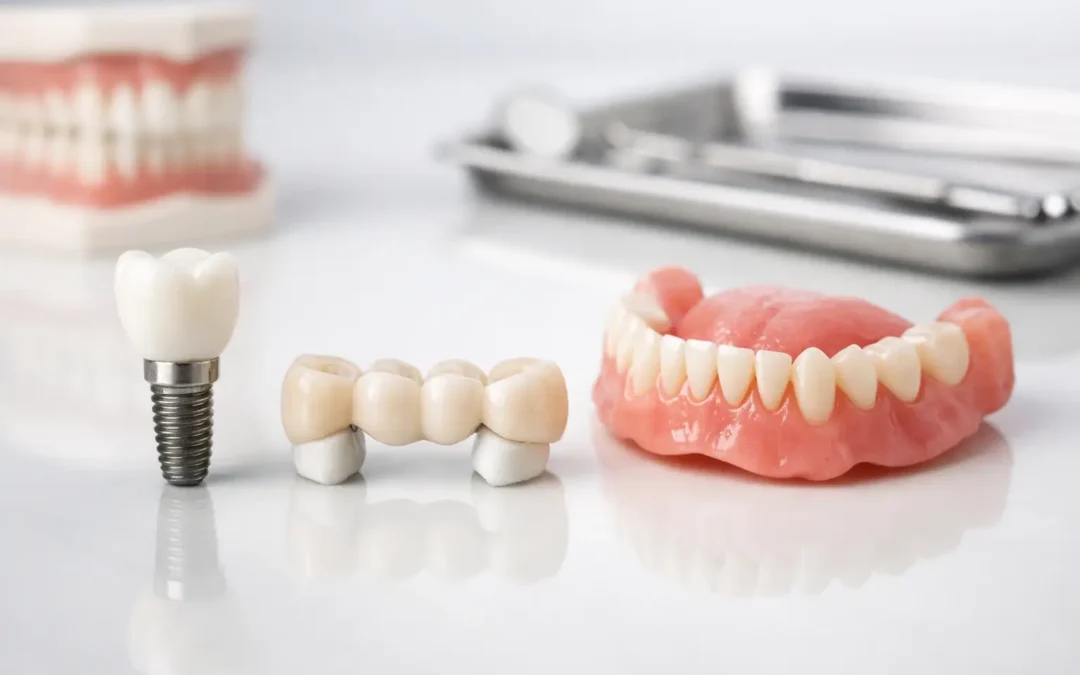
The best treatment is the one that restores function, supports your oral health, and fits your goals. In most cases, your dentist will talk through three main solutions: dental implants, dental bridges, and dentures. Each one has benefits, and each one works best in different situations.
If you are missing one tooth, an implant or bridge may be the most practical choice. If you are missing several teeth, implant-supported treatment or a partial denture may make more sense. If you have lost most or all of your teeth, full dentures or full-arch implant treatment may be the better path. The answer is not the same for everyone, which is why a personalized treatment plan is so important.
Dental implants: the closest thing to a natural tooth
For many adults, dental implants are considered the gold standard for tooth replacement. An implant replaces the root of the missing tooth with a small titanium post placed in the jawbone. Once it heals, a custom crown is attached on top.
What makes implants stand out is stability. They do not rely on neighboring teeth for support, and they help stimulate the jawbone in a way other options cannot. That matters because bone loss is one of the biggest long-term concerns after losing a tooth.
Implants also tend to feel more natural when you chew and speak. Patients often like that they are fixed in place and cared for much like natural teeth. From an appearance standpoint, a well-made implant crown can blend in beautifully with the rest of your smile.
Still, implants are not automatically the right answer for every patient. They usually cost more upfront than bridges or dentures, and treatment takes longer because healing time is part of the process. You also need enough healthy bone to support the implant, although bone grafting may be an option in some cases.
When implants make the most sense
Implants are often an excellent option if you want a long-term solution, have good general oral health, and want to avoid removable appliances. They are especially appealing for patients who want strong chewing ability and a replacement that looks and feels close to a natural tooth.
They can also be used beyond single teeth. Implant-supported bridges and full-arch systems such as All-on-4 can restore multiple missing teeth with excellent stability.
Dental bridges: a reliable fixed option
A dental bridge fills the gap left by one or more missing teeth by anchoring an artificial tooth to the natural teeth on either side. Bridges have been used successfully for many years and remain a dependable option for many patients.
One advantage of a bridge is speed. In many cases, treatment can be completed faster than implant therapy. Bridges are also fixed in place, so they do not come out the way a removable denture does.
For some patients, a bridge is a sensible choice when the neighboring teeth already need crowns or have large fillings. In that situation, using those teeth to support a bridge may fit the overall treatment plan well.
The trade-off is that a traditional bridge requires reshaping the adjacent teeth. Unlike an implant, it does not replace the tooth root, so it does not help preserve bone in the same way. Bridges can be very attractive and functional, but they do place extra workload on the supporting teeth.
Who may be a good candidate for a bridge
A bridge may be a strong option if you are missing one or a few teeth in a row, want a non-removable solution, and either are not a candidate for implants or prefer a quicker treatment process. It can also be helpful when cost is a major factor and you want something fixed rather than removable.
Dentures: practical, affordable, and more natural-looking than many expect
Dentures remain one of the most common ways to replace missing teeth, especially when several or all teeth are missing. Today’s dentures are often more comfortable and natural-looking than patients expect, particularly when they are carefully designed and adjusted.
Partial dentures replace several missing teeth while using the remaining natural teeth for support. Full dentures replace an entire upper arch, lower arch, or both. For patients who need broad tooth replacement and want a lower initial cost, dentures can offer a very practical solution.
Dentures can restore appearance and basic function, but they do come with limitations. Traditional removable dentures may shift during eating or speaking, and lower dentures in particular can feel less stable over time. Because they rest on the gums rather than replacing roots, they do not stop bone loss in the jaw.
That said, dentures are often the right starting point for many patients. In some cases, they can also be upgraded later to implant-supported dentures for better retention and comfort.
Implant-supported dentures and full-arch solutions
If you want more stability than a traditional denture can provide, implant-supported treatment is worth serious consideration. This approach uses implants to secure a denture or full arch of replacement teeth, helping reduce slipping and improving biting strength.
For patients missing most or all of their teeth, this can be life-changing. Everyday concerns like denture adhesive, movement while talking, or avoiding certain foods become much less of an issue. Many patients also appreciate the stronger, more confident feel.
Full-arch options such as All-on-4 are especially appealing for people who want a more secure, long-term replacement for an entire row of teeth. These treatments are more of an investment, but for the right patient, the improvement in comfort and quality of life can be significant.
How to choose among the best options for replacing teeth
The right choice usually comes down to five factors: how many teeth are missing, the health of your gums and jawbone, your budget, your timeline, and your goals for comfort and appearance.
If preserving bone and getting the most natural feel are top priorities, implants are often the leading option. If you want a fixed solution without surgery, a bridge may be a better fit. If you need to replace many teeth and want the most budget-conscious route, dentures may make the most sense.
There is also the question of lifestyle. A busy professional may value the security of implants. A patient looking for faster treatment may prefer a bridge. Someone replacing an entire arch may choose between a removable denture and an implant-supported alternative based on comfort, expectations, and finances.
This is where a consultation matters. A complete exam, digital imaging, and a conversation about your priorities can make the decision much clearer.
What patients often overlook
Cost gets a lot of attention, and understandably so. But the least expensive option upfront is not always the most cost-effective over time. A treatment that lasts longer, feels better, and protects oral health may offer stronger long-term value.
Patients also sometimes focus only on the visible gap. The real issue can be broader. Missing teeth can affect bite pressure, strain other teeth, and change facial support over time. Replacing teeth is about restoring balance, not just filling space.
At United Dental Specialists, this is why treatment planning looks at the full picture – not just the missing tooth, but your bite, bone support, smile goals, and daily comfort.
When to take the next step
If you have been putting off treatment, you are not alone. Many patients wait because they are unsure which option makes sense or worry the process will be too complicated. The good news is that modern dentistry offers more solutions than ever, and the first step is simply getting clear answers.
Whether you are missing one tooth or several, the best time to explore your options is before the problem starts affecting more of your oral health. A thoughtful evaluation can help you understand what is possible, what fits your budget, and what will serve you best in the long run.
The best tooth replacement is the one that helps you eat comfortably, smile confidently, and stop thinking about what is missing.

Recent Comments