
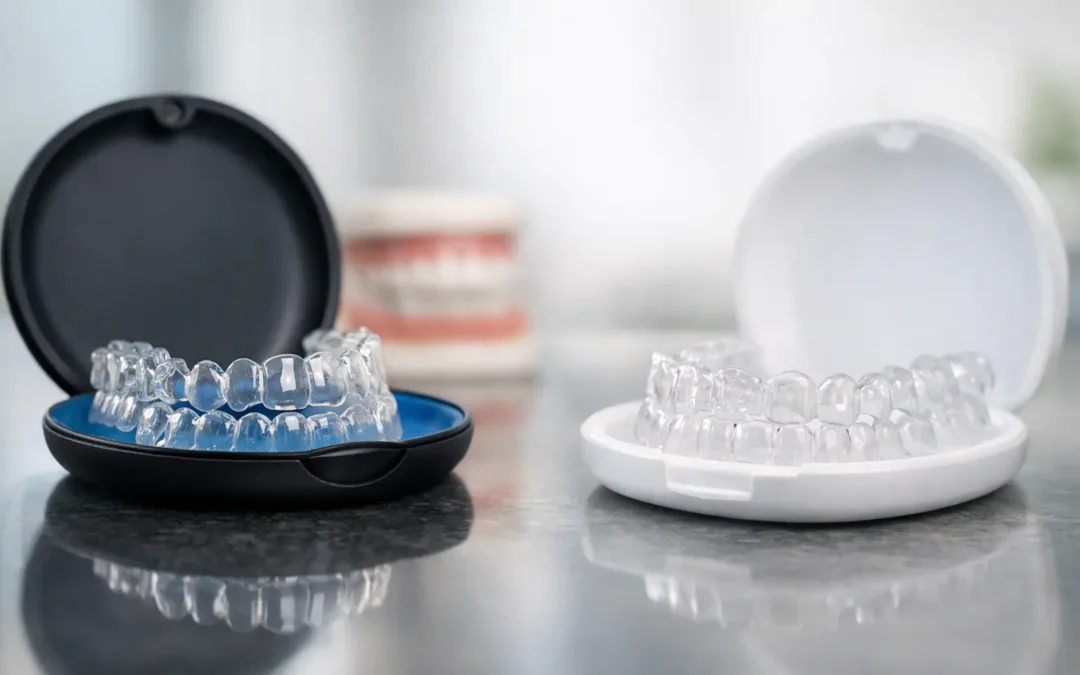
If you are weighing Invisalign vs clear aligners, you are probably not just choosing between trays. You are choosing how much clinical oversight you want, how complex your case may be, and how confident you want to feel throughout treatment.
That matters more than most people realize. Clear aligner treatment can look simple from the outside – a series of nearly invisible trays that gradually move teeth into place. But the quality of the planning behind those trays often makes the biggest difference in comfort, timing, and results.
Invisalign vs clear aligners: the basic difference
Invisalign is a specific brand of clear aligner treatment provided through licensed dental professionals. When people say “clear aligners,” they may mean Invisalign, but they may also mean other in-office systems or direct-to-consumer options.
So this is not always a brand-versus-brand comparison. In many cases, it is a doctor-supervised system versus a broader category that can vary quite a bit in quality, materials, monitoring, and treatment scope.
That distinction is important because not all clear aligners are built for the same kind of tooth movement. Some are best for mild crowding or spacing. Others can address more involved bite issues when treatment is carefully planned and monitored by an experienced dentist.
Why patients compare them in the first place
Most adults who ask about aligners want the same things. They want a straighter smile without metal braces. They want something discreet for work, social events, and photos. They also want a treatment plan that fits real life.
For many patients in Doral, Miami Lakes, and nearby communities, the decision usually comes down to four practical questions: Will it work for my smile? How long will it take? How visible will it be? And what will the full process actually feel like?
Those are the right questions to ask. A lower upfront price can look appealing, but if treatment is poorly planned or limited to cosmetic tooth movement without addressing bite concerns, it may not deliver the result you expected.
How Invisalign is different
Invisalign has become the most recognized name in clear aligner therapy for a reason. It combines custom aligners, digital treatment planning, and ongoing professional oversight. Patients are typically evaluated in person, their oral health is checked first, and treatment is built around the position of the teeth, gums, jaw alignment, and smile goals.
That in-person evaluation matters. Before moving teeth, a dentist needs to know whether there are cavities, gum disease, worn teeth, or bite issues that should be addressed first. Straightening teeth is not just a cosmetic decision. It works best when the foundation is healthy.
Invisalign can also be a better fit for cases that are more than minor. Depending on the situation, it may be used to treat crowding, spacing, overbites, underbites, crossbites, and relapse after previous orthodontic treatment. Not every case is ideal for aligners, but Invisalign tends to offer more flexibility than limited mail-order systems.
What “other clear aligners” can mean
The term clear aligners covers a wide range of options. Some are excellent, professionally managed systems offered by dental practices. Others are lower-cost, direct-to-consumer models with remote check-ins and little to no in-person supervision.
That range is why broad comparisons can get confusing. One type of clear aligner may offer detailed scans, attachments, refinements, and regular follow-up visits. Another may rely on impressions taken at home and aim only for small cosmetic changes.
Patients sometimes assume the trays themselves are the product. In reality, the trays are only one part of treatment. The diagnosis, planning, monitoring, and adjustments are just as important.
The biggest trade-off: convenience vs oversight
This is often where the real decision lives. Some alternatives to Invisalign are marketed as easier, faster, or less expensive because they reduce office visits. For the right patient with very mild alignment concerns, that may seem attractive.
But less supervision also means fewer opportunities to catch problems early. Teeth do not always move exactly as predicted. Trays may stop fitting well. Attachments may be needed. Bite changes may need correction. If those issues are missed, treatment can stall or create a result that looks straighter in the front but feels off when you bite down.
For patients who want reassurance, in-person oversight is often worth it. It gives you a clear treatment roadmap and a professional who can make changes if your teeth respond differently than expected.
Cost matters, but value matters more
There is no single price point for Invisalign or other clear aligners because cost depends on complexity, treatment length, and whether refinements are included. In general, direct-to-consumer aligners may advertise a lower fee, while Invisalign through a dental office often costs more.
That does not automatically make one better than the other. It means you need to compare what is actually included. Are records and scans part of the fee? Are follow-up visits included? What happens if the teeth do not track properly? Will you receive retainers? Is there a plan if your bite needs more than simple front-tooth movement?
A lower starting price can end up costing more if treatment has to be corrected later. On the other hand, some mild cases may do well with non-Invisalign options when they are still supervised by a qualified dentist. The key is not chasing the cheapest tray. It is choosing the option that fits your needs safely and predictably.
Comfort, appearance, and day-to-day life
For most patients, both Invisalign and other high-quality clear aligners are more comfortable and less noticeable than traditional braces. The trays are removable, which makes eating easier and helps you brush and floss more normally.
Still, aligners require commitment. They need to be worn about 20 to 22 hours a day to stay on track. If you remove them often, forget to put them back in, or switch trays too quickly, treatment can drag out.
Speech changes are usually minor and temporary, but some patients notice a slight lisp at first. You may also feel pressure when switching to a new set of trays. That pressure is normal – it means the aligners are working.
Who may be a good candidate for Invisalign
Invisalign is often a strong option for adults and teens who want a discreet treatment with professional guidance. It can work well for patients with mild to moderate crowding, spacing, or bite concerns, and for adults whose teeth have shifted after braces years ago.
It may be especially appealing if you care about smile aesthetics but also want a dentist monitoring your oral health throughout the process. If you have dental restorations, gum concerns, or a more involved bite issue, that supervision becomes even more valuable.
When another clear aligner option might make sense
A non-Invisalign aligner system may still be a good fit if it is provided through a dental office and your case is straightforward. Some patients simply want a modest cosmetic improvement and do not need the full capabilities of a premium aligner system.
That said, a proper exam should still come first. If no one has checked your bite, X-rays, gum health, and overall dental condition, you do not yet have enough information to choose wisely.
Questions worth asking before you start
Before beginning any aligner treatment, ask who is planning your case, how progress will be monitored, and whether your treatment goal is cosmetic alignment alone or a healthier bite as well. Ask what happens if your teeth do not move as expected. Ask whether refinements are included. Ask how often you will be seen.
These questions help separate polished marketing from genuine care. Good treatment should feel clear from the beginning, not vague.
The right choice depends on your smile, not the ad
There is no universal winner in the Invisalign vs clear aligners conversation because every smile starts in a different place. Some patients need a highly customized, doctor-led plan. Others may qualify for a simpler option. What matters is getting an honest evaluation and a treatment recommendation based on your teeth, your bite, and your goals.
At United Dental Specialists, that means looking at the whole picture before recommending any cosmetic treatment. Straight teeth should also support comfort, function, and long-term oral health.
If you are thinking about aligners, the best next step is not picking a brand from an ad. It is sitting down with a dental team that will explain your options clearly, answer your questions directly, and help you choose a plan you can feel good about every time you smile.

Recent Comments