
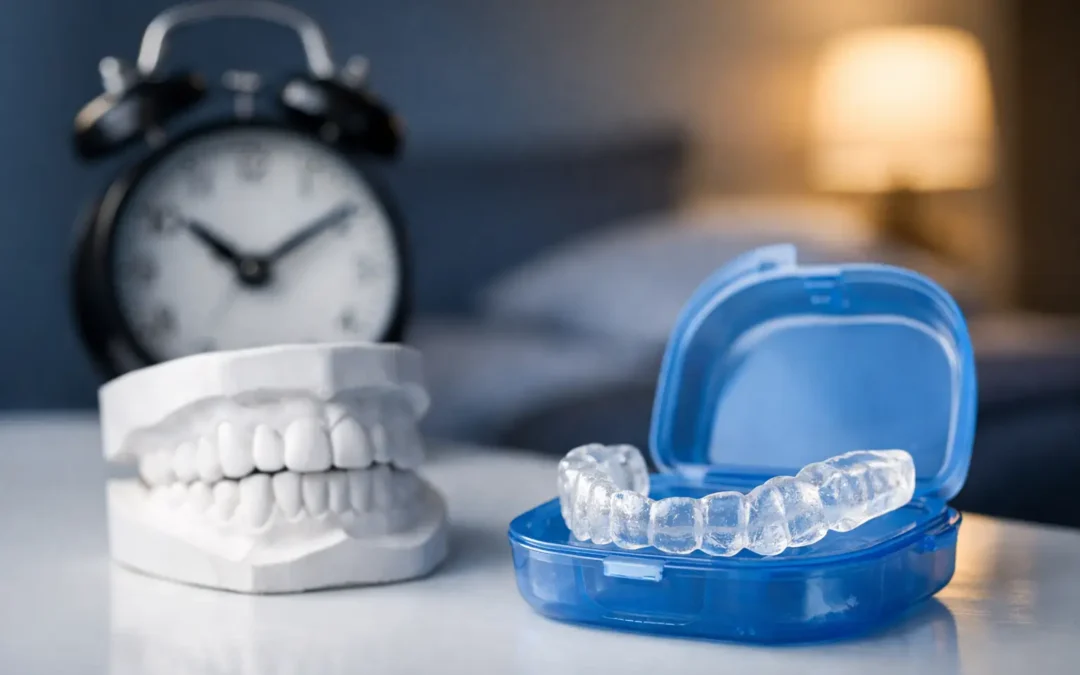
Waking up with a sore jaw, a dull headache, or teeth that feel unusually sensitive can be more than an uncomfortable start to the day. A night guard for teeth grinding creates a protective barrier between your upper and lower teeth, helping reduce the damage caused by clenching and grinding while you sleep.
Many people grind their teeth without realizing it. A partner may hear the sound at night, but others first notice chipped teeth, worn edges, or tension around the jaw. The right treatment depends on what is causing the grinding, how much damage has already occurred, and how your bite functions.
What Teeth Grinding Can Do to Your Smile
Teeth grinding, also called bruxism, places significant pressure on teeth and jaw joints. The force from nighttime clenching can be much stronger than normal chewing. Over time, that pressure can wear down enamel, flatten the biting surfaces of teeth, loosen or crack restorations, and make teeth more vulnerable to sensitivity.
Grinding can also affect more than your teeth. Some patients experience tight facial muscles, morning headaches, jaw soreness, neck discomfort, or clicking near the jaw joint. If you already have crowns, veneers, bonding, or dental implants, protecting your bite becomes especially important. These restorations are designed for everyday function, but repeated grinding may shorten their lifespan or lead to repairs.
Stress can contribute to bruxism, but it is not the only reason it happens. Bite imbalance, certain medications, sleep disturbances, alcohol use, and caffeine may play a role. That is why a dental evaluation is valuable. A guard can protect your teeth, but your dentist should also look for the reason you are putting so much pressure on them.
How a Night Guard for Teeth Grinding Works
A night guard fits over the teeth and cushions the contact between the upper and lower arches. Rather than allowing teeth to scrape directly against each other, the guard absorbs and distributes some of the pressure. This can reduce enamel wear and help relieve strain on the jaw muscles.
A guard does not necessarily stop every clenching motion. Its primary job is protection. Patients often notice that their jaw feels less fatigued in the morning, and their dentist can monitor whether tooth wear has stabilized over time.
The material and design matter. A thin, flexible guard may be appropriate for mild grinding, while a more durable appliance may be recommended for stronger clenching or more advanced wear. The best choice is not always the thickest guard. It is the one that fits securely, supports a balanced bite, and feels comfortable enough to wear consistently.
Custom Guards Versus Store-Bought Options
Over-the-counter guards can seem convenient, particularly if you need a short-term option quickly. Boil-and-bite products are widely available and may offer limited protection for some people. However, they are not made from an impression of your teeth, so they can feel bulky, shift during sleep, or create uneven contact when you bite down.
A custom night guard is made specifically for your mouth. Your dentist takes digital scans or impressions and designs the appliance around your teeth, bite, and level of grinding. The result is typically more comfortable, more durable, and less likely to interfere with normal jaw positioning.
For patients with significant tooth wear, jaw symptoms, dental restorations, or an uneven bite, a custom appliance is usually the safer long-term choice. It also gives your dental team a chance to identify cracks, damaged fillings, gum recession, or other concerns that a store-bought product cannot address.
Signs You May Benefit From a Night Guard
You do not need to hear yourself grinding to benefit from an evaluation. Dentists often spot signs of bruxism during routine exams before patients connect their symptoms to nighttime clenching.
Consider scheduling a visit if you notice several of the following:
- Jaw soreness, facial tension, or headaches when you wake up
- Teeth that look shorter, flatter, or more translucent at the edges
- New sensitivity to cold foods or drinks
- Chipped teeth, cracked fillings, or repeated damage to crowns
- A partner who hears grinding or clicking sounds while you sleep
- Tired jaw muscles, especially after stressful periods
Grinding can be gradual, so it is easy to dismiss small changes. But enamel does not grow back once it has worn away. Addressing the problem early can help preserve more of your natural tooth structure and avoid more extensive restorative treatment later.
Getting the Right Fit Matters
A well-made guard should stay in place without feeling tight, painful, or loose. It should allow your teeth to meet evenly against the appliance. If a guard causes increased pain, changes how your teeth come together, or feels difficult to wear, do not try to adjust it yourself. Bring it to your dentist for an evaluation.
At your appointment, the dentist will examine your teeth, gums, bite, and jaw movement. They may ask about headaches, sleep quality, stress, medications, and any history of jaw joint problems. If a custom guard is recommended, digital scans or impressions are used to create an appliance tailored to your smile.
Your dentist may also recommend treating related concerns. For example, a cracked tooth may need a crown before it worsens, while an uneven bite or missing tooth may need restorative care to improve function. In some cases, persistent grinding symptoms can point to a sleep-related issue that deserves further evaluation with your physician or sleep specialist.
Caring for Your Night Guard
A night guard works best when it becomes part of your bedtime routine. Brush and floss your teeth first, then place the clean guard as directed. In the morning, rinse it with cool water and gently brush it with a soft toothbrush. Hot water can warp many guard materials, so avoid soaking it in heat or putting it in the dishwasher.
Store the guard in its ventilated case when it is not in use. This protects it from damage and allows it to dry properly. Bring it to regular dental visits so your dentist can inspect the fit and check for wear. Heavy grinders may wear through a guard over time, and a damaged appliance should be replaced rather than used indefinitely.
It is also helpful to keep the case out of reach of pets. Dogs are especially drawn to the scent and texture of dental appliances, and a chewed guard usually cannot be repaired.
Can a Guard Help With TMJ Symptoms?
The term TMJ is often used to describe pain or dysfunction involving the jaw joint and surrounding muscles. A night guard may help some patients whose symptoms are related to clenching, but it is not a universal fix for every type of jaw pain.
Jaw discomfort can have several causes, including muscle tension, bite issues, joint inflammation, arthritis, injury, or habits such as chewing gum frequently. For that reason, treatment should be based on an examination rather than an assumption. Your dentist may recommend a guard along with practical steps such as reducing gum chewing, using gentle heat for muscle soreness, and avoiding hard foods during a flare-up.
If you have locking of the jaw, severe pain, swelling, trouble opening your mouth, or a sudden change in your bite, contact a dental professional promptly. Those symptoms deserve a closer assessment.
Protecting the Dental Work You Have Invested In
Patients often think of a guard as something only for natural teeth. In reality, it can be especially useful after cosmetic or restorative treatment. Veneers, crowns, bridges, and implant-supported restorations can improve appearance and function, but nighttime grinding may place excess force on them.
A properly designed guard helps protect both your dental work and the teeth supporting it. It is a straightforward way to support the long-term results of treatment and reduce the chance of waking up to a chipped restoration or sudden tooth pain.
If you are noticing signs of grinding, do not wait for a broken tooth to make it urgent. A personalized evaluation at United Dental Specialists can determine whether a custom guard fits your needs and help you protect the healthy, confident smile you work hard to maintain.

Recent Comments