
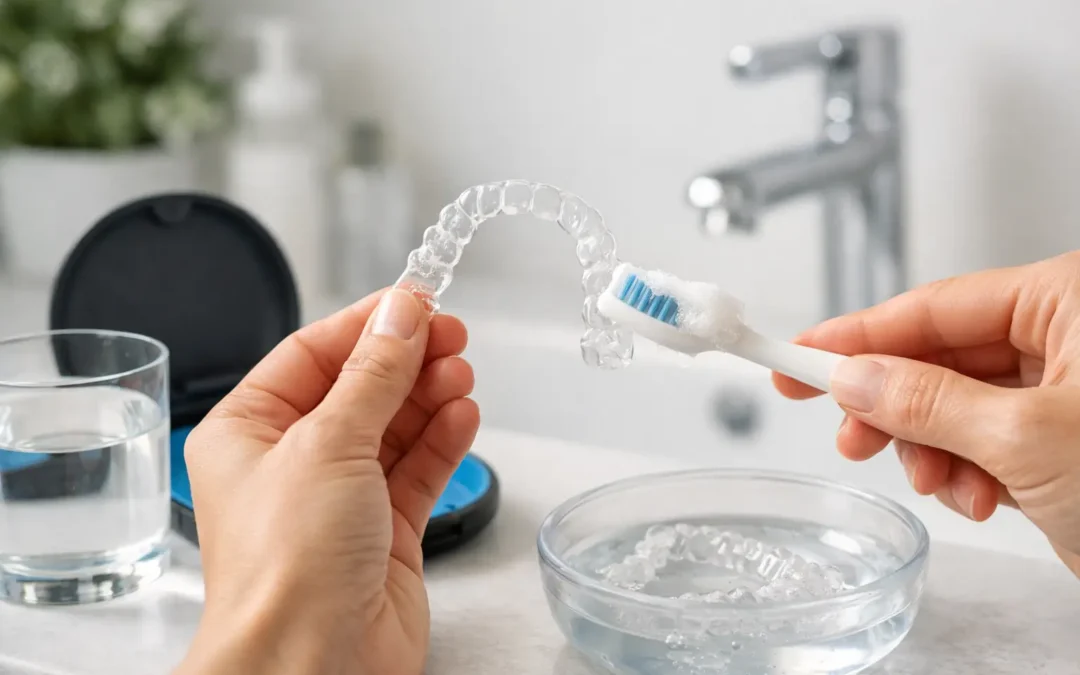
A clear aligner can look nearly invisible, but it is in contact with your teeth and gums for most of the day. Coffee residue, plaque, saliva, and bacteria can quickly leave trays looking cloudy or smelling unpleasant. Knowing how to care for Invisalign trays helps keep your treatment discreet, comfortable, and moving toward the healthy, confident smile you want.
The routine is simple, but consistency matters. Your aligners should be clean every time you place them back in your mouth, and your teeth should be clean before they go in. A few minutes of care each day can help prevent stains, odors, and avoidable treatment setbacks.
How to Care for Invisalign Trays at Home
Start by rinsing your trays with cool or lukewarm water whenever you remove them. This helps wash away saliva and loose debris before it can dry onto the plastic. Do not use hot water. Heat can warp the aligner material, changing how the trays fit and potentially affecting the pressure they place on your teeth.
Clean your aligners at least once a day, ideally as part of your morning or evening routine. Use a soft-bristled toothbrush reserved for your trays and a small amount of clear, gentle liquid soap or a cleaner recommended by your dental team. Brush the inside and outside surfaces lightly, then rinse thoroughly before wearing them again.
A soft brush is effective because it reaches the small grooves and edges where buildup tends to collect. The goal is not to scrub aggressively. Invisalign trays are durable enough for daily wear, but harsh brushing can create tiny scratches that make them look dull and give bacteria more places to cling.
For a deeper clean, use aligner-cleaning crystals, tablets, or another product your dentist approves. Soak the trays as directed, then brush and rinse them before putting them back in. This can be especially helpful if you notice a film, odor, or discoloration that routine cleaning does not remove.
Keep Toothpaste and Heat Away From Aligners
Toothpaste may seem like the obvious choice, but most toothpastes are too abrasive for clear aligners. Over time, they can scratch the plastic and make your trays more noticeable. Colored toothpaste can also leave residue in the aligners, particularly around the edges.
Avoid mouthwash unless your dentist specifically tells you it is appropriate for your trays. Many mouthwashes contain dyes or alcohol that can discolor or dry the material. Likewise, do not clean aligners with bleach, denture cleaner, scented soap, or household cleaning products. These products can be too harsh and may leave behind substances you do not want against your teeth and gums.
Hot water deserves another reminder. It can be tempting to use warm water to loosen buildup, but a warped tray may no longer fit as designed. If an aligner feels suddenly loose, distorted, or uncomfortable after cleaning, contact your dental office before moving ahead to the next set.
Remove Trays for Every Meal and Drink
Invisalign treatment typically requires wearing aligners for 20 to 22 hours each day, so it is understandable to want to leave them in whenever possible. However, trays should come out before meals and snacks. Food can get trapped between the aligner and your teeth, increasing the chance of staining, plaque buildup, and cavities.
Water is generally the only drink that is safe to have while wearing your trays. Coffee, tea, red wine, soda, sports drinks, and colored juices can stain aligners and teeth. Sugary or acidic drinks are an even bigger concern because they can sit against tooth surfaces under the tray, increasing the risk of enamel damage.
If you have coffee or another beverage with your aligners out, brush your teeth before replacing them whenever possible. If brushing is not practical, rinse your mouth well with water and clean your teeth as soon as you can. Putting trays back over food particles or sugary residue can lead to bad breath and tooth decay during treatment.
Store Your Invisalign Trays Safely
The most common way patients lose aligners is surprisingly simple: they wrap them in a napkin during a meal and accidentally throw them away. Always place trays in their protective case when they are not in your mouth. Keep the case with you at work, school, restaurants, and while traveling.
Leaving aligners loose on a table, in a pocket, or in a car exposes them to damage, dirt, and heat. Pets are also known for chewing aligners, so keep the case closed and out of reach. A replacement tray may be needed if your aligner is lost or broken, and that can affect your schedule depending on where you are in treatment.
It is also wise to keep your previous set of trays in the labeled bag provided by your dental office. If your current aligner breaks or goes missing, your dentist may advise you to wear the prior set temporarily. Do not make that decision on your own, though. Your treatment plan is personalized, and the right next step depends on how long you have worn the current trays.
Build a Routine That Protects Your Teeth, Too
Clear aligners work best when oral hygiene is strong. Brush at least twice daily, floss every day, and pay special attention after meals before replacing your trays. Because aligners cover the teeth closely, they can hold bacteria against enamel if food debris is left behind.
Consider carrying a small care kit with a travel toothbrush, toothpaste, floss, aligner case, and cleaning product approved by your dentist. For busy professionals and parents on the go, this makes it much easier to stay consistent between meetings, errands, and family activities.
You should also follow the wear time and change schedule given by your Invisalign provider. Wearing trays inconsistently, switching sets early, or skipping ahead can interfere with tooth movement. If an aligner is unusually painful, will not seat fully, cracks, or repeatedly pops off, call your dental team. Do not try to reshape it yourself.
What to Do If Trays Become Cloudy or Smell Bad
Cloudiness and odor usually point to buildup, not a permanent problem. First, give the aligners a proper soak with a dentist-approved cleaner, gently brush them with clear liquid soap, and rinse them thoroughly. Then review your habits. Are you drinking anything besides water with trays in? Are you brushing before reinserting them? Are the trays spending too much time outside their case?
If the problem persists, bring the aligners to your appointment. Your dentist can check the fit, look for damage, and recommend a safe cleaning approach. Never attempt to mask odor with perfume, mouthwash, or scented products. Clean trays should have little to no smell.
When to Contact Your Invisalign Provider
Reach out promptly if you lose an aligner, it becomes cracked, it no longer fits, or you develop persistent gum irritation. Early guidance can prevent a small issue from turning into a delay. If you experience tooth pain that feels severe or unusual, swelling, or signs of a dental emergency, contact your dental office right away.
At United Dental Specialists, Invisalign care is designed around your smile goals, daily routine, and oral health. Keeping your trays clean and wearing them as directed protects the investment you are making in a straighter, healthier-looking smile. If you have questions about your aligners or need help with a damaged or missing tray, schedule an appointment so your treatment can stay on track.

Recent Comments