
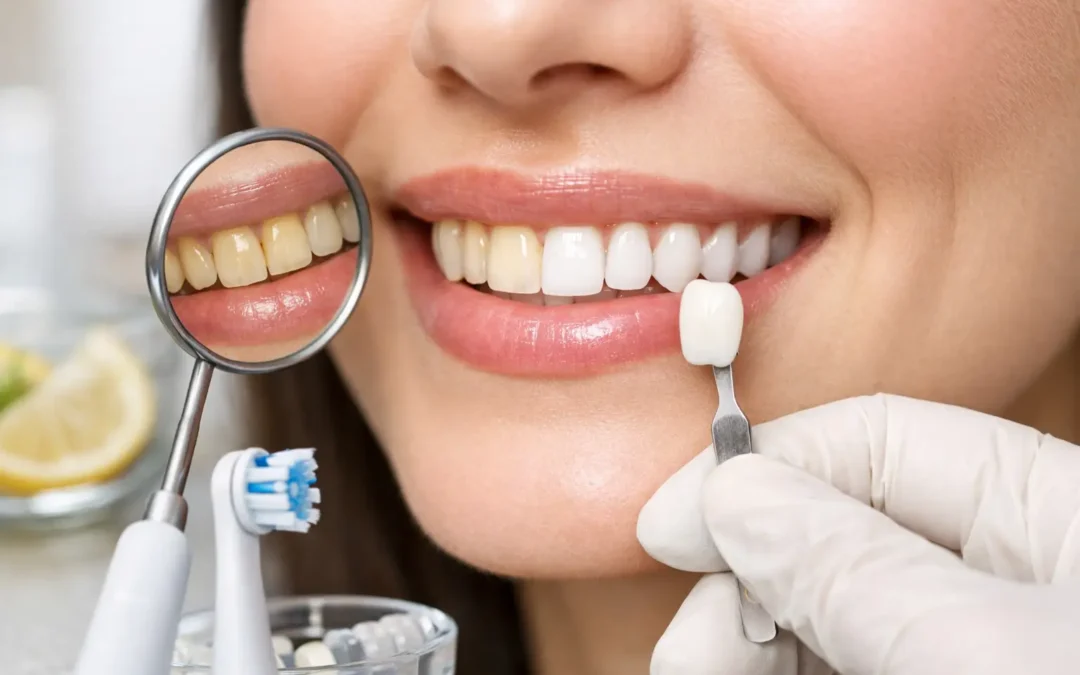
Coffee on the commute, red wine at dinner, and years of everyday eating can slowly change the color of your teeth. If you are wondering how to fix stained teeth, the best answer depends on what caused the discoloration, how deep it is, and the condition of your enamel. The right treatment can make a meaningful difference, but not every stain should be treated the same way.
A brighter smile should still be a healthy smile. Before reaching for a whitening strip or a viral home remedy, it helps to understand which options work, which can cause sensitivity or enamel damage, and when professional care offers the most predictable result.
Why Teeth Become Stained
Some stains sit on the outer surface of the tooth. Others develop within the tooth structure itself. This distinction matters because surface stains often respond well to cleaning and whitening, while deeper discoloration may need a cosmetic solution such as bonding or veneers.
Surface stains, also called extrinsic stains, are commonly caused by coffee, tea, red wine, dark sodas, berries, tomato-based sauces, and tobacco use. These pigments can collect in the natural microscopic texture of enamel, especially when plaque and tartar are present. Even a healthy diet can include foods and drinks that gradually affect tooth color.
Intrinsic stains come from inside the tooth. They may be related to aging, certain medications, trauma to a tooth, developmental changes, or a root canal. As enamel naturally becomes thinner over time, the warmer-colored dentin beneath it becomes more visible. A single tooth that suddenly turns gray, brown, or darker than the surrounding teeth should be examined promptly, particularly if there is a history of injury or pain.
How to Fix Stained Teeth Based on the Cause
The most effective treatment begins with an exam and professional cleaning. Many patients are surprised by how much brighter their smile looks after plaque, tartar, and surface buildup are removed. A cleaning does not change the natural shade of teeth, but it can remove stains that whitening products cannot reach through hardened deposits.
Start With a Professional Cleaning
Tartar cannot be brushed away at home. If it is contributing to dullness or staining near the gumline, a dental hygienist can remove it safely without damaging enamel. This also gives your dental team a clear view of cavities, gum inflammation, worn enamel, and existing dental work that may affect your whitening plan.
A cleaning is especially valuable if your teeth look yellow because of buildup, you have not had a recent checkup, or your gums bleed when you brush or floss. Whitening over active gum disease, untreated decay, or exposed roots can lead to unnecessary discomfort.
Consider Professional Teeth Whitening
For many adults with generalized yellowing or food-and-drink stains, professional whitening is the fastest and most reliable option. Professional systems use carefully selected whitening ingredients and application methods to lift stains while helping minimize irritation to the gums.
The result is usually more noticeable and more even than over-the-counter products. Your dentist can also advise whether in-office whitening, custom take-home trays, or a combination approach makes sense for your goals, timeline, and sensitivity level. Someone preparing for a wedding, job interview, or major event may prefer an in-office option, while custom trays can offer gradual whitening on a more flexible schedule.
Whitening is not permanent because teeth can pick up new stains over time. Many patients maintain their results with good oral hygiene, thoughtful food and drink habits, and occasional touch-up treatment recommended by their dentist.
Know When Whitening Will Not Solve the Problem
Whitening products only change natural tooth enamel. They do not whiten crowns, veneers, bonding, fillings, or dental implants. If a front crown has become darker or no longer matches the shade of your surrounding teeth, replacement may be the better cosmetic option.
Deep gray, brown, or uneven stains may also respond poorly to bleaching. In these cases, cosmetic bonding or porcelain veneers can cover discoloration while improving shape, symmetry, and minor wear. Veneers are a more significant investment than whitening, and they require careful planning, but they can be an excellent option for patients who want a longer-lasting improvement in both color and smile design.
For a tooth that has darkened after a root canal, your dentist may recommend internal whitening or a restorative solution based on the tooth’s strength and appearance. This is not a situation for a store-bought whitening kit.
At-Home Habits That Help Prevent New Stains
At-home care will not produce the same change as professional whitening, but it plays a major role in preventing stains from returning. Brush twice daily with a soft-bristled toothbrush and fluoride toothpaste, and clean between your teeth every day with floss or another interdental cleaner. Removing plaque regularly gives pigments fewer places to cling.
After coffee, tea, wine, or dark-colored foods, rinse with water when you can. This simple habit reduces the time staining compounds remain on your enamel. Drinking iced coffee or dark beverages through a straw may also reduce contact with the front teeth, although it is not a substitute for brushing and regular dental visits.
Wait about 30 minutes to brush after acidic drinks such as soda, citrus beverages, or sports drinks. Acid temporarily softens enamel, and brushing immediately can contribute to wear. Water, sugar-free gum, and time allow saliva to help restore a healthier mouth environment first.
If you use tobacco, quitting can improve both the appearance of your teeth and the health of your gums. Tobacco stains are often stubborn, and continued use can quickly darken teeth after whitening.
Be Careful With DIY Whitening Trends
Not every product marketed as natural or fast-working is safe for your smile. Activated charcoal, abrasive baking soda routines, lemon juice, vinegar, and other acidic home remedies can wear down enamel. Once enamel is thinned, teeth may appear more yellow because more dentin shows through. Enamel does not grow back.
Over-the-counter whitening strips and toothpastes can help with mild staining for some people, but they have limits. Whitening toothpastes primarily remove surface stains through polishing ingredients. Used too aggressively, highly abrasive products may increase sensitivity or contribute to enamel wear.
Whitening strips can lighten teeth, but generic trays and strips do not account for gum recession, existing restorations, cavities, or uneven tooth color. If whitening causes sharp pain, persistent sensitivity, or gum irritation, stop using the product and schedule a dental evaluation.
How to Keep Your Smile Bright After Treatment
A bright smile does not require giving up every food or drink you enjoy. It calls for a realistic maintenance routine. Continue professional cleanings on the schedule recommended for your oral health, brush and floss consistently, and address small concerns before they become more complicated.
If you have crowns, veneers, or bonding, use non-abrasive products and ask your dental team which toothpaste is appropriate. The goal is to protect the polish and avoid creating a mismatch between natural teeth and restorations. Patients with frequent sensitivity may also benefit from a desensitizing toothpaste before and after whitening treatment.
Regular exams matter because color changes can occasionally signal more than a cosmetic concern. A dark tooth, a new spot that does not brush away, or discoloration combined with pain, swelling, or sensitivity deserves prompt attention.
Get a Personalized Plan for a Brighter Smile
There is no one-size-fits-all answer to stained teeth. The safest path is to identify whether the discoloration is from surface buildup, natural aging, an old restoration, or a deeper issue within a tooth. From there, treatment can be tailored to protect your oral health while improving the appearance of your smile.
At United Dental Specialists, a personalized cosmetic consultation can help you compare professional whitening, bonding, veneers, and restorative options with confidence. A healthy, brighter smile starts with a plan that fits your teeth, your goals, and your comfort level.

Recent Comments