
A front tooth with a large crack needs a different solution than a healthy tooth with a stain that whitening cannot remove. That is why the dental crowns vs veneers decision should never be based on appearance alone. Both treatments can create a more confident smile, but they solve different problems and require different levels of tooth preparation.
At United Dental Specialists, treatment planning starts with what your tooth needs to stay healthy and functional, then considers the cosmetic result you want. The right choice may be a crown, a veneer, or sometimes a more conservative treatment altogether.
Dental Crowns vs Veneers: The Main Difference
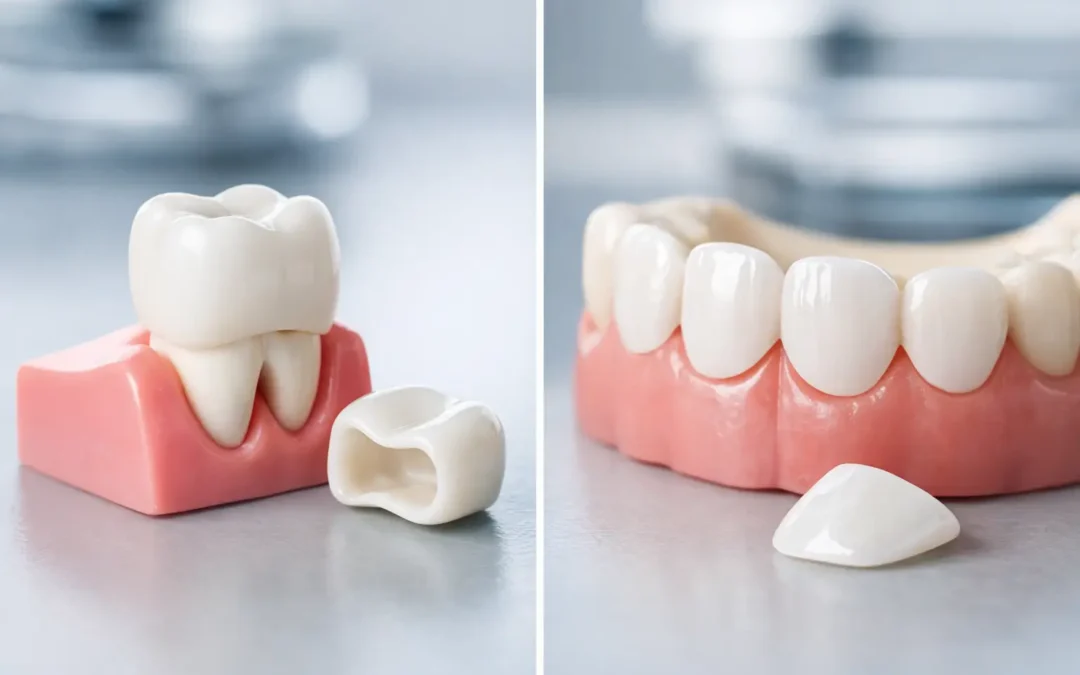
A dental crown covers the entire visible portion of a tooth, much like a fitted cap. It is designed to restore a tooth that has been weakened by a large cavity, fracture, root canal treatment, extensive old filling, or significant wear. A crown can improve the look of a tooth, but its primary job is to protect what remains of the natural tooth and restore biting strength.
A veneer is a thin custom shell, typically made from porcelain, bonded to the front surface of a tooth. Veneers are usually chosen when the tooth is structurally healthy but its appearance is a concern. They can address discoloration, small chips, uneven edges, minor spacing, worn enamel, or teeth that look slightly too short or misshapen.
Think of it this way: a crown is often the better answer when a tooth needs reinforcement from all sides. A veneer is often the better answer when the tooth is healthy enough but needs a visible cosmetic improvement.
When a Crown Is the Better Choice
Crowns are restorative treatments first. If biting pressure could cause a weakened tooth to crack further, a veneer would not provide enough support. A crown surrounds the tooth and distributes biting forces more evenly, helping protect it during everyday chewing.
Your dentist may recommend a crown if you have a tooth with a large filling that has left little natural structure, a deep fracture, severe decay, or a tooth that has been treated with a root canal. Crowns are also commonly used to complete a dental implant restoration. In that case, the crown replaces the visible part of a missing tooth and is attached to the implant beneath the gumline.
For patients who grind or clench their teeth, crowns may also be a more dependable choice for teeth with significant damage. Grinding can place heavy pressure on any restoration. A custom night guard may still be recommended to protect the crown, your surrounding teeth, and your jaw joints.
Modern crowns can look remarkably natural. Porcelain and ceramic options are selected to match the shade, shape, and translucency of nearby teeth, especially when restoring a tooth near the front of the smile. Still, crown treatment generally requires more reshaping of the natural tooth than veneer treatment because the restoration must fit around the full tooth.
When Veneers Are the Better Choice
Veneers are designed for healthy teeth that need a cosmetic refresh. They are especially useful when whitening alone will not give you the result you want. Certain stains caused by medications, trauma, aging, or natural tooth color can remain visible even after professional whitening. Porcelain veneers can create a brighter, more uniform appearance while resisting stains better than natural enamel.
They can also improve symmetry across the smile. A veneer may make a narrow tooth appear wider, balance a slightly uneven gumline visually, close small spaces, or smooth the appearance of chipped edges. For a smile makeover, veneers are often planned across several visible teeth so the final result looks balanced rather than overly uniform.
Because veneers cover the front and edge of a tooth rather than the whole tooth, they generally preserve more natural tooth structure than crowns. However, many veneers still require the removal of a small amount of enamel to create room for a natural-looking result. This means veneers are not simply a temporary cosmetic cover that can be removed later without consequences. Once enamel is altered, the tooth will usually need a veneer or another restoration moving forward.
Veneers are not ideal for every cosmetic concern. If a tooth has active decay, a large fracture, poor enamel quality, or a large existing filling, it may need a crown or another restorative treatment first. Healthy gums are also essential. Cosmetic dentistry looks its best when the foundation of the smile is healthy.
Appearance, Durability, and Daily Function
Both crowns and porcelain veneers can be color-matched and custom shaped for a natural result. The difference is how they perform and what they are designed to withstand. A well-made crown is typically built to handle stronger chewing forces, particularly on back teeth. Veneers are durable but thinner, making them better suited to cosmetic changes on front teeth when the underlying tooth is stable.
Neither treatment is indestructible. Crowns and veneers can chip, loosen, or fracture, particularly when patients bite ice, chew pens, open packages with their teeth, or grind their teeth at night. Good home care and regular dental visits protect the investment in either option.
Brushing twice daily with a nonabrasive toothpaste, flossing around each tooth, and seeing your dentist for routine exams and cleanings remain essential. While porcelain itself cannot decay, the natural tooth edge and gumline around a restoration can still develop cavities or inflammation. Careful hygiene helps prevent problems that may shorten the life of a crown or veneer.
What Does the Treatment Process Look Like?
The process starts with a consultation and examination. Your dentist will review your goals, check the health of your teeth and gums, evaluate your bite, and take any necessary X-rays or digital images. This step matters because a cosmetic concern can sometimes reveal a functional issue, such as tooth grinding, decay, or an uneven bite.
For a crown, the tooth is carefully reshaped to make room for the restoration. If decay or damaged material is present, it is removed first. An impression or digital scan is taken, and a temporary crown may be placed while a dental lab creates the final restoration. At the final visit, the crown is checked for fit, color, comfort, and bite before being bonded or cemented into place.
For veneers, the dentist plans the size, shape, and shade based on your facial features, bite, and smile goals. A small amount of enamel may be refined, then a scan or impression is used to create your custom veneers. Temporary veneers may be used in some cases. Once the final veneers are ready, your dentist confirms the fit and appearance before bonding them to the teeth.
The exact timeline varies depending on the number of teeth being treated, your oral health needs, and the type of restoration selected. If you need gum care, fillings, or bite treatment first, addressing those concerns creates a stronger foundation for long-lasting cosmetic results.
Cost Considerations Without the Guesswork
Cost is a practical part of the conversation, and it depends on the tooth being treated, materials used, the complexity of your case, and whether additional dental care is needed. A crown may be partially covered by dental insurance when it is medically necessary to restore a damaged tooth. Veneers are commonly considered elective cosmetic treatment, so insurance coverage is less common.
The lowest upfront price is not always the best value. A veneer placed on a tooth that really needs structural support can lead to further damage and additional treatment. On the other hand, placing a crown on a healthy tooth solely to change its appearance may remove more natural structure than necessary. A personalized recommendation helps you invest in the treatment that fits both your oral health and your goals.
How to Choose Between a Crown and a Veneer
The best choice comes down to one central question: is the tooth mainly unhealthy or weakened, or is it healthy but cosmetically disappointing? A crown is usually recommended when strength, protection, and restoration are the priorities. A veneer is often recommended when you want to improve the visible front surface of a stable, healthy tooth.
Your bite also matters. If you clench, grind, or have teeth that meet unevenly, your dentist may recommend protective measures or a different treatment plan. The most beautiful result should also feel comfortable when you speak, eat, and smile.
If you are considering crowns or veneers, schedule a cosmetic consultation and bring your questions, photos, and goals. A clear exam and personalized plan can help you move forward with a smile that looks natural, feels comfortable, and is built to support your long-term oral health.

Recent Comments