by Dr. David Bennett | Apr 25, 2026 | Uncategorized |
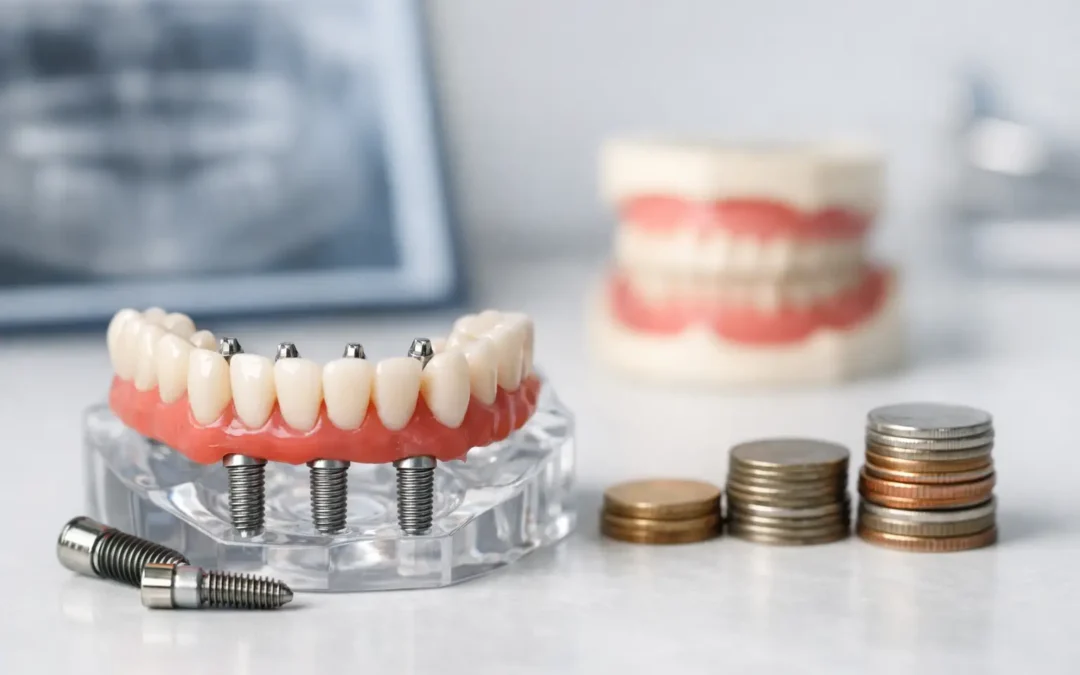
If you have been searching for answers about all on 4 top arch cost, you are probably not casually browsing. In most cases, you are trying to solve a real problem – missing teeth, failing dental work, a denture that never feels secure, or a smile that no longer feels like yours. Cost matters, but so does getting a solution that actually works, feels stable, and looks natural.
All-on-4 for the upper arch can be life-changing for the right patient. It can restore chewing, improve speech, support facial structure, and replace a full row of missing or failing teeth with a fixed implant-supported restoration. But pricing can vary more than most people expect, and that is where confusion starts.
What affects all on 4 top arch cost?
The short answer is that the cost depends on much more than four implants. When a patient hears All-on-4, it is easy to assume the price is mostly about placing four implant posts. In reality, the final number reflects the entire treatment process, from planning to surgery to the custom teeth that sit on top.
One major factor is your starting point. Some patients already have enough healthy bone in the upper jaw for implant placement, while others need preparatory treatment. The upper arch often presents more complexity than the lower arch because bone density is usually softer in the maxilla. That can affect surgical approach, implant design, and whether additional procedures are needed.
The restoration itself also plays a large role. A temporary fixed prosthesis and a final long-term prosthesis are not the same thing. Materials, aesthetics, durability, and how customized the smile is can all shift the investment. Patients who want highly lifelike teeth, improved gum appearance, and refined bite design may see a different fee than someone receiving a more basic restorative approach.
The provider matters too. Experience, technology, in-house capabilities, and whether your care is coordinated under one roof can influence both price and value. A well-planned case may cost more upfront than a bargain option, but that does not mean it is overpriced. It may simply reflect stronger diagnostics, better materials, and more precise execution.
What is usually included in the price?
This is one of the most important questions to ask during a consultation. Two treatment plans can look similar at first glance and be priced very differently because they do not include the same things.
In many cases, all on 4 top arch cost includes your consultation, digital imaging, treatment planning, implant surgery, and a temporary fixed set of teeth. It may also include extractions if remaining upper teeth are being removed at the time of treatment. After healing, the final prosthesis is typically delivered as a separate phase, though some offices bundle that into one total fee.
What patients often miss is that not every quote includes sedation, bone reduction, grafting, replacement temporaries, follow-up visits, or the final premium restoration. That is why a lower number is not always the better deal. If one office gives you a price that sounds surprisingly low, ask exactly what happens from day one through the final smile.
A clear treatment plan should explain what is included now, what may become necessary later, and what would increase the fee. That kind of transparency helps you budget with fewer surprises.
Why upper arch treatment can cost more
When patients compare full-arch implant pricing, they sometimes assume upper and lower treatment should cost the same. Often, that is not the case.
The upper jaw can be more demanding from a surgical and restorative standpoint. Bone quality is frequently less dense than in the lower jaw, which may require more detailed planning to achieve stable implant placement. In some cases, anatomy such as sinus position or previous bone loss can limit options and increase complexity.
There is also an aesthetic factor. Upper teeth are usually more visible when you smile and speak. That means the design of the final restoration often requires more attention to tooth shape, lip support, gum display, and overall facial balance. Patients are not only looking for function. They want a smile that looks natural and confident.
That added attention to fit and appearance can influence all on 4 top arch cost, especially when the goal is a long-lasting result that performs well and looks like it belongs to you.
Typical price ranges and why quotes vary
Across the market, full-arch upper implant treatment often falls into a wide price range. In many practices, patients may see quotes starting around the low five figures and extending significantly higher depending on materials, complexity, and what is included.
That range exists for a reason. Some cases are straightforward. Others involve extractions, infection management, bone loss, bite issues, or replacing old dental work that has already failed. A patient who needs a premium final prosthesis, sedation, and additional surgical support will not have the same fee as someone with a simpler starting point.
Location can also affect price. In a market like South Florida, where patients expect modern technology, cosmetic quality, and experienced implant care, fees may reflect that level of service. The goal should not be finding the cheapest number. It should be understanding what you are paying for and whether the treatment is designed to last.
Questions to ask when comparing all on 4 top arch cost
A consultation should leave you more informed, not more confused. If you are comparing offices, ask direct questions.
Start with whether the quoted fee includes the temporary and final teeth. Then ask about imaging, extractions, sedation, follow-up visits, and any potential additional costs related to bone condition or healing. It also helps to ask what material will be used for the final restoration and how long the expected treatment timeline will be.
You should also ask who is planning and performing each part of the case. Full-arch implant treatment is not just a procedure. It is a coordinated process that affects your health, appearance, and day-to-day comfort. Knowing who is responsible for surgery, restoration, and long-term maintenance matters.
A good office will explain the process in plain language. You should feel that the team is listening to your goals, not pushing you into a one-size-fits-all plan.
Financing, insurance, and the real cost of waiting
For many patients, the biggest barrier is not whether they want treatment. It is whether they can fit it into their budget right now.
Dental insurance may help with certain parts of care, such as extractions, imaging, or portions of restorative treatment, but it does not always cover implant treatment in a meaningful way. That is why financing options often become part of the conversation. Monthly payment plans can make care more manageable, especially for patients who want a fixed solution but do not want to delay for years.
Waiting also has a cost. Ongoing tooth loss, repeated repairs, unstable dentures, and difficulty eating can affect your health and confidence over time. Some patients spend years patching together short-term fixes that add up financially and still leave them frustrated. A well-planned full-arch solution can be a larger initial investment, but it may save time, discomfort, and repeated dental work down the road.
Is All-on-4 worth the cost?
That depends on your goals. If you are looking for the lowest-cost way to replace upper teeth, a removable denture will usually cost less. But lower cost and better value are not the same thing.
Many patients choose All-on-4 because they want more than replacement teeth. They want stability, stronger bite function, less movement, and a smile that feels closer to natural teeth. They want to eat more comfortably, speak with confidence, and stop worrying that their teeth will shift at the wrong moment.
For the right candidate, those benefits can make the investment worthwhile. The key is making sure your treatment plan is realistic, personalized, and built around long-term success rather than a fast sales pitch.
At United Dental Specialists, those conversations are meant to be straightforward. Patients deserve to understand their options, their timeline, and the factors shaping cost before making a decision.
If you are weighing all on 4 top arch cost, the best next step is not guessing from online numbers. It is getting a clear exam, a personalized plan, and honest answers about what your smile needs to feel strong again.
by Dr. David Bennett | Apr 24, 2026 | Uncategorized |
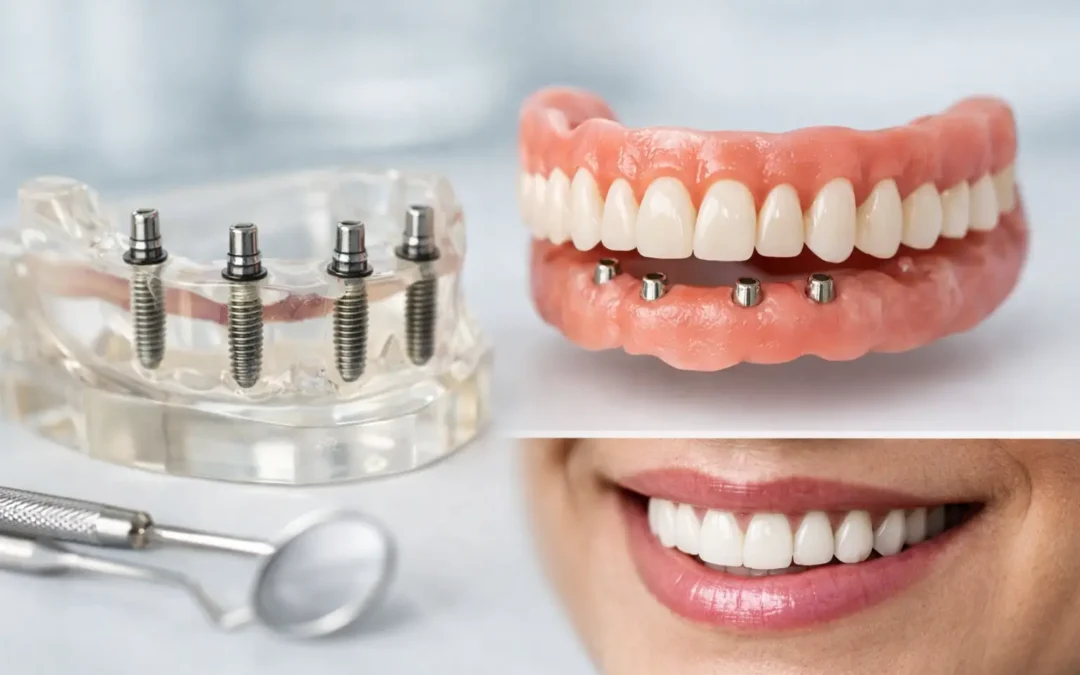
When your teeth have reached the point where eating is frustrating, smiling feels forced, and dentures no longer feel like a real solution, all on 4 full arch restoration becomes a serious option worth discussing. For many adults, this treatment is not just about replacing teeth. It is about getting back daily comfort, speaking clearly, eating with confidence, and feeling like yourself again.
Full-arch tooth loss affects more than appearance. It changes how you chew, how your bite functions, and often how confident you feel in social and professional settings. That is why patients looking for a long-term answer often ask about All-on-4. The concept is simple: a full arch of teeth is supported by four strategically placed dental implants, creating a stable and natural-looking restoration without needing an implant for every missing tooth.
What all on 4 full arch restoration means
All on 4 full arch restoration is a treatment designed for patients who are missing most or all of the teeth in the upper arch, lower arch, or both. Instead of relying on a removable denture, this approach uses four dental implants to support a fixed set of replacement teeth.
The implants act like artificial tooth roots. Once placed in the jawbone, they provide support for a custom prosthetic arch that is designed to look balanced, feel secure, and restore everyday function. The back implants are often angled to maximize available bone, which is one reason this treatment can work well for many patients who have experienced some bone loss.
For the right candidate, the appeal is clear. You get a more secure solution than traditional dentures, a more efficient approach than replacing every tooth individually, and a treatment plan built around both function and appearance.
Why patients choose All-on-4 over traditional dentures
Traditional dentures can help in some cases, but they come with limits that many patients know too well. They may slip while talking, shift during meals, or require adhesive to stay in place. Over time, they also do not prevent jawbone shrinkage because they sit on the gums instead of integrating with the bone.
All-on-4 solves a different problem. Because the restoration is anchored by implants, it stays in place and provides a stronger bite. Many patients find they can eat a wider range of foods and speak more naturally. Just as important, the restoration is designed to look more like natural teeth and less like a removable appliance.
That said, treatment is not one-size-fits-all. Dentures may still be appropriate for some patients based on health history, budget, or treatment goals. A proper exam is what determines whether implant-supported full-arch care is the better fit.
Who may be a good candidate
Most candidates for all on 4 full arch restoration are adults with extensive tooth loss, failing teeth, severe decay, or advanced gum problems that make saving the remaining teeth unrealistic. It may also be a strong option for long-term denture wearers who want more stability.
Good candidacy depends on several factors, including overall oral health, jawbone condition, medical history, and lifestyle habits. Smoking, uncontrolled diabetes, and certain healing issues can affect implant success, but these do not automatically rule treatment out. They simply mean the case needs closer evaluation and careful planning.
This is where personalized treatment matters. A patient who has been told elsewhere that they are not a candidate may still have options depending on the amount of bone available, the condition of the gums, and the design of the final restoration.
What the treatment process usually looks like
The first step is a detailed consultation. This includes an exam, digital imaging, and a conversation about what you want to change. Some patients are focused on chewing again without discomfort. Others want to stop hiding their smile. Most want both.
If the remaining teeth cannot be saved, they are removed as part of the treatment plan. The implants are then placed in carefully selected positions to support the full arch. In many cases, a temporary fixed restoration is provided so patients do not leave without teeth. That immediate improvement is often one of the most meaningful parts of the process.
Healing takes time. The implants need to integrate with the bone before the final restoration is placed. Once healing is complete, the temporary is replaced with a custom final arch designed for strength, fit, and appearance. The result should feel secure and look natural in proportion to your face.
Timelines vary. Some cases move more quickly than others, especially if extractions, infection, or bone conditions need to be managed first. The right pace is the one that protects long-term success.
The benefits patients notice most
The biggest benefit is stability. Patients who are used to movement, looseness, or discomfort with dentures often notice a dramatic difference right away. A fixed full-arch restoration helps make chewing feel more natural and reduces the everyday worry of teeth shifting out of place.
Appearance also matters. A well-designed All-on-4 restoration can restore facial support and create a healthier, more confident smile. That improvement is not vanity. It affects how many people show up at work, interact socially, and feel in photos.
There is also a practical long-term advantage. Dental implants stimulate the jawbone in a way removable dentures do not, which can help reduce future bone loss. While no treatment stops aging or guarantees permanent results without maintenance, implant support gives patients a stronger foundation.
Trade-offs to understand before saying yes
A good dental team should be honest about the advantages and the limits. All-on-4 is an advanced treatment, but it is still a surgical and restorative process. That means healing time, follow-up visits, and a real commitment to home care.
Cost is another factor. Implant-supported full-arch treatment is a larger investment than a conventional denture. For many patients, the added security, comfort, and longevity make it worthwhile. Still, the right decision depends on your priorities, your oral condition, and what you want your daily quality of life to look like.
It is also important to understand that the restoration is strong, not indestructible. Just like natural teeth, it can be affected by poor hygiene, grinding, or skipped dental visits. Protecting the result is part of the treatment.
Caring for an All-on-4 restoration
One of the biggest misconceptions is that replacing teeth means less maintenance. In reality, implant-supported restorations still need consistent care. Daily cleaning, professional checkups, and routine maintenance help protect both the implants and the surrounding tissues.
Patients are usually shown how to clean under and around the arch using tools designed for fixed restorations. These steps are simple once you get used to them, but they matter. Healthy gums and clean implant surfaces are essential to keeping the restoration stable.
Regular exams also help catch small issues before they turn into expensive ones. Bite pressure, wear on the prosthetic, and gum health should all be monitored over time.
Why experience and planning matter
Full-arch implant treatment is not something patients should choose based on price alone. The quality of planning, imaging, surgical placement, and final prosthetic design has a direct impact on comfort, function, and appearance.
That is why many patients in Doral and Miami Lakes look for a provider that combines advanced implant care with personalized treatment planning. At United Dental Specialists, the goal is to make complex care feel clear, supportive, and achievable from the first consultation forward.
If you are living with widespread tooth loss, failing dental work, or dentures that no longer feel like enough, asking about All-on-4 is a smart next step. The best treatment plans start with a straightforward conversation, an honest evaluation, and a team that understands you are not just replacing teeth – you are rebuilding daily confidence.
by Dr. David Bennett | Apr 23, 2026 | Uncategorized |
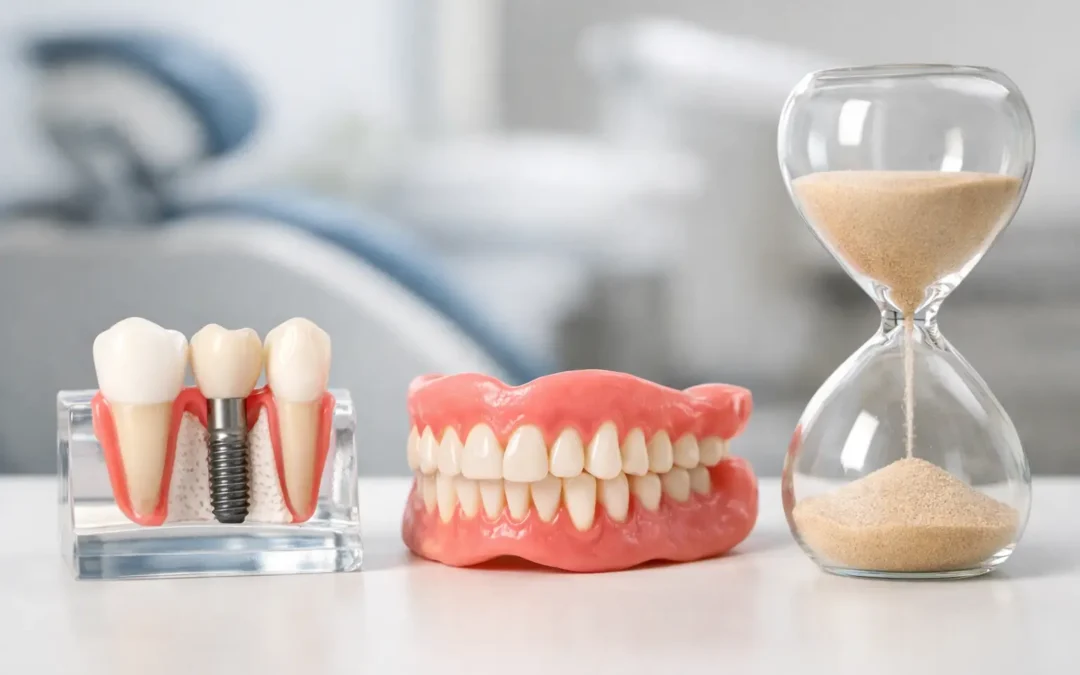
If you are living with failing, missing, or severely damaged teeth, the first question is often not whether implants work. It is how long does it take to replace all teeth with implants, and how soon can you get back to eating, smiling, and speaking with confidence.
The honest answer is that full-mouth implant treatment can take anywhere from one day for a temporary set of teeth to several months for the final result. That range is wide for a reason. Your timeline depends on your bone health, whether extractions are needed, the type of implant treatment you choose, and how your body heals. For many patients, the process moves faster than they expect once they understand the steps.
How long does it take to replace all teeth with implants?
In many cases, patients can leave the office with a fixed temporary set of teeth the same day or within 24 to 72 hours after implant surgery. This is often possible with full-arch solutions such as All-on-4 or similar implant-supported systems.
The final, long-term restoration usually takes longer. Most patients need about 3 to 6 months from surgery to final teeth, although some cases take longer if bone grafting, gum treatment, or complex healing is involved.
So the short version is simple. You may get teeth quickly, but the complete process is usually measured in months, not days.
Why the timeline can vary so much
Two patients can both need a full arch of implants and still have very different treatment schedules. That is because replacing all teeth is not a single appointment. It is a sequence of planning, surgery, healing, and final restoration.
If your mouth is generally healthy and you have enough jawbone, treatment may move efficiently. If you have advanced bone loss, active infection, uncontrolled gum disease, or medical factors that affect healing, more preparation may be needed before implants are placed.
Lifestyle also matters. Smoking, poor blood sugar control, and inconsistent home care can slow healing and affect how predictably implants integrate with the bone. A careful plan at the beginning often saves time and frustration later.
The main stages of full-mouth implant treatment
Consultation and planning
This first stage is where the timeline becomes clear. Your dentist examines your teeth, gums, bite, and jawbone, often with digital imaging. If you are a candidate for full-mouth implants, your treatment plan will outline whether you need extractions, bone grafting, sinus treatment, or immediate temporary teeth.
For some patients, this phase is completed quickly. For others, there may be a short period of additional diagnostics or pre-treatment to improve the health of the mouth before surgery.
Extractions, if needed
If you still have damaged or failing teeth, they may need to be removed before or at the time of implant placement. In some cases, extractions and implants can happen during the same visit. That can shorten the overall process.
However, if there is significant infection or too much bone damage around the existing teeth, your dentist may recommend allowing the area to heal before moving forward. This adds time, but it can improve the long-term outcome.
Bone grafting, when necessary
Not everyone needs bone grafting, but when the jaw has shrunk after tooth loss, it may be recommended. A graft helps create a stronger foundation for implants.
This is one of the biggest factors that can extend the timeline. Some grafting procedures heal in a few months, while larger grafts can take longer before implants are placed safely. If enough stable bone is already present, treatment can move much faster.
Implant placement
This is the surgical phase where the implants are placed in the jaw. For full-mouth treatment, several implants support a full upper arch, lower arch, or both. Depending on the plan, you may receive a temporary fixed bridge right away or shortly after surgery.
This part often surprises patients. The surgery itself may be completed in a single day, even though the total treatment takes longer. In other words, the procedure can be efficient even when healing still lies ahead.
Healing and osseointegration
After placement, the implants need time to fuse with the bone. This process is called osseointegration, and it is the reason the final teeth are not always placed immediately.
For most patients, this healing phase takes about 3 to 6 months. During that time, you may wear a temporary restoration that looks good and lets you function while the implants stabilize. Your dentist will monitor healing and make sure the implants are ready for the final stage.
Final teeth placement
Once healing is complete, impressions or digital scans are used to create your final implant-supported teeth. These are designed for long-term comfort, appearance, and bite function.
The final restoration stage may take a few visits to refine fit, shape, and esthetics. It is worth taking the time to get this right. The final teeth should feel secure, look natural, and support everyday confidence.
Same-day teeth vs. final teeth
One of the biggest sources of confusion around how long does it take to replace all teeth with implants is the phrase same-day teeth. Patients often hear that they can get a new smile in one day, and in many cases that is true. What they are getting, though, is usually a temporary or provisional set of teeth.
That temporary restoration is a major benefit. You do not have to spend months without teeth, and you can leave with a smile that already looks dramatically better. But temporary teeth are not the same as the final prosthetic.
The final set is placed after healing, once the implants have integrated and your bite can be adjusted more precisely. So if your goal is to know when you will look normal again, the answer may be very soon. If your goal is to know when the entire process is complete, expect several months.
What can speed up the process
A healthy mouth and enough existing bone are the biggest advantages. Patients who do not need grafting or staged extractions usually have shorter timelines.
Choosing a full-arch implant solution designed for immediate function can also help. In the right case, this allows implants and temporary teeth to be coordinated efficiently.
Good habits matter too. Following post-op instructions, keeping appointments, eating as directed during healing, and maintaining excellent home care all support a smoother recovery.
What can delay treatment
The most common delays are untreated gum disease, infection, major bone loss, and medical issues that interfere with healing. Smoking is another factor that can affect both healing speed and implant success.
Sometimes delays happen for practical reasons as well. If a patient waits too long between visits or postpones recommended treatment, the process naturally stretches out. A clear plan and steady follow-through usually make a noticeable difference.
Is the longer timeline worth it?
For most patients, yes. Replacing all teeth with implants is not the fastest dental treatment available, but it is often one of the most life-changing. Implant-supported teeth can restore biting power, improve speech, support facial structure, and eliminate the daily inconvenience of removable dentures.
The timeline can feel long at first glance, especially if you are eager for relief. But when treatment is done carefully, the result is built for stability and long-term function. Rushing the healing phase rarely serves the patient well.
What to expect during your consultation
A good consultation should leave you with real answers, not vague estimates. You should understand whether you are a candidate for immediate temporary teeth, whether any preparatory work is needed, and what your likely timeline looks like from start to finish.
This is also the right time to ask practical questions. How many visits will be needed? Will you be without teeth at any point? What foods should you expect to avoid during healing? How will your treatment plan fit your schedule and budget?
At United Dental Specialists, patients looking for full-mouth restoration are guided through these decisions with a personalized approach, because the right timeline is not just about speed. It is about creating a stable, confident result that fits your health needs and your life.
If you are considering full-mouth implants, the best next step is not guessing based on someone else’s case. It is getting a clear evaluation of your own. Once you know what your mouth needs, the path forward usually feels much more manageable.
by Dr. David Bennett | Apr 22, 2026 | Uncategorized |
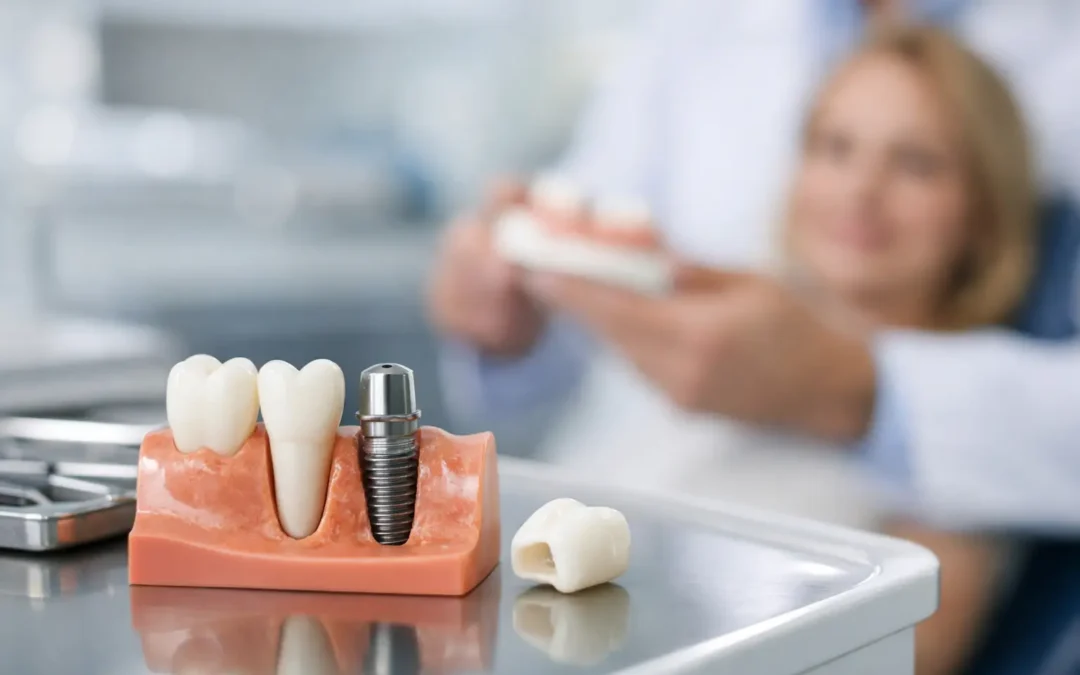
If you are investing in dental implants, one of the first questions you may ask is, do you have to get teeth implants replaced? The short answer is not usually – but some parts of an implant restoration can wear out over time, and the implant itself still needs proper care to stay healthy.
That distinction matters. Many patients hear that implants are “permanent” and assume that means every part will last forever. In reality, dental implants are built to be long-lasting, but their lifespan depends on the health of your gums and bone, your bite, daily habits, and the type of restoration attached to the implant.
Do You Have to Get Teeth Implants Replaced Over Time?
In many cases, the implant post itself does not need to be replaced. The post is the titanium or ceramic piece placed in the jawbone, and once it heals correctly, it can last for decades. For many patients, it lasts a lifetime.
What may need replacement sooner is the crown, bridge, or denture attached to the implant. These visible teeth are exposed to chewing pressure every day. Just like natural teeth restorations, they can chip, loosen, crack, or wear down over time. That does not always mean the implant has failed. It may simply mean the restoration needs repair or replacement.
This is why your dentist looks at dental implants in layers. There is the implant post in the bone, the connector piece called the abutment, and the visible restoration on top. Each part has a different expected lifespan.
How Long Do Dental Implants Usually Last?
A well-placed implant post can often last 20 years or more. Many last much longer. The crown on top may last 10 to 15 years before needing attention, though some last longer with excellent care and a balanced bite.
Patients with implant-supported bridges or full-arch restorations, such as All-on-4, may also need maintenance over time. That might involve replacing worn prosthetic teeth, tightening components, adjusting the bite, or repairing a damaged section. This is normal long-term care, not necessarily a sign that something went wrong.
The better question is often not whether implants ever need replacement, but which part might need service and when.
What Can Cause an Implant to Need Replacement?
When an implant post does need to be removed and replaced, there is usually an underlying reason. The most common issue is bone loss around the implant, often linked to infection or chronic inflammation. This condition, sometimes called peri-implant disease, can weaken the support around the implant until it becomes loose or unstable.
Smoking can raise this risk. Poor oral hygiene can too. So can skipping checkups, grinding your teeth, uncontrolled diabetes, or heavy bite forces that place too much pressure on the implant.
Sometimes the issue is mechanical rather than biological. A crown may fracture. A screw may loosen. The prosthetic teeth on an implant denture may wear down faster than expected. These problems can often be fixed without replacing the implant post itself.
Less often, an implant may fail early because it never fully integrated with the bone after placement. If that happens, your dentist may remove it, allow the area to heal, and discuss whether a replacement implant is the right next step.
Signs Your Dental Implant Needs Attention
Implants should feel stable and comfortable. If something changes, it is worth having it checked early. Waiting tends to make treatment more complicated.
Signs that may point to a problem include pain when chewing, swelling around the implant, bleeding gums, a loose feeling, bad taste or drainage near the site, or visible recession that exposes more of the implant or restoration than before. A cracked crown or a change in your bite can also signal that the restoration needs repair.
Not every symptom means the implant must be replaced. In many cases, a prompt visit allows your dentist to treat inflammation, adjust the restoration, or repair a damaged component before the situation gets worse.
Implant Post vs. Crown – What Gets Replaced?
This is where many patients get confused. If your implant crown breaks, the implant itself may still be completely healthy. Your dentist may be able to replace only the crown. If the abutment is damaged, that piece may be replaced while the implant post stays in place.
Think of it this way: the implant post functions like an artificial tooth root, while the crown is the visible tooth above the gumline. The root is designed for long-term support. The top portion takes more daily wear.
For full-mouth implant cases, the prosthesis may also be replaced before the implants are. This is especially true after many years of use, when normal wear affects appearance, chewing surfaces, or fit.
How to Make Dental Implants Last Longer
Long-lasting implants are not just about good materials. They are also about good maintenance.
Daily brushing and flossing are essential, even though implants cannot get cavities. The gum tissue around them can still become inflamed, and infection can still damage the supporting bone. Regular hygiene visits help remove buildup in areas that are hard to clean at home.
Bite protection also matters. If you grind or clench your teeth, a night guard may help protect both your natural teeth and your implant restoration from excessive force. For patients with implant crowns or full-arch restorations, this can make a real difference in longevity.
Routine exams give your dentist a chance to monitor the implant, check the health of the surrounding tissue, and catch small issues before they turn into expensive ones. That is one reason ongoing care is so important after implant treatment.
Do You Have to Get Teeth Implants Replaced If They Are Old?
Age alone is not a reason to replace a dental implant. If the implant is stable, the gums are healthy, and the restoration is functioning well, there may be no reason to change anything.
That said, older implant restorations sometimes benefit from an update. A crown that looked good 15 years ago may now show wear. A denture attached to implants may need relining, repair, or replacement to improve comfort and appearance. Technology and materials also improve over time, so some patients choose to refresh older work even when the implant itself remains sound.
The key is evaluation, not assumption. A dental exam with imaging can show whether the implant is healthy and whether only the visible restoration needs attention.
When Replacement Is the Best Option
There are situations where replacing an implant is the right move. A failed implant with significant bone loss may not be salvageable. A severely damaged implant component may not support a secure restoration. In some cases, the implant may have been placed in a position that no longer supports ideal function or esthetics.
When that happens, the next step should be a clear treatment plan. That may include removing the old implant, treating infection, rebuilding bone if needed, and placing a new implant after healing. While that sounds involved, replacement can still lead to an excellent outcome when managed carefully.
This is also why personalized planning matters. No two implant cases are exactly the same, and the right recommendation depends on your oral health, medical history, bone support, and goals for comfort and appearance.
What Patients in Doral and Miami Lakes Should Know
If you already have dental implants and something feels off, the smartest move is not to guess whether they need replacement. It is to have them evaluated before a minor issue becomes a bigger one.
At United Dental Specialists, patients often come in worried that a loose crown or gum irritation means the whole implant has failed. Often, the fix is much simpler. A professional exam can tell you whether the implant post is healthy, whether the restoration needs repair, and what steps will protect your smile for the long term.
Dental implants are one of the most reliable ways to replace missing teeth, but they are not a set-it-and-forget-it treatment. With proper care and regular follow-up, many patients keep their implants for decades and only need occasional maintenance along the way.
If you are wondering whether your implant is still in good shape, let that question lead to a checkup, not more waiting. The best outcomes usually come from catching changes early and keeping a healthy smile on track.
by Dr. David Bennett | Apr 21, 2026 | Uncategorized |
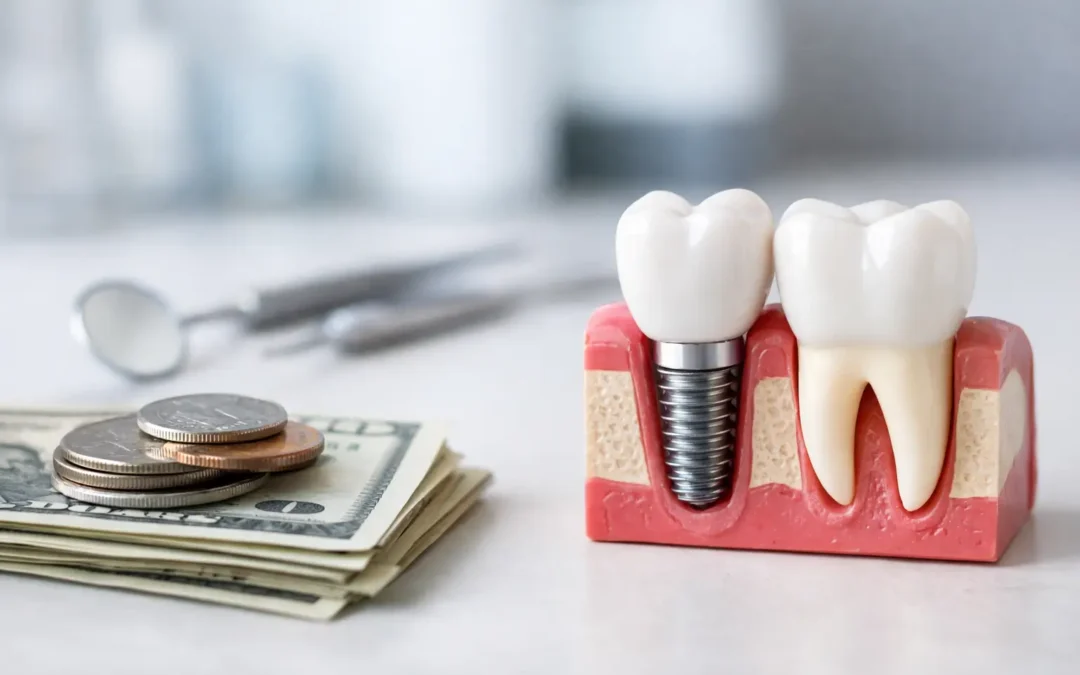
If you are asking how much does it cost to replace a tooth with an implant, you are probably dealing with more than a gap in your smile. For many patients, a missing tooth affects chewing, confidence, speech, and even the way surrounding teeth shift over time. The good news is that dental implants are one of the most dependable long-term solutions available, but the final cost can vary more than most people expect.
How much does it cost to replace a tooth with an implant?
In most cases, replacing one tooth with a dental implant can range from about $3,000 to $6,000 or more, however United Dental Specialists using the latest technology of CBCT/Optical integration can significantly reduce that cost to less than $3000 in many cases. That estimate often includes the implant post, the abutment, and the final crown, but not always. Some offices quote only one part of the process at first, which is why patients sometimes feel surprised when they learn the full treatment cost.
A single number rarely tells the whole story. The price depends on your oral health, the location of the missing tooth, whether bone grafting is needed, the materials used, and the complexity of the procedure. If the missing tooth has been gone for a while, the jawbone may have shrunk in that area, which can add to the treatment plan.
Why implant costs vary so much
Dental implants are not a one-size-fits-all service. They are personalized treatments designed to replace the root and visible portion of a tooth while supporting long-term oral health. That level of customization is one reason the investment is higher than other tooth replacement options.
The implant itself is a small post, usually made of titanium, placed in the jawbone. After healing, an abutment connects the implant to the custom-made crown. Each of those parts has a cost, and the planning behind them matters just as much as the hardware.
Your dentist also needs detailed imaging, careful treatment planning, and precise placement to help the implant integrate properly with the bone. In a practice focused on advanced restorative care, that process is designed to improve both function and appearance, not just fill a space.
The parts that may be included in the total price
When patients compare estimates, it helps to understand what may be bundled together and what may be billed separately. The total cost may include the consultation, digital X-rays or 3D imaging, the surgical placement of the implant, the abutment, and the final crown.
In some cases, sedation, tooth extraction, temporary restorations, or follow-up visits are separate charges. If you are comparing treatment plans from different offices, ask for a full breakdown so you can see whether you are looking at the same scope of care.
What can increase the cost of replacing a tooth with an implant?
The most common reason the cost rises is the need for additional procedures before the implant can be placed safely. Bone grafting is one of the biggest examples. If the jawbone is not thick or strong enough, the implant may need a better foundation first.
A sinus lift may also be needed for upper back teeth if there is not enough bone height. If the damaged tooth still needs to be extracted, that can add another step as well. These procedures are not extras for the sake of it. They are often what make long-term implant success possible.
The location of the missing tooth matters too. Front teeth can require especially careful cosmetic planning so the implant crown matches the shape, shade, and symmetry of your smile. Back teeth may involve more biting force, which can influence material selection and treatment design.
Material and lab choices matter
Not all implant crowns are the same. Some are made from porcelain-fused-to-metal, while others use all-ceramic or zirconia materials for a more natural look. Higher-end materials can cost more, but they may offer better esthetics, especially for teeth that show when you smile.
The quality of the dental lab and the precision of the crown design also affect the final fee. A well-made restoration should fit comfortably, look natural, and function properly with your bite.
Is a dental implant more expensive than a bridge or denture?
Usually, yes. A dental implant often costs more upfront than a bridge or removable partial denture. That said, the comparison should not stop at the initial price.
A bridge may be less expensive at first, but it often requires reshaping the healthy teeth next to the missing one. A partial denture can restore appearance and some function, but it may feel less stable and may need more frequent adjustments or replacement. An implant stands on its own, helps preserve the jawbone, and does not rely on neighboring teeth for support.
For many patients, that long-term value is the reason implants remain such a popular option. They are designed to look, feel, and function more like natural teeth than many alternatives.
Does insurance cover the cost?
Insurance coverage depends on your specific plan. Some dental plans may help with parts of the process, such as the crown or extraction, while not covering the implant itself. Other plans may offer limited implant benefits, and some medical plans may contribute if tooth loss is related to trauma or certain health conditions.
Because coverage rules vary so much, it is worth having your benefits reviewed before treatment begins. A good dental team will help you understand what is covered, what is not, and what financing options may be available if you want to move forward with care.
When a lower price is not always a better deal
It is natural to compare prices, especially for a treatment that can represent a meaningful investment. But with dental implants, lower cost should never be the only deciding factor.
Experience, technology, diagnosis, and follow-through all matter. If implant placement is not properly planned, the result can affect comfort, appearance, healing, and long-term stability. Choosing a provider based on quality, clarity, and personalized planning often saves patients stress and added expense later.
That does not mean the highest fee is automatically the best choice either. What matters most is understanding what you are paying for, whether your case has been evaluated thoroughly, and whether the treatment plan fits your health goals and budget.
How to budget for a single-tooth implant
The first step is a consultation. That visit allows your dentist to evaluate the missing tooth area, check bone support, review imaging, and explain whether additional procedures are needed. Once that information is clear, the office can provide a more accurate estimate instead of a broad online price range.
Many patients also benefit from asking a few direct questions. Does the quote include the crown? Are bone grafting or extraction fees separate? How many appointments are involved? What financing options are available? Simple questions can make the process feel much more manageable.
If you are in Doral or Miami Lakes and want a clear, personalized answer, United Dental Specialists can evaluate your needs and walk you through your options in a straightforward, supportive way. That kind of one-on-one planning matters because no two implant cases are exactly alike.
How much does it cost to replace a tooth with an implant compared with doing nothing?
This is the question many people do not ask soon enough. Leaving a missing tooth untreated may seem like the least expensive choice in the moment, but it can create other costs over time. Nearby teeth can drift, bite problems can develop, and bone loss in the jaw can progress. Those changes may eventually require more complex and expensive treatment.
Replacing a missing tooth early can protect more than your smile. It can support your overall oral health, help you chew normally, and keep your dental work simpler in the future.
If you are weighing the cost, think beyond the procedure itself. Think about comfort, confidence, convenience, and the value of restoring your smile with a solution built to last. The right next step is not guessing from a price range online. It is getting a personalized exam and a treatment plan that makes sense for your needs.

Recent Comments