
A smile can look healthy on paper and still feel like something you want to hide in photos. For many adults, that gap comes down to issues like stains that whitening cannot fully lift, small chips, uneven edges, or spaces that draw the eye. This guide to porcelain veneers is designed to help you understand what veneers can realistically fix, what they cannot, and how to decide whether they fit your goals.
Porcelain veneers are thin custom shells bonded to the front surface of the teeth, usually in the visible smile zone. Their purpose is cosmetic, but the impact often goes beyond appearance. When the shape, color, and balance of your smile improve, many patients also feel more comfortable speaking, laughing, and being seen up close.
What porcelain veneers actually do
Porcelain veneers are best thought of as a smile-refinement treatment, not a cure-all. They can improve the look of teeth that are discolored, slightly worn, mildly uneven, chipped, short, or separated by small gaps. They can also create a more symmetrical look when natural teeth vary in size or shape.
What makes porcelain especially appealing is how closely it can mimic natural enamel. Good veneers do not look flat or overly white. They reflect light in a way that gives the smile depth, which is one reason patients often choose porcelain over more temporary cosmetic options.
That said, veneers are not the right answer for every problem. If a tooth has significant decay, active gum disease, a major bite issue, or structural weakness, those concerns need to be addressed first. In some cases, orthodontic treatment, bonding, whitening, or crowns may be more appropriate.
Who is a good candidate in this guide to porcelain veneers
The best candidates usually have healthy teeth and gums and want to improve the visible appearance of their smile. You may be a strong candidate if your concerns are mostly cosmetic and your teeth have enough healthy structure to support veneers.
Lifestyle matters too. If you grind your teeth, clench your jaw, bite your nails, or use your teeth to open packaging, veneers may still be possible, but your treatment plan may need extra protection. A night guard, for example, can help preserve both natural teeth and veneers.
Your expectations matter just as much as your dental condition. Veneers can create a dramatic improvement, but the best results still look like you. A thoughtful treatment plan focuses on harmony with your face, gumline, bite, and existing features rather than chasing a one-size-fits-all smile.
The porcelain veneer process, step by step
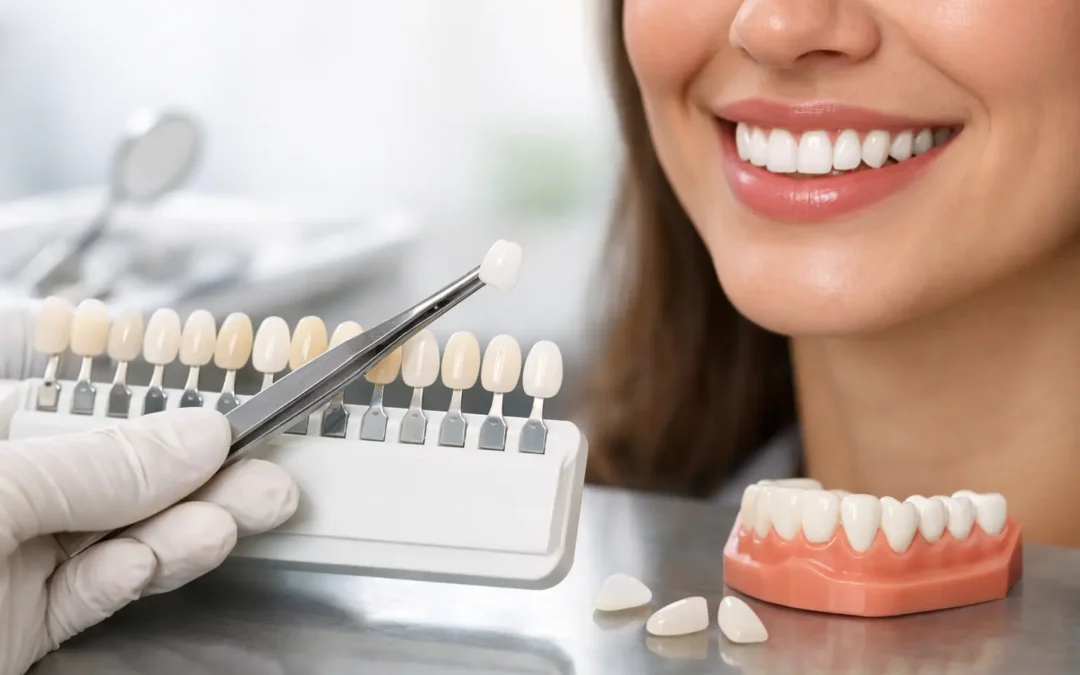
The process usually begins with a cosmetic consultation and exam. This is where your dentist evaluates oral health, discusses what bothers you about your smile, and reviews whether veneers are the best fit. Photos, digital imaging, and shade discussions may be part of this stage so the final result feels personalized, not generic.
If you move forward, the teeth being treated are prepared. In many cases, this means removing a very thin layer of enamel from the front surface to make room for the veneer. The amount is conservative, but it is still an important step because veneers need space to sit naturally and avoid looking bulky.
After preparation, impressions or digital scans are taken so the veneers can be custom-made. Temporary veneers may be placed while your final restorations are being crafted. When the permanent veneers are ready, your dentist checks the fit, shape, color, and overall appearance before bonding them into place.
The bonding appointment is where precision matters. Small adjustments can make a major difference in how natural the veneers look and how comfortable they feel when you bite. Once bonded, the veneers become a stable part of your smile, though follow-up care is still essential.
How many veneers do you need?
This depends on your smile line and your goals. Some patients improve one or two teeth, while others choose a broader cosmetic update across the front six to ten upper teeth. If lower teeth show prominently when you speak or smile, they may be included as well.
There is no universal number that works for everyone. The right plan balances aesthetics, budget, and what will look consistent with your surrounding teeth. Sometimes a smaller, carefully designed case looks more natural than treating too many teeth unnecessarily.
Color, shape, and the natural look
One of the biggest concerns patients have is whether veneers will look obvious. They should not. The most attractive veneer cases are usually the ones people do not immediately identify as dental work.
Shade selection is not just about picking white teeth. Skin tone, lip shape, age, facial features, and the color of nearby teeth all influence what will look right. Very bright veneers can be beautiful, but only when they fit the person wearing them. The same is true for shape. Rounded edges, slight translucency, and subtle texture can make the final result look far more believable.
This is why planning matters so much. A cosmetic treatment should reflect your preferences, but it should also be guided by clinical judgment. Patients often come in asking for a perfect smile when what they really want is a confident, healthy-looking one.
How long do porcelain veneers last?
Porcelain veneers are durable, but they are not permanent in the sense of lasting forever without maintenance. Many last well over a decade with proper care. Longevity depends on the quality of the treatment, your bite, your habits, and how consistently you protect your teeth.
A person who keeps up with cleanings, wears a night guard when needed, and avoids damaging habits will usually get more life out of veneers than someone who grinds heavily and skips routine care. Even excellent veneers may eventually need replacement due to wear, gumline changes, or damage over time.
Cost and what affects the price
Veneer pricing varies because the treatment is highly customized. The number of teeth treated matters, but so do the materials used, the planning involved, and whether any other dental work is needed first. If whitening, gum treatment, or restorative care should happen before veneers, that changes the overall investment.
It helps to view veneers as part of a larger treatment plan rather than a simple cosmetic purchase. The goal is not just to place porcelain on teeth. The goal is to create a smile that looks right, functions well, and holds up over time. During a consultation, a clear breakdown of options can help you compare what is possible with your goals and budget.
Daily care after veneers
Veneers do not require complicated maintenance, but they do require good habits. Brushing twice a day, flossing daily, and keeping regular dental visits remain essential. The teeth underneath and around veneers still need protection from decay and gum problems.
Porcelain resists staining better than natural enamel, but that does not mean you can ignore care. Coffee, red wine, and tobacco can still affect the surrounding teeth and influence how even your smile appears over time. If you want your results to stay bright and balanced, routine maintenance makes a real difference.
If you are prone to grinding or clenching, protecting your veneers at night is especially important. A custom night guard can help prevent excess pressure that chips or shortens the life of cosmetic work.
Common concerns patients ask about
One common question is whether veneers damage your teeth. The honest answer is that veneer treatment usually involves removing a thin amount of enamel, so it is a permanent decision. That is why case selection and planning are so important. When done for the right reasons and on the right teeth, veneers can be a very effective long-term cosmetic solution.
Another concern is sensitivity. Some patients notice temporary sensitivity after preparation, but it often improves. The experience varies depending on the teeth involved and your baseline sensitivity.
Patients also ask whether veneers feel different. At first, they can. After a short adjustment period, well-designed veneers should feel smooth and natural in the mouth, not bulky or distracting.
Is this the right time for veneers?
If you have been thinking about changing your smile for years, timing usually comes down to readiness, not just appearance. The right time is when your teeth and gums are healthy, your goals are clear, and you are ready to invest in a solution that is both cosmetic and lasting.
For patients in Doral and Miami Lakes who want a more confident smile without guessing their way through treatment, a personalized cosmetic consultation is the best place to start. At United Dental Specialists, that conversation is meant to be straightforward and pressure-free, with attention to how you want your smile to look and how you want it to function.
A well-planned veneer case should not make you look like someone else. It should make you feel more like yourself every time you smile.

Recent Comments