
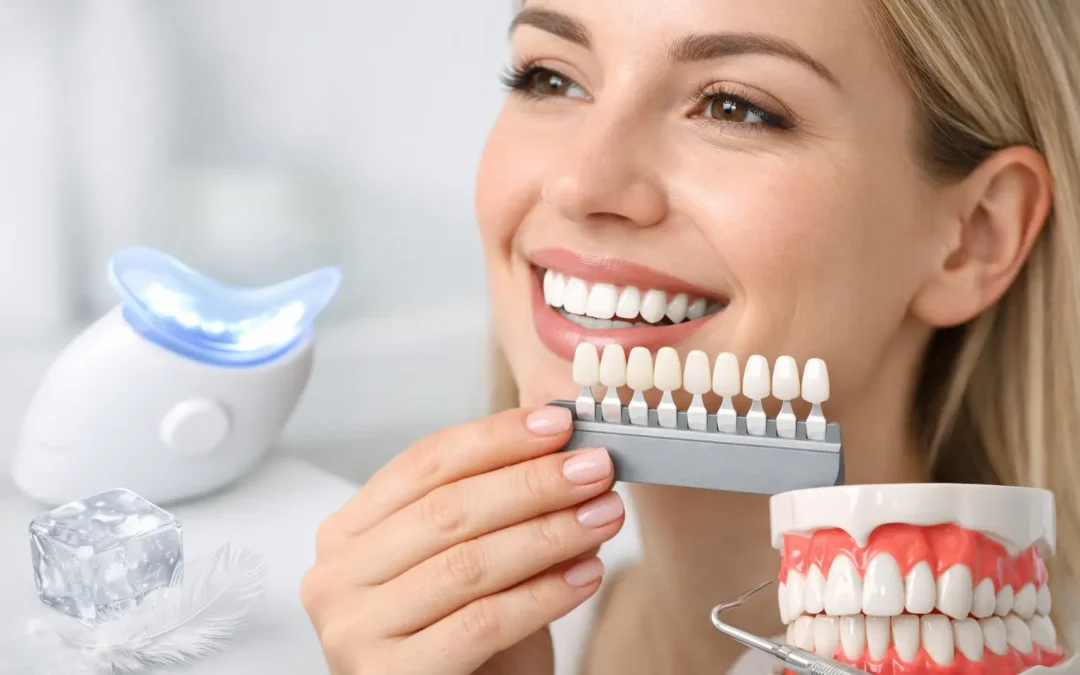
That quick zing when you sip something cold can make any whitening treatment feel like a bad idea. The good news is that teeth whitening for sensitive teeth is possible. It just needs a more careful approach, the right products, and realistic expectations about how fast your smile should brighten.
Sensitivity does not always mean you have to give up on cosmetic treatment. In many cases, it means you need to treat the cause of the sensitivity first, adjust the whitening method, or let a dentist guide the process. A whiter smile should never come at the cost of ongoing discomfort.
Why whitening can trigger sensitivity
Most whitening products use peroxide-based ingredients to lift stains from the enamel. As those ingredients work, they can temporarily irritate the tooth’s inner layer, especially if enamel is thin, gums have receded, or there are untreated dental issues. That is why some people feel sharp, short-lived sensitivity during or after treatment.
The level of discomfort varies. One person may notice mild tenderness for a day. Another may feel significant sensitivity from a product that is simply too strong or used too often. This is where the details matter. The concentration, the fit of whitening trays, the condition of your teeth, and how long the product stays on all affect the outcome.
Sensitivity can also be a sign that whitening is not the main issue. A cavity, worn enamel, cracked tooth, or gum recession can all make bleaching treatments feel much more intense. If your teeth are already reacting to cold drinks or brushing, it is worth having that checked before starting anything cosmetic.
Teeth whitening for sensitive teeth starts with the right diagnosis
The safest whitening plan begins with understanding why your teeth are sensitive in the first place. Some patients have naturally sensitive teeth. Others are dealing with enamel wear from grinding, acidic foods, aggressive brushing, or untreated decay. These situations do not call for the same whitening strategy.
A dental exam can make that distinction quickly. If the sensitivity is tied to a correctable problem, treating that issue first often makes whitening more comfortable and more effective. There is little value in whitening over active dental problems, because the process may increase discomfort and the final result may be uneven.
For many adults, this is the turning point. They assume whitening is off the table, when in reality they just need a more personalized plan. That may involve a lower-strength product, shorter wear times, desensitizing toothpaste, or in-office treatment with professional monitoring.
At-home vs. professional whitening for sensitive teeth
At-home whitening can work well for some patients with sensitivity, but not every over-the-counter product is a good choice. Whitening strips, pens, and one-size trays are convenient, yet they can be unpredictable. If the formula is too strong or the tray touches the gums, irritation becomes much more likely.
Professional whitening offers more control. A dentist can evaluate your enamel, protect the gums, choose an appropriate whitening strength, and adjust the treatment if sensitivity starts to build. That does not automatically mean in-office whitening is stronger in a bad way. In fact, a supervised treatment is often more comfortable than repeated trial and error at home.
Custom take-home trays from a dental office can be especially helpful for patients with sensitive teeth. Because the trays fit closely, the gel stays where it should and the whitening process tends to be more even. Patients can also follow a slower schedule, which often reduces post-treatment sensitivity.
What makes a whitening option more sensitivity-friendly
For patients trying to choose the best method, the goal is not simply the fastest result. The better question is how to whiten safely while keeping teeth comfortable enough to continue treatment.
Lower peroxide concentration is often easier to tolerate, though it may take longer to reach the shade you want. Shorter application times can also help. Some people do better whitening every other day rather than daily, especially in the first week.
Products that include desensitizing ingredients may offer an advantage. Potassium nitrate and fluoride are commonly used to calm the nerve response and support enamel. Using a sensitivity toothpaste for one to two weeks before whitening can also make a noticeable difference.
Technique matters just as much as product choice. Leaving whitening gel on longer than directed will not always produce better results, but it can increase discomfort. So can layering multiple products at once, such as strips plus whitening toothpaste plus a mouth rinse. More is not better when your teeth are already reactive.
When whitening should wait
There are times when the best whitening decision is to pause. If you have active cavities, inflamed gums, exposed roots, recent dental work, or a broken tooth, whitening should usually wait until those issues are treated. This is not just about comfort. It is also about protecting your oral health and avoiding a result that looks uneven.
It is also worth remembering that whitening does not change the color of crowns, veneers, fillings, or bonding. If you have visible dental work in your smile zone, your dentist may recommend whitening first and then matching any restorations afterward. For patients who want a more dramatic cosmetic improvement, veneers or bonding may be a better fit than repeated whitening.
Pregnant patients, those with severe enamel loss, and anyone with chronic unexplained tooth pain should also speak with a dentist before starting whitening. A bright smile is a worthwhile goal, but it should always fit into a larger treatment plan that supports long-term oral health.
How to reduce sensitivity during whitening
If your dentist has confirmed that whitening is appropriate, a few simple adjustments can make the process much easier.
Start by using a toothpaste designed for sensitive teeth consistently, not just the day discomfort begins. Brush gently with a soft-bristled toothbrush and avoid overly abrasive whitening pastes. During treatment, take breaks if needed. Whitening over a longer period is often more successful than pushing through pain and having to stop altogether.
It also helps to avoid very cold drinks, highly acidic foods, and extreme temperatures right after whitening sessions. Teeth can be more reactive for a short time, and giving them a calm recovery window helps. If sensitivity lasts beyond a couple of days or feels severe, it is time to call your dentist rather than guessing your way through it.
In a professionally guided setting, there may be additional options, including fluoride treatments or desensitizing gels before or after whitening. These small steps can make a meaningful difference for patients who want cosmetic results without the usual discomfort.
What kind of results should you expect?
Teeth whitening for sensitive teeth can absolutely improve your smile, but the pace may be more gradual. That is not a drawback. A slower, better-tolerated treatment often gives patients a more positive experience and makes it easier to maintain results.
The final shade depends on the type of staining, your enamel, your habits, and whether you have existing restorations. Yellow-toned staining generally responds better than gray or deeply internal discoloration. Coffee, tea, red wine, and tobacco can all affect both how much whitening you need and how long the result lasts.
Maintenance also matters. Touch-up whitening done carefully and occasionally is usually better than waiting until stains build up and then trying to whiten aggressively. Regular cleanings, good brushing habits, and a personalized maintenance plan can help keep your smile brighter without triggering unnecessary sensitivity.
For patients in Doral, Miami Lakes, and nearby communities, professional guidance can take much of the guesswork out of the process. At United Dental Specialists, cosmetic care is approached with the same attention to comfort and long-term health as any other treatment. That matters when your goal is not just whiter teeth, but a smile that feels as good as it looks.
If your teeth are sensitive, whitening should be thoughtful, not rushed. The right plan can brighten your smile while protecting your comfort, and that balance is what makes the result worth it.

Recent Comments