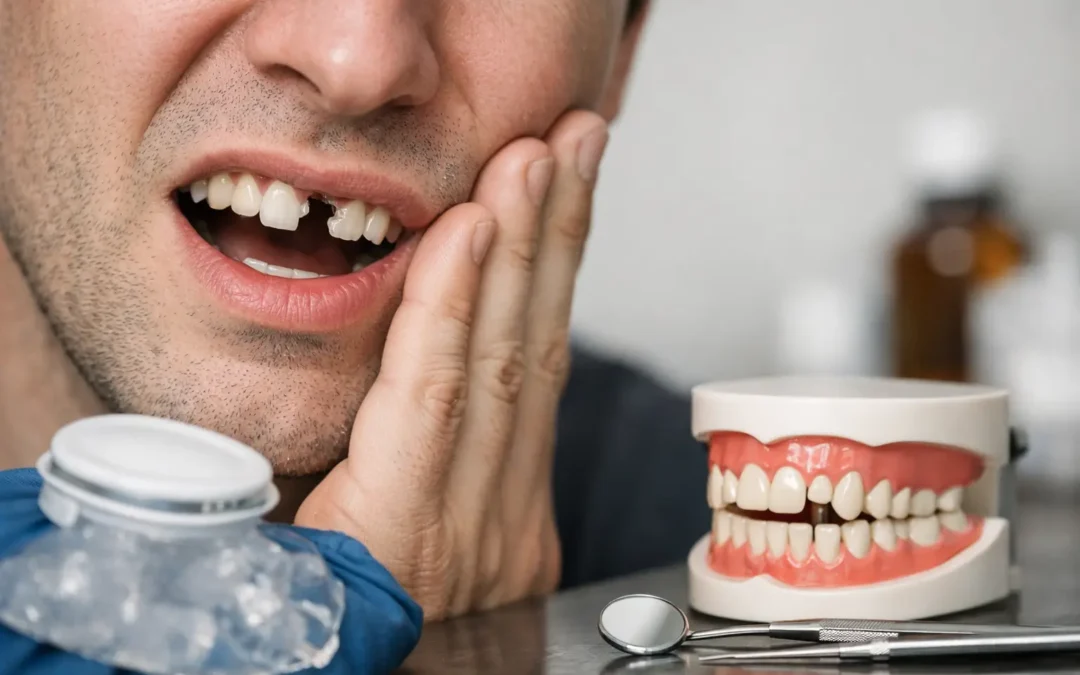
A broken tooth has a way of stopping your day cold. One bite of something hard, one accidental fall, or one old filling giving out can leave you with sharp pain, a jagged edge, or a visible chip that makes you worry every time you speak or smile. If you are wondering what to do for a broken tooth, the first priority is to protect the tooth, reduce irritation, and get professional care as soon as possible.
Some broken teeth are obvious right away. You may hear a crack, feel a rough edge with your tongue, or notice sensitivity to cold air and water. Other times, the damage is less dramatic but still serious, especially if the crack extends below the surface or exposes the inner part of the tooth. Even a small fracture can worsen if you keep chewing on it or wait too long to have it examined.
What to do for a broken tooth right away
Start by rinsing your mouth gently with warm water. This helps clear away debris and gives you a better sense of where the injury is. If there is bleeding from the gums or surrounding tissue, apply light pressure with clean gauze. If swelling begins, place a cold compress on the outside of your cheek in short intervals.
Try not to touch or test the broken area repeatedly. A rough tooth edge can cut your tongue or cheek, so covering it with dental wax can help until you are seen. If you do not have dental wax, sugar-free gum can work as a short-term barrier. Avoid using glue, household adhesives, or any DIY repair kit that is not recommended by a dental professional.
Pain can vary quite a bit. Some people feel only mild sensitivity, while others experience sharp pain when biting down. An over-the-counter pain reliever may help, but it is best to avoid placing aspirin directly on the gum or tooth. That can irritate the tissue and make things worse rather than better.
If a piece of the tooth broke off and you can find it, save it in a clean container and bring it to your appointment. It may not always be usable, but your dentist will want to see it. The more information you can provide about when the tooth broke and what symptoms started afterward, the easier it is to plan the right treatment.
When a broken tooth is a dental emergency
Not every chip is an emergency, but some situations should be treated urgently. If the break causes severe pain, significant bleeding, visible swelling, or a large missing portion of the tooth, it is best to call for emergency dental care the same day. The same goes for any broken front tooth that affects appearance and confidence in a major way, especially if the damage is sudden and noticeable.
A crack that reaches the nerve can quickly become more painful. You might notice throbbing, lingering sensitivity, or pain that gets worse when you eat. In some cases, a broken tooth also leaves the inside of the tooth exposed, which increases the risk of infection. If you see a pink or red area inside the tooth, or if the tooth feels loose after trauma, do not wait.
There is also the issue of timing. A small fracture on Monday may feel manageable, but by Friday it can become a larger break, a deeper crack, or a source of infection. Prompt care often means more conservative treatment and a better chance of saving the tooth.
What not to do for a broken tooth
Knowing what to avoid matters almost as much as knowing what to do. Do not chew on the affected side. Even soft foods can place pressure on a weakened tooth and cause more damage. Skip crunchy, sticky, very hot, or very cold foods until a dentist has evaluated the area.
Do not assume that no pain means no problem. Some cracks are painless at first, especially if the damage has not yet reached the nerve. That does not mean the tooth is stable. A tooth can still fracture further below the gumline, where treatment becomes more complex.
It is also a mistake to put off care because the break looks minor. Cosmetic damage and structural damage are not always the same thing. A tooth that appears only chipped may have an underlying crack that requires a crown or another restorative solution.
How dentists treat a broken tooth
The right treatment depends on how much tooth structure is lost, whether the nerve is involved, and where the tooth is located. For a very small chip, smoothing and bonding may be enough. Tooth-colored bonding can restore shape, improve comfort, and blend naturally with your smile.
If the tooth has a larger fracture but still has healthy structure remaining, a dental crown is often the best option. A crown covers and strengthens the tooth, which is especially important for back teeth that handle heavy chewing forces. In many cases, this is the most reliable way to protect a weakened tooth from breaking again.
If the broken tooth has exposed or damaged the nerve, root canal treatment may be needed before the tooth is restored. That sounds intimidating to some patients, but the goal is straightforward: remove the damaged tissue, stop pain, and save the tooth whenever possible.
Sometimes the damage is too severe to repair with bonding, a filling, or a crown. If the tooth is broken below the gumline or split in a way that cannot be restored, extraction may be the safest choice. When that happens, replacement matters. Leaving a gap can affect your bite, your appearance, and the health of surrounding teeth. Options such as a dental implant or bridge can restore both function and confidence.
What to do for a broken tooth if it is a front tooth
A broken front tooth tends to feel more urgent because it affects your appearance immediately. It can also make you self-conscious at work, in social settings, or even on a video call. The good news is that many front tooth injuries can be repaired very effectively with cosmetic and restorative treatments.
For a small chip, bonding may provide a fast, natural-looking fix. If the break is larger or the tooth has multiple fractures, a veneer or crown may be a better long-term solution. The choice depends on the extent of damage and whether the goal is purely cosmetic, structural, or both.
This is where experience and planning matter. A front tooth restoration needs to do more than just fill space. It has to match the surrounding teeth in color, shape, and balance. That is why prompt care from a dentist who understands both function and smile aesthetics can make a big difference.
Caring for your mouth until your appointment
Until you are seen, keep your mouth as calm and protected as possible. Eat soft foods like yogurt, eggs, soup, or pasta, and chew on the opposite side. Stay away from hard breads, nuts, ice, chips, and anything sticky that could pull at the damaged tooth.
Continue brushing gently and keeping the area clean, but do not scrub the broken section aggressively. If floss catches around the tooth, be cautious. You want to reduce the chance of irritation without trapping food and bacteria around the injury.
If swelling or discomfort increases, that is a sign to move faster, not slower. Pain that builds, swelling near the gumline, or a bad taste in the mouth can suggest infection or deeper internal damage.
Why fast treatment protects more than the tooth
A broken tooth is not just a one-tooth problem. It can affect how you chew, how your bite lines up, and how comfortable you feel speaking or smiling. If you start avoiding one side of your mouth, other teeth and jaw muscles may take on extra strain. If the tooth becomes infected, the issue can spread beyond simple repair.
There is also the confidence side of it, which matters more than many people admit. A visible broken tooth can make you cover your mouth when you laugh, hesitate in conversations, or put off photos and events. Restoring the tooth quickly is not only about function. It is also about helping you feel like yourself again.
At United Dental Specialists, patients dealing with a broken tooth are evaluated with both urgency and long-term results in mind. The goal is to relieve pain, preserve as much healthy tooth structure as possible, and recommend the treatment that fits your needs, your timeline, and your smile.
If you break a tooth, do the simple things first: rinse, protect it, avoid chewing on it, and call a dentist promptly. The sooner you act, the better your chances of keeping treatment simpler, saving the tooth, and getting back to eating, speaking, and smiling without second-guessing every bite.

Recent Comments