
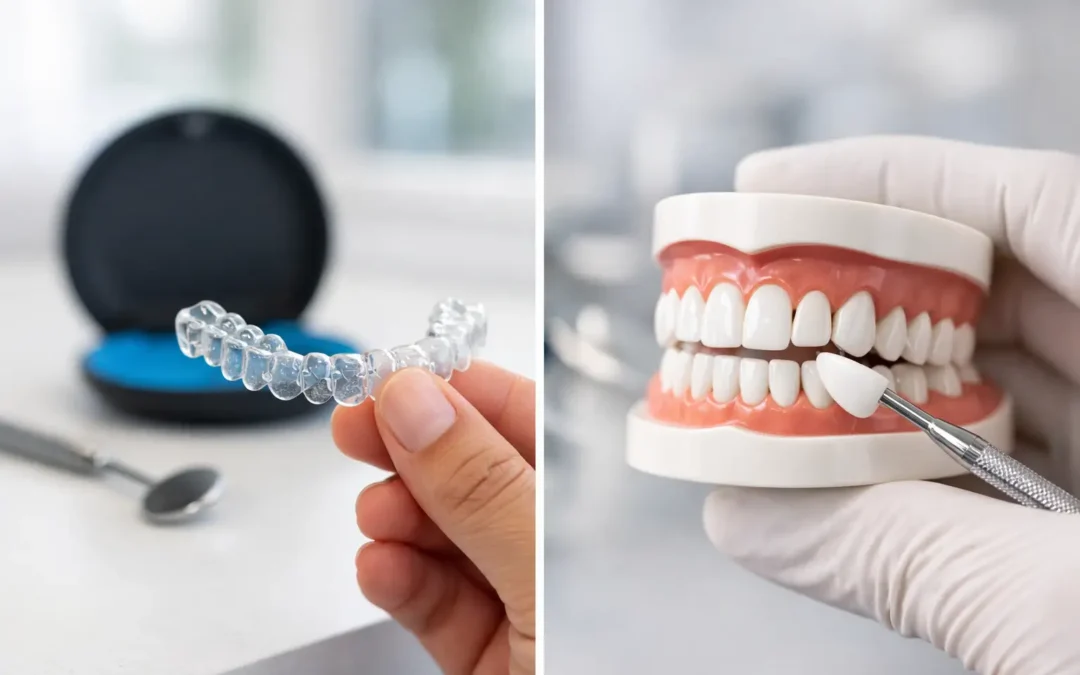
Some patients want a straighter smile. Others want a brighter, more even look fast. When the question is Invisalign vs veneers smile goals, the right answer depends on what you want to change, how quickly you want results, and whether the issue is position, shape, color, or all three.
This is where many people get stuck. Invisalign and veneers can both improve your smile, but they work in completely different ways. One moves teeth. The other changes how teeth look from the front. If you choose based on photos alone, it is easy to end up disappointed. If you choose based on your actual dental condition and long-term goals, you are much more likely to love the result.
Invisalign vs veneers smile goals: what each treatment really does
Invisalign is an orthodontic treatment. It uses a series of clear aligners to gradually move teeth into better positions. That makes it a strong option for crowding, spacing, mild to moderate bite issues, and teeth that look uneven because they are out of alignment.
Veneers are thin shells, usually made of porcelain, that are bonded to the front of teeth. They do not move teeth. Instead, they improve the visible appearance of teeth by changing color, shape, size, and surface uniformity. Veneers are often chosen for chipped teeth, worn edges, stubborn discoloration, small gaps, or teeth that look irregular.
That distinction matters. If your main concern is that your teeth are crooked, veneers may make them look straighter in some cases, but they do not correct the underlying alignment. If your teeth are already in a good position and you mostly want a whiter, more polished smile, Invisalign may not solve the cosmetic issue you actually care about.
When Invisalign makes more sense
Invisalign is usually the better choice when the foundation of your smile needs to change. If teeth overlap, twist, drift, or leave uneven spaces, clear aligners can address the root issue rather than masking it.
This often appeals to adults who want a natural improvement without changing the structure of healthy teeth. Because Invisalign works by repositioning your actual teeth, the final result can feel more conservative and health-focused. Better alignment can also make teeth easier to clean, which may support long-term oral health.
There are trade-offs. Invisalign takes time. Some cases finish in months, while others take longer. You also need to wear the aligners consistently, usually 20 to 22 hours a day, to stay on track. For busy professionals and parents, that commitment is manageable, but it does require discipline.
Invisalign is also not designed to whiten deeply stained teeth, cover chips, or change the shape of short or worn teeth. If those cosmetic details matter most to you, straightening alone may leave you wanting one more step afterward.
When veneers are the better fit
Veneers are often the better fit when your smile concerns are mostly visual and centered on the front surfaces of your teeth. They can create a dramatic upgrade in color, symmetry, and overall polish, especially when teeth are stained, uneven, chipped, or naturally small.
For patients who want a faster cosmetic transformation, veneers can be very appealing. Instead of moving teeth over time, veneers can reshape the visible smile in a more immediate way. That is one reason they are commonly associated with smile makeovers.
But veneers are not a shortcut for every problem. If teeth are significantly crooked or your bite is off, placing veneers without addressing alignment first may create compromises in appearance, function, or tooth preparation. A smile can look better in photos and still not be the healthiest long-term choice if the underlying issue was never corrected.
Veneers also require planning around durability and maintenance. Porcelain veneers are strong, but they are still a restoration that may need replacement over the years. They are an investment, and they should be placed with a clear understanding of both the aesthetic payoff and the long-term commitment.
Invisalign vs veneers smile goals by concern
If you are trying to decide between the two, it helps to narrow the question. What exactly bothers you when you look in the mirror?
If the answer is crooked teeth, crowding, or spaces, Invisalign is usually the more appropriate first step. It treats the position of the teeth, which is the real source of the issue.
If the answer is discoloration that whitening cannot fix, chips, worn edges, or uneven tooth shape, veneers may be the stronger option because they directly improve those visible details.
If your answer is all of the above, the solution may not be either-or. Some of the best cosmetic results come from combining treatments in the right order. Invisalign can first create better alignment, then veneers can refine specific teeth that still need shape or color enhancement. That approach is not necessary for everyone, but for some patients it delivers the most balanced and natural-looking result.
The question of speed vs conservation
A lot of cosmetic dental decisions come down to this tension. Do you want the fastest route to a better-looking smile, or do you want to preserve as much natural tooth structure as possible while correcting the cause of the problem?
Invisalign usually leans toward conservation. It uses your natural teeth and changes their position over time. Veneers usually lean toward immediate aesthetic impact. They can produce a noticeable upgrade faster, but they do so by placing a restoration over the front of the tooth.
Neither priority is wrong. It depends on your goals, your timeline, and your comfort level. Someone preparing for a major life event may care most about quick cosmetic improvement. Someone focused on long-term function and minimal intervention may prefer orthodontic correction first.
A good consultation should make space for both priorities instead of pushing one treatment for everyone.
What your dentist looks at before recommending either one
A proper recommendation is never based on looks alone. Your dentist should evaluate tooth position, bite, enamel condition, gum health, existing dental work, and whether habits like grinding could affect the outcome.
That matters because a smile that looks attractive also needs to function well. If you have untreated decay, gum inflammation, or bite stress, cosmetic treatment should be planned carefully around those issues. Sometimes the smartest path is to handle foundational dental needs first, then move into smile enhancement once the mouth is healthy and stable.
This is also where personalized treatment planning becomes valuable. Two patients can both ask for a straighter, whiter smile and still need completely different recommendations. One may be an excellent Invisalign candidate. Another may get better value and satisfaction from veneers. A third may benefit from a staged plan that combines both.
Cost matters, but value matters more
Patients understandably ask which option is more affordable. The answer varies by case, because Invisalign cost depends on treatment complexity and veneers cost depends on how many teeth are treated and what materials are used.
The better question is which option gives you the result you actually want. If you spend less on a treatment that does not fix your main concern, it is not really a better value. A treatment plan should match your priorities, not just a price point.
That is why honest conversations about goals and budget are so important. In many cases, there is more than one path to improvement, but the best path is the one that aligns with your health, appearance goals, and expectations for maintenance over time.
Making the right choice for your smile
If you are comparing Invisalign vs veneers smile goals, start by asking whether your biggest concern is where your teeth sit or how they look from the front. That one distinction often points the conversation in the right direction.
Invisalign is often best for correcting alignment and creating a healthier foundation. Veneers are often best for transforming visible cosmetic details like color, shape, and minor imperfections. When both alignment and aesthetics matter, a customized combination may offer the strongest result.
At United Dental Specialists, that decision starts with listening. The best cosmetic plan is not the trendiest treatment. It is the one that fits your smile, your timeline, and the outcome you want to see every time you look in the mirror.
If you are unsure which option fits your goals, that is completely normal. The most helpful next step is a conversation with a dental team that can evaluate your smile honestly and show you a path that feels right, not rushed.

Recent Comments