Losing most or all of the teeth in your upper or lower jaw changes more than your smile. It can affect the way you eat, the way you speak, and the way you feel in everyday conversations. If you have been asking what is a full arch restoration, the short answer is this: it is a treatment designed to replace an entire row of missing or severely damaged teeth with a stable, natural-looking solution.
For many patients, this option is about getting life back to normal. Meals feel easier. Smiling feels less self-conscious. And instead of managing one failing tooth after another, you can move toward a plan that restores your oral health in a more complete way.
What is a full arch restoration?
A full arch restoration replaces all the teeth in one dental arch, meaning either the upper jaw or the lower jaw. In some cases, patients need both arches restored. The treatment is commonly recommended when most teeth in an arch are missing, badly damaged, worn down, loose from gum disease, or no longer predictable to save.
Rather than treating each tooth separately, a full arch restoration looks at the entire picture. The goal is to rebuild function, appearance, and comfort across the whole arch. Depending on your needs, that restoration may involve implant-supported teeth, a full denture, or a fixed prosthetic that attaches to dental implants.
When people hear the term, they often think only about cosmetics. Appearance matters, but this treatment is also about bite support, chewing ability, jaw stability, and long-term oral health.
Who is a good candidate for full arch restoration?
This treatment is often a fit for adults who are dealing with widespread dental problems, not just one or two unhealthy teeth. You may be a candidate if you have multiple missing teeth, advanced tooth decay, broken teeth that cannot be restored predictably, or severe bone loss and gum disease that have made your natural teeth unstable.
It can also make sense for patients who already wear dentures but want more stability. Traditional dentures can shift, rub, or make chewing difficult. A full arch restoration may offer a more secure and comfortable solution, especially when implants are part of the treatment plan.
That said, candidacy depends on several factors. Your bone volume, gum health, general health, and treatment goals all matter. Some patients are ready for implant-based care right away, while others may need extractions, periodontal treatment, or bone grafting first. This is one of those situations where the right answer depends on your starting point.
How a full arch restoration works
The process starts with a comprehensive exam. Your dentist will assess the condition of your teeth, gums, jawbone, and bite. Digital imaging helps determine what can be saved, what should be removed, and which type of restoration gives you the best long-term result.
From there, your treatment plan is customized. If you still have failing teeth in the arch, they may need to be extracted. If you are a strong candidate for implants, a fixed full arch option may be recommended. This often involves placing a strategic number of implants in the jaw to support a complete set of replacement teeth.
Some patients qualify for same-day temporary teeth after implant placement. Others may heal first and receive their final restoration later. If implants are not the best choice, a conventional removable denture may still restore appearance and function, though it comes with different trade-offs.
A well-planned full arch case is never just about filling space. It is about creating a bite that feels balanced, teeth that look proportional to your face, and a result you can maintain with confidence.
Full arch restoration options
There is no single version of this treatment. The best option depends on your oral health, budget, goals, and how much stability you want.
Implant-supported full arch restoration
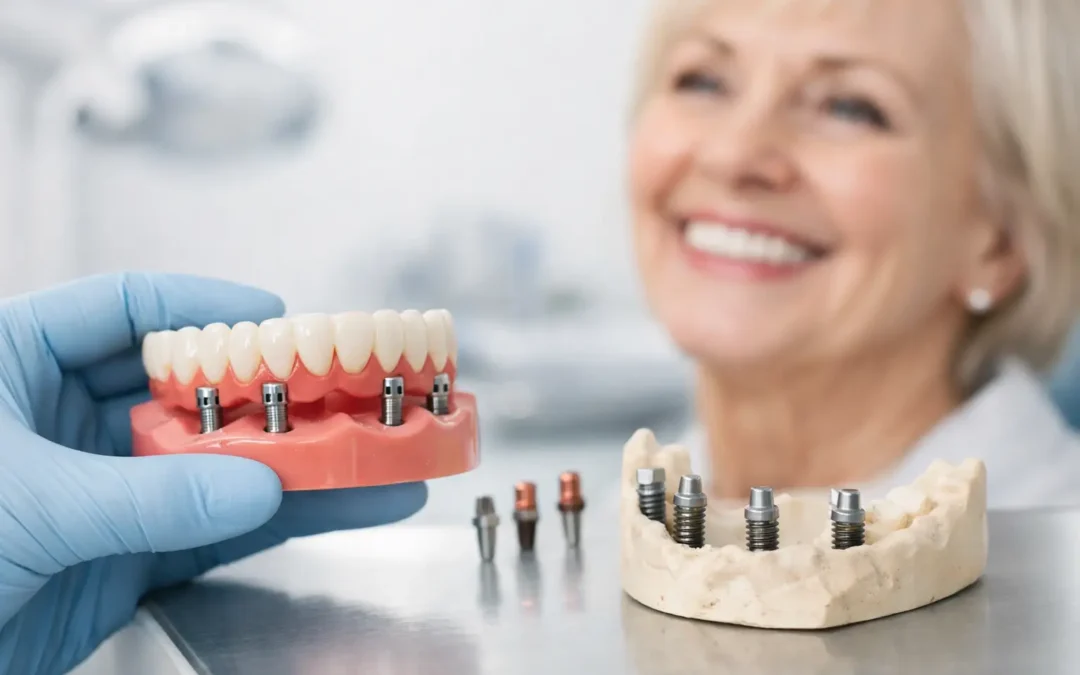
This is one of the most popular choices for patients who want a secure, long-term solution. A full set of prosthetic teeth is supported by dental implants placed in the jawbone. Because the implants act like artificial tooth roots, the restoration tends to feel more stable than a removable denture.
This option can improve chewing strength and help preserve bone over time. Many patients also prefer that it looks and feels closer to natural teeth.
All-on-4 or similar full arch implant solutions
Some full arch restorations use a system like All-on-4, where a limited number of implants support a full arch of replacement teeth. This approach can be effective for patients who want a fixed solution and may not have enough bone for a larger number of implants.
It is not automatically the right answer for everyone, but it can be life-changing for the right candidate. Careful planning is what makes the difference.
Traditional full dentures
Dentures can replace a full arch without surgery. They are usually more affordable upfront and may be appropriate for patients who do not want implants or are not medically ready for them.
The trade-off is stability. Dentures can move, require adhesives, and may not deliver the same biting power as implant-supported teeth. For some patients, they are a practical answer. For others, they are a temporary step toward a more stable restoration later.
Benefits of a full arch restoration
The biggest benefit is that it treats the problem as a whole instead of patching it one tooth at a time. When most of the teeth in an arch are failing, a full arch plan can be more efficient, more predictable, and more satisfying in the long run.
Patients often notice better chewing, clearer speech, and a major improvement in smile appearance. There is also the emotional side of treatment. Many people feel embarrassed by missing or damaged teeth, and restoring the full arch can bring back a sense of ease in social and professional settings.
Implant-supported options add another advantage by helping maintain jawbone support. When teeth are missing for too long, the bone can shrink. Replacing an entire arch with implant support may reduce that problem compared with a removable option alone.
What to expect during recovery
Recovery depends on the kind of restoration you receive. If your treatment includes extractions or implant placement, you can expect some swelling and tenderness early on. Most patients manage this period well with medication, rest, and close follow-up.
You may need to follow a softer diet while healing, especially if temporary teeth are in place. Final restorations are typically delivered after the tissues have stabilized and the implants have integrated properly, if implants are part of your care.
Adjustment is normal. Even when teeth look beautiful right away, your mouth needs time to get used to a new bite and new contours. A good dental team will monitor fit, comfort, and function closely.
How long does a full arch restoration last?
That depends on the materials used, the quality of the treatment plan, and how well you care for it afterward. Dental implants can last many years, often much longer, when they are maintained properly. The prosthetic teeth attached to them may eventually need repair or replacement from normal wear.
Traditional dentures also require maintenance and may need relining or remaking as your mouth changes over time. No restoration is completely maintenance-free. Regular checkups, home care, and professional cleanings all play a major role in protecting your investment.
Why personalized planning matters
When patients search what is a full arch restoration, they are usually not just looking for a definition. They are trying to figure out whether this is the right next step for them. That answer should never come from a one-size-fits-all recommendation.
Some people need a fixed implant solution because they want the highest level of stability. Others need a phased approach that starts with urgent care, extractions, or temporary teeth. Budget matters too, and a good treatment plan should be honest about options, limitations, and timelines.
At United Dental Specialists, the focus is on creating a plan that matches your health needs, comfort level, and smile goals. That kind of personalized approach matters because full arch treatment is a major decision, and patients deserve clarity from the start.
If you are living with multiple missing teeth, loose teeth, or a smile that no longer feels dependable, asking the right question is a strong first step. Full arch restoration is not just about replacing teeth. It is about restoring comfort, confidence, and the ability to enjoy daily life again.

Recent Comments