A dental implant may feel and function like a natural tooth, but it needs a different kind of attention at the gumline. Knowing how to clean dental implants correctly helps protect the healthy tissue and bone that keep your restoration stable, comfortable, and beautiful for years to come.
Implants cannot develop cavities, but the gums and bone around them can still become inflamed or infected. Plaque can collect where the crown meets the gumline, beneath a bridge, and in the spaces that ordinary brushing may miss. The good news is that a consistent home routine, paired with professional cleanings, can make implant care straightforward.
Why Cleaning Dental Implants Matters
Your implant restoration has several parts: the implant post in the jawbone, the connector piece, and the visible crown, bridge, or full-arch restoration. While the implant itself is made from biocompatible materials, the surrounding gums are still vulnerable to bacteria.
When plaque is not removed thoroughly, it can lead to redness, bleeding, tenderness, and bad breath. Early inflammation around an implant is often called peri-implant mucositis. Without treatment, it can progress to peri-implantitis, a more serious condition that may involve bone loss around the implant.
That does not mean implants are difficult to maintain. It means they deserve the same commitment you would give to natural teeth, with a little extra attention to the areas around the restoration. Good cleaning protects not only your oral health, but also the time and investment you have made in your new smile.
How to Clean Dental Implants Every Day
The most effective routine is one you can follow consistently. Brush twice daily, clean between the teeth or beneath the restoration once daily, and pay close attention to the gumline.
Brush Gently for Two Full Minutes
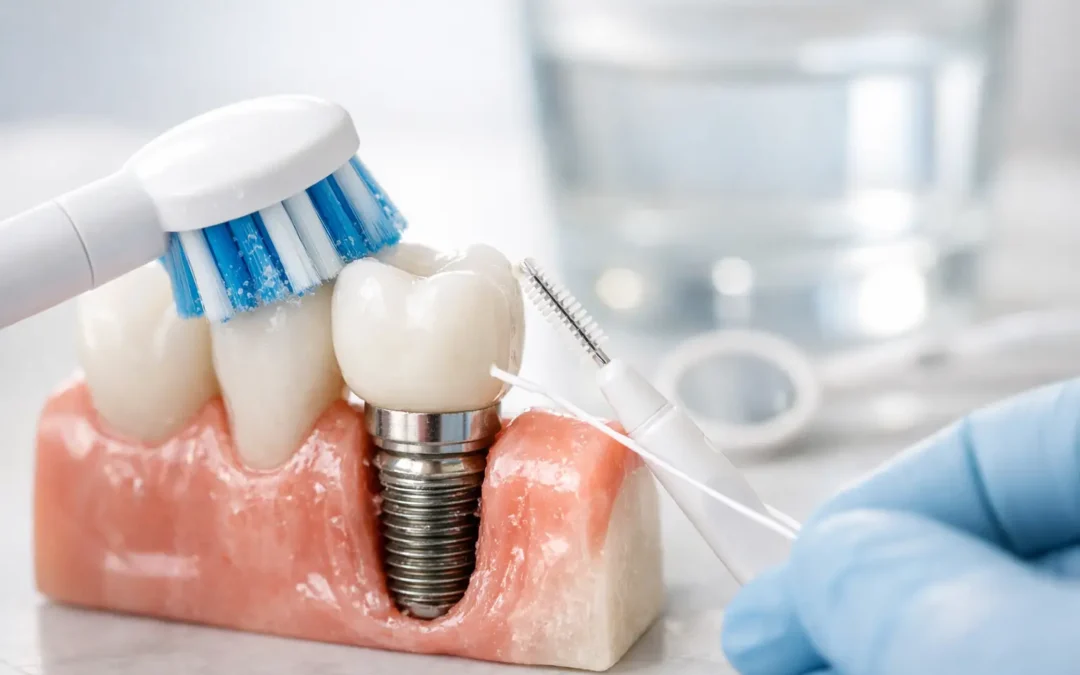
Use a soft-bristled manual toothbrush or a soft electric toothbrush head. Hold the bristles at a gentle angle toward the gumline and use small, controlled motions around every side of the implant crown. Do not scrub aggressively. Heavy pressure can irritate your gums and may not remove plaque any better.
A non-abrasive toothpaste is usually the right choice. Very gritty whitening formulas, charcoal powders, or abrasive pastes can gradually dull or scratch certain restoration materials. Fluoride toothpaste is generally safe and helpful for protecting your remaining natural teeth, unless your dentist has recommended a specific product for your needs.
Do not rush the back and tongue-side surfaces. Those areas are easy to miss, especially around implant-supported bridges. If you have an electric toothbrush with a pressure sensor or timer, it can be a useful tool for making your routine more consistent.
Clean Between Teeth and Under Bridges
Brushing alone does not reach the tight spaces between teeth or beneath an implant bridge. The best method depends on the type of restoration you have and the shape of the spaces around it.
For a single implant crown, floss may be appropriate if it moves comfortably between the implant and neighboring teeth. Use a gentle sawing motion rather than snapping floss down through the contact point. Implant-specific floss, soft woven floss, or a floss threader may be easier to use around wider spaces.
For implant-supported bridges, you may need to clean underneath the artificial teeth. A floss threader can guide soft floss below the bridge so you can sweep it back and forth along the gumline. Many patients also benefit from an interdental brush designed for implant care. Choose a soft brush with a plastic-coated or nylon-coated wire, and use a size recommended by your dental team. A brush that is too large can traumatize the tissue, while one that is too small may not clean effectively.
A water flosser can be an excellent addition, particularly for full-arch restorations and bridges. It helps flush food particles from hard-to-reach areas and can make daily care feel more comfortable. Still, it works best as a complement to brushing and other between-teeth cleaning, not as a substitute for every other step.
Rinse When It Supports Your Routine
An alcohol-free antimicrobial mouth rinse may be recommended if you have gum inflammation, dry mouth, or a history of periodontal disease. However, mouthwash is not a replacement for mechanical plaque removal with a toothbrush, floss, or interdental cleaner.
If you are unsure which rinse is right for you, ask your dentist or hygienist. Some patients need a short-term prescription rinse after treatment, while others only need a gentle over-the-counter option as part of everyday maintenance.
Choose Tools That Protect Your Restoration
The right products should clean effectively without scratching the implant crown, damaging gum tissue, or making your mouth uncomfortable. Your dental team may personalize recommendations, especially if you have several implants, sensitive gums, or a full-arch restoration.
In general, use soft bristles, low-abrasion toothpaste, gentle floss, and implant-safe interdental brushes. Avoid using sharp metal instruments, toothpicks that splinter, or hard bristles to dig around the crown. You should also be cautious with highly abrasive stain-removal products. A clean implant should look polished and natural, not scratched from overly aggressive home care.
Smoking and frequent tobacco use can also make maintaining implant health more challenging by affecting gum healing and increasing the risk of complications. If you smoke, your dentist can discuss practical steps to protect your implants and support your overall oral health.
Caring for All-on-4 and Full-Arch Implants
Full-arch implant restorations can restore confidence, chewing comfort, and the appearance of a complete smile. They also create areas underneath the bridge where food debris and plaque can collect. Daily cleaning is essential.
Use a soft toothbrush to clean the visible teeth, gums, and the transition area where the bridge meets your gums. A water flosser is particularly helpful for gently flushing beneath the prosthesis. Many patients also use a floss threader, implant floss, or a specially shaped interdental brush to clean under the bridge more thoroughly.
The exact method depends on whether your restoration is fixed or removable. Never try to remove a fixed full-arch bridge yourself. If you have a removable overdenture, follow the instructions provided by your dentist for taking it out, brushing it, and cleaning around the attachments. When in doubt, bring your cleaning tools to your next appointment and ask for a hands-on demonstration.
Professional Implant Cleanings Are Not Optional
Even an excellent home routine cannot remove hardened tartar or fully evaluate the health of the tissues around an implant. Regular professional visits allow your dental team to check your bite, inspect the crown or bridge, monitor your gum health, and use instruments appropriate for implant restorations.
Your recommended schedule may be every three, four, or six months. It depends on your history of gum disease, how many implants you have, your home-care routine, and whether you have a bridge or full-arch restoration. Patients with a history of periodontal disease often benefit from more frequent maintenance visits.
At these appointments, let your hygienist know if food has been getting trapped, floss has started catching, or your bite feels different. Small changes can be easier to address before they become bigger problems.
Signs You Should Call Your Dentist
Healthy implants should not bleed, feel painful, or move. Schedule an evaluation promptly if you notice bleeding when brushing, swollen or receding gums, persistent bad breath, a bad taste, pus, pain when chewing, looseness, or a change in how your crown or bridge fits.
Do not wait to see whether these symptoms go away on their own. Early care can often protect the tissues around an implant and help prevent more extensive treatment later. If a crown feels loose or breaks, avoid chewing on that side until you are seen.
A few careful minutes each day can help your implant stay healthy, functional, and natural-looking. If you would like a personalized implant-cleaning routine or have concerns about your restoration, the team at United Dental Specialists can help you feel confident in every step of your care.

Recent Comments