A slightly rotated front tooth can change how you feel in photos. More significant crowding can make brushing difficult, strain your bite, or leave you avoiding foods you enjoy. The best options for crooked teeth are not one-size-fits-all because the right choice depends on your alignment, bite, oral health, timeline, and goals for your smile.
At United Dental Specialists, treatment begins with a conversation about what you want to change and a thorough evaluation of what your teeth and gums need. Some patients want the most discreet way to straighten their smile. Others need a solution that improves both appearance and chewing comfort. A personalized plan helps you make a confident decision without paying for treatment you do not need.
Why Crooked Teeth Deserve More Than a Cosmetic Fix
Crooked teeth are often viewed as an appearance concern, but alignment can affect daily oral health. Overlapping teeth create tight spaces where plaque can collect. If floss cannot reach easily or a toothbrush misses areas around crowded teeth, the risk of cavities and gum inflammation can increase over time.
A misaligned bite may also place uneven pressure on certain teeth. Some patients notice chipping, tooth sensitivity, jaw discomfort, or wear along the edges of their teeth. These symptoms do not automatically mean orthodontic treatment is necessary, but they are good reasons to schedule an evaluation rather than choosing a cosmetic option based on photos alone.
Before moving teeth or placing restorations, your dentist should check for gum disease, untreated decay, cracked teeth, and bite concerns. A healthy foundation protects the investment you make in your smile.
The Best Options for Crooked Teeth
Invisalign clear aligners
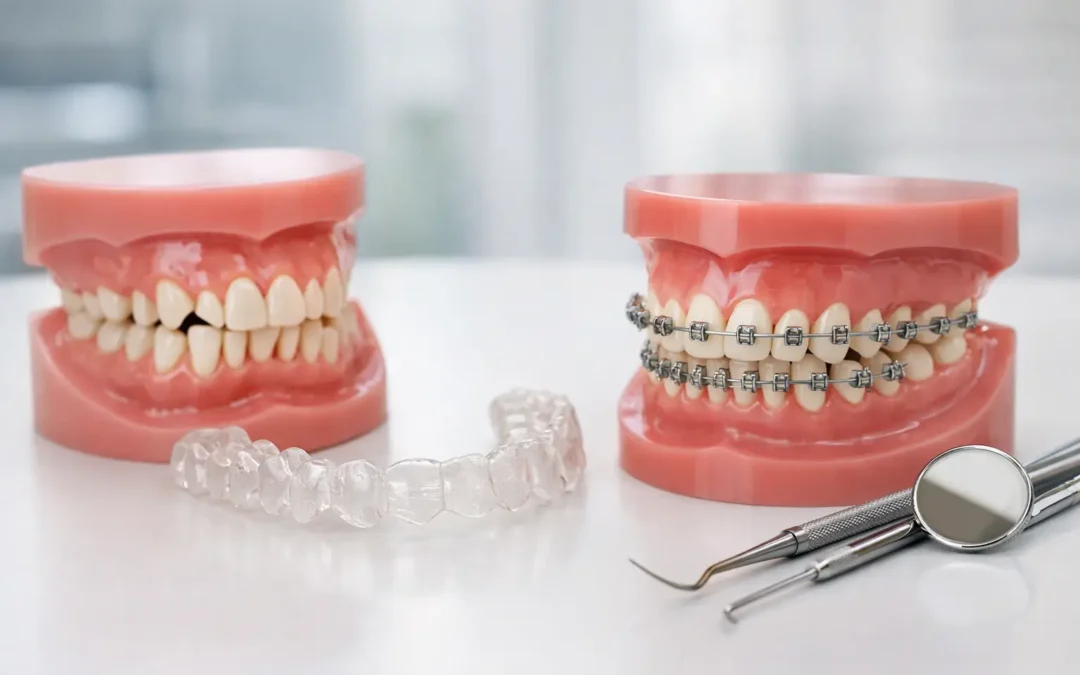
Invisalign uses a series of custom, removable clear aligners to gradually guide teeth into planned positions. For adults who want an inconspicuous option, it is often the first treatment they ask about. The aligners are smooth, removable for meals and brushing, and designed around your individual smile goals.
Clear aligners can address many cases of spacing, crowding, and mild to moderate bite concerns. They are especially appealing for working professionals and anyone who prefers not to have brackets and wires visible during treatment. However, they work best when worn consistently, usually 20 to 22 hours each day. Leaving aligners out frequently can delay progress and affect results.
Treatment length varies. Some limited cases can be completed in months, while more involved alignment and bite correction can take longer. Attachments, which are small tooth-colored shapes placed on certain teeth, may be needed to help the aligners create precise movements. They are usually subtle, but patients should know about them before choosing this approach.
Traditional braces
Traditional braces remain one of the most reliable choices for complex tooth movement and significant bite correction. Brackets and wires stay in place, so they do not rely on the same daily wear discipline required with removable aligners. For teens, adults with more involved orthodontic needs, or patients who prefer a fixed treatment method, braces can be the better path.
The trade-off is visibility and maintenance. Food can collect around brackets, so careful brushing and flossing are essential. Certain crunchy, sticky, or hard foods may need to be avoided during treatment. Modern braces are smaller and more comfortable than many people remember, but they are still a more noticeable option than clear aligners.
Porcelain veneers
Veneers are thin, custom porcelain shells bonded to the front surfaces of teeth. They do not move teeth. Instead, they can create the appearance of a straighter, more balanced smile by improving the visible shape, color, size, and alignment of selected teeth.
For someone with minor crookedness plus chips, discoloration, uneven edges, or gaps, veneers can be an excellent cosmetic solution. The results are immediate once the final veneers are placed, which may appeal to patients preparing for a wedding, career milestone, or other important event.
Veneers are not appropriate for every crooked smile. If teeth are severely crowded, the bite is unstable, or the misalignment affects function, straightening may be the healthier choice first. Veneer treatment also typically requires removing a small amount of enamel, making it an irreversible decision. A careful smile evaluation should determine whether veneers will look natural, function well, and protect your long-term oral health.
Dental bonding
Dental bonding uses tooth-colored composite material to reshape a tooth, close a small gap, or mask a minor rotation. It is a conservative option for small cosmetic changes and can often be completed in a single visit. Bonding may be a practical choice when one front tooth looks slightly out of place but the rest of the smile is healthy and aligned.
Composite is generally less costly than porcelain veneers, but it is also more likely to stain, chip, or wear over time. It may need polishing, repair, or replacement. Bonding improves what is visible, but it does not correct the underlying tooth position or bite.
Crowns and restorative treatment
A crown may be recommended when a crooked tooth is also heavily decayed, fractured, worn down, or weakened by a large filling. A well-designed crown can restore strength and improve the tooth’s shape and appearance. Like veneers and bonding, however, a crown is a restorative solution, not orthodontic treatment.
If a tooth is missing, neighboring teeth may shift into the open space and create new alignment concerns. Replacing the missing tooth with an appropriate restorative option can help support a stable bite. In these situations, timing matters. Your dentist may recommend orthodontic treatment before, after, or in coordination with restorative care so the final result fits comfortably and looks natural.
How to Choose the Right Treatment
The quickest solution is not always the best solution, and the most comprehensive treatment is not always necessary. Your dentist will look at the degree of crowding or spacing, the health of your gums, your bite, the condition of existing dental work, and whether you want to change only a few teeth or your entire smile.
Your daily routine matters, too. Invisalign is convenient for brushing and eating, but it requires commitment. Braces are always working, but they require more careful cleaning. Veneers can provide a dramatic cosmetic transformation, yet they are best reserved for cases where reshaping the visible teeth is clinically appropriate.
Budget is another honest part of the conversation. Orthodontic treatment, veneers, bonding, and restorative care have different costs, treatment timelines, and maintenance needs. A clear treatment plan should explain the expected investment and the reason a particular option is being recommended. Ask whether treatment can be phased if you have multiple concerns, such as crowding, discoloration, and worn teeth.
What to Expect From a Smile Consultation
A cosmetic or orthodontic consultation should feel informative, not pressured. Your appointment may include digital imaging, photographs, bite evaluation, and a review of your dental and medical history. These details help your dental team see issues that are not obvious in the mirror, such as gum recession, tooth wear, or a bite that could limit cosmetic results.
Come prepared to describe what bothers you most. Is it one crooked front tooth? A crowded lower smile? A gap that has become more noticeable? Are you concerned about treatment being visible at work, or do you want the most efficient route to a broader smile makeover? Specific goals help shape a recommendation that makes sense for your life.
You should also ask how long treatment may take, what follow-up visits are needed, and how results are maintained. After teeth are straightened, retainers are essential. Teeth naturally have a tendency to shift over time, and wearing retainers as directed helps protect your new alignment. Veneers, bonding, and crowns also need ongoing dental care, including routine cleanings and good home hygiene.
A Healthy, Confident Smile Starts With a Clear Plan
You do not have to settle for a smile that feels difficult to clean, uncomfortable to bite with, or hard to show in photos. Whether your needs call for Invisalign, braces, veneers, bonding, or a combination of care, the best next step is a professional evaluation that considers your health as carefully as your appearance.
Schedule a consultation to discuss your goals, ask direct questions about your options, and leave with a treatment plan built for your smile. A well-planned result can make everyday moments, from sharing a meal to smiling without hesitation, feel more comfortable.

Recent Comments