
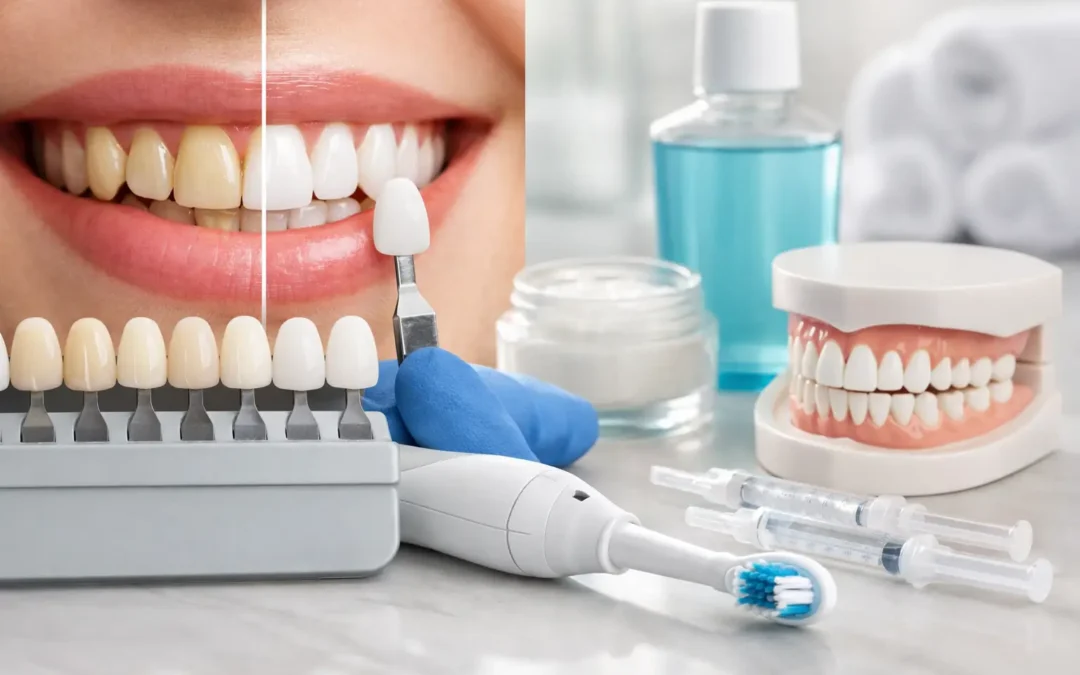
A bright smile can make a meaningful difference at work, in photos, and in everyday conversations. But stains are not all the same, which is why the best treatments for stained teeth depend on what caused the discoloration, where it sits in the tooth, and the condition of your enamel. The right plan should improve your smile without creating unnecessary sensitivity or overlooking an underlying dental concern.
Coffee, tea, red wine, tobacco, aging, certain medications, and past dental trauma can all change the color of teeth. Some discoloration responds beautifully to whitening. Other stains require a cosmetic restoration, such as bonding or porcelain veneers, for a natural-looking result. A professional examination is the best starting point because it helps identify the treatment that fits your goals, oral health, and budget.
Why Teeth Become Stained
Surface stains, also called extrinsic stains, develop on the outer enamel. Dark drinks, richly colored foods, tobacco use, and inadequate plaque removal are common contributors. These stains are often the most responsive to a professional cleaning and whitening treatment.
Intrinsic discoloration begins inside the tooth. It can be related to aging, a childhood illness, certain antibiotics taken while teeth were developing, excess fluoride exposure, tooth decay, or an injury that affected the tooth’s nerve. A tooth that turns gray, brown, or noticeably darker than the teeth around it deserves a dental evaluation. Whitening may help in some cases, but it will not always address the source of the color change.
It is also common for dental work to create a color mismatch over time. Crowns, fillings, bonding, and veneers do not whiten with bleaching gel. If your natural teeth become brighter, an older restoration may stand out more clearly and may need to be replaced for a balanced smile.
The Best Treatments for Stained Teeth
Professional Dental Cleaning for Surface Buildup
Sometimes what looks like deep discoloration is a combination of plaque, tartar, and surface staining. A professional cleaning removes hardened buildup that brushing cannot remove at home and can noticeably refresh the appearance of teeth.
Cleaning is an essential first step, particularly if it has been a while since your last visit. It does not change the natural shade of enamel, so it will not produce the same result as whitening. Still, it can make teeth look cleaner and brighter while supporting healthier gums and fresher breath.
Professional Teeth Whitening for Overall Yellowing
Professional whitening is one of the most effective options for healthy teeth with generalized yellowing or staining from foods, drinks, and tobacco. Dentists use carefully selected whitening agents and protect the gums and soft tissues during treatment. Depending on your needs, whitening may be completed in the office, with custom take-home trays, or through a combination of both.
In-office whitening is a good choice for patients who want a faster visible change before a wedding, job interview, vacation, or important event. Custom take-home trays offer more gradual whitening and can be convenient for patients who prefer to brighten their smile on their own schedule. Both approaches are more predictable than over-the-counter strips because the treatment is tailored to your teeth and monitored by a dental team.
Sensitivity is the main trade-off. It is usually temporary, but people with exposed roots, worn enamel, cracks, cavities, or gum recession may need treatment for those concerns before whitening. A dentist can adjust the plan, recommend a desensitizing product, or use a gentler approach to help keep you comfortable.
Whitening for a Single Dark Tooth
One dark tooth should not be treated like a full-smile cosmetic concern until its cause is understood. Trauma or infection can affect the nerve inside a tooth, leading to a gray or brown appearance. If root canal treatment is needed or has already been completed, internal bleaching may be an option to lighten the tooth from within.
This treatment is different from standard whitening and is performed only after a dentist confirms that the tooth is healthy enough for the procedure. In other cases, a crown or veneer may be the better solution, especially if the tooth is also weak, cracked, or heavily restored.
Composite Bonding for Small, Localized Stains
Composite bonding uses tooth-colored resin to cover a stubborn spot or improve the appearance of a small area of discoloration. It can also correct minor chips, uneven edges, and small gaps, making it a practical choice for patients who want several subtle improvements at once.
Bonding is generally more conservative and less costly than veneers. However, resin can stain over time, particularly with coffee, tea, red wine, or tobacco exposure. It may require polishing, repair, or replacement in the future. For the right case, it provides an attractive improvement with minimal alteration of the natural tooth.
Porcelain Veneers for Deep or Resistant Discoloration
Porcelain veneers are thin, custom-made shells placed on the front of teeth. They are often recommended when discoloration is severe, internal, uneven, or resistant to whitening. Veneers can also improve the shape, size, spacing, and symmetry of teeth, which makes them a strong option for patients seeking a more comprehensive smile transformation.
Porcelain is highly stain resistant and can be customized to complement your facial features and desired level of brightness. The trade-off is that veneers are a more involved cosmetic treatment than whitening or bonding, and some enamel preparation is often needed. A careful consultation helps determine whether veneers are appropriate and ensures the final shade looks bright but still natural.
Crowns When Color and Strength Both Need Attention
A dental crown covers the entire visible portion of a tooth. It may be recommended when a tooth is dark and also has significant decay, a large filling, a fracture, or structural weakness. While a veneer focuses on the front surface for cosmetic enhancement, a crown is designed to restore both appearance and function.
Crowns are not the first option for every stained tooth. When the tooth is otherwise healthy, a more conservative treatment may be preferable. But when damage is present, restoring the tooth’s strength is just as important as improving its color.
What About Store-Bought Whitening Products?
Whitening toothpaste, strips, pens, and rinses can help with mild surface stains, but they have limits. Whitening toothpaste mainly works by polishing away surface discoloration and may be abrasive if used too aggressively. Strips can lighten teeth for some people, yet they may not fit evenly, can irritate gums, and do not address cavities, sensitivity, or a dark tooth caused by trauma.
Over-the-counter products are not necessarily wrong for every patient. They may be reasonable for mild staining and healthy teeth. Still, professional guidance is valuable if you have crowns or veneers, gum recession, tooth sensitivity, uneven color, or a stain that appeared suddenly.
How to Keep Your Smile Brighter After Treatment
Whitening and cosmetic treatments look their best when supported by consistent care. Brush twice daily with fluoride toothpaste, clean between teeth every day, and keep regular dental cleaning appointments. If you enjoy coffee, tea, or red wine, rinsing with water afterward can reduce the time pigments stay on enamel. Using a straw for cold dark beverages can also limit contact with front teeth.
Tobacco is one of the most persistent causes of tooth staining and can affect gum health as well. Reducing or stopping use protects both your cosmetic results and your long-term oral health. If you have porcelain veneers, bonding, or crowns, regular professional care also helps preserve the polish and allows your dentist to monitor the surrounding teeth and gums.
Choose a Plan That Matches Your Smile
The most effective treatment is not always the strongest whitening product or the most dramatic cosmetic procedure. It is the option that addresses the actual cause of discoloration while protecting your teeth and giving you a result that feels like you. At United Dental Specialists, a personalized cosmetic consultation can help you compare whitening, bonding, veneers, and restorative options with clarity and confidence.
A stained smile does not have to be something you hide. With a thoughtful evaluation and a treatment plan built around your goals, you can move toward a healthier-looking smile that feels comfortable to share.

Recent Comments