
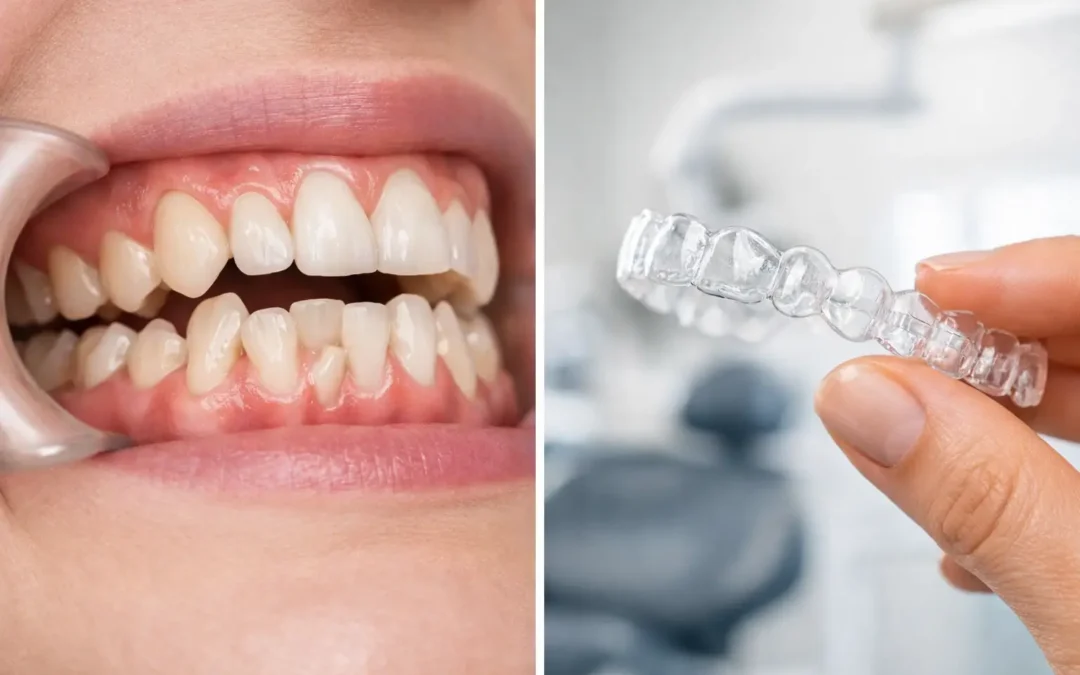
If you avoid photos because your front teeth overlap, or you have a hard time flossing between tight spaces, you may be asking a very practical question: can Invisalign fix crowded teeth? In many cases, yes. Clear aligners can correct mild to moderate crowding and, in some situations, even more complex cases. The real answer depends on how crowded your teeth are, how your bite fits together, and whether your teeth have enough room to move safely.
Crowding is more than a cosmetic concern. When teeth overlap or rotate out of position, they can be harder to clean, which raises the risk of plaque buildup, cavities, and gum irritation. For many adults, treatment is not just about a straighter smile. It is also about making daily oral care easier and protecting long-term dental health.
Can Invisalign fix crowded teeth in every case?
Not every crowded smile should be treated the same way. Invisalign works by using a series of custom-made clear aligners that gradually move teeth into better alignment. This approach is often very effective for patients with mild to moderate crowding, especially when the goal is to create a more even smile line and improve spacing for cleaning.
That said, severe crowding can be more complicated. If there is not enough space in the arch, or if crowding is tied to a significant bite issue, treatment may require additional planning. Some patients may still be candidates for Invisalign, but they might need attachments, enamel reshaping, or other techniques to create space. In the most complex cases, traditional braces may offer more control.
This is why a consultation matters. Two people can both say their teeth are crowded, but their treatment plans may look very different.
What makes someone a good candidate for Invisalign?
A good candidate usually has healthy teeth and gums, realistic expectations, and crowding that can be corrected with controlled tooth movement. Adults often do especially well with Invisalign because they are motivated to wear the aligners consistently. Since aligners need to be worn about 20 to 22 hours a day, patient commitment plays a major role in the final result.
Your dentist will also look at the full picture, not just the front teeth. Crowding may be visible in the smile, but the position of the back teeth and the way your bite closes are just as important. If the bite is unstable, simply straightening the front teeth without addressing function can create problems later.
Patients with gum disease, untreated cavities, or significant jaw discrepancies may need other dental care before starting Invisalign. In those cases, the right first step is to stabilize oral health and then move forward with alignment if appropriate.
How Invisalign creates space for crowded teeth
One of the biggest questions patients have is how teeth can straighten if there does not seem to be enough room. Invisalign treatment does not magically shrink teeth or expand the mouth without limits. Instead, it uses planned movement to make better use of available space.
Sometimes this means gently widening the arch. In other cases, it means rotating teeth so they sit more efficiently. For some patients, small amounts of enamel can be reshaped between selected teeth to create the room needed for alignment. This process is conservative and carefully planned. It is not used in every case, but it can be very helpful when crowding is mild to moderate.
Attachments may also be placed on certain teeth. These small tooth-colored shapes help the aligners grip the teeth more effectively and guide difficult movements. They are a normal part of many Invisalign cases and can make a big difference in the outcome.
Invisalign vs braces for crowded teeth
If you are comparing options, the biggest advantage of Invisalign is convenience. The aligners are removable, nearly invisible, and easier to live with during work, social events, and everyday meals. For many adults in Doral and Miami Lakes, that matters. You can straighten your teeth without the look of metal braces, and brushing and flossing are much simpler because you remove the aligners before cleaning.
Braces, however, still have an important place in orthodontic care. They can be a better choice for severe crowding, major bite problems, or cases where highly precise movement is needed from the start. Because braces stay on 24 hours a day, they also remove the compliance factor. You do not have to remember to wear them.
This is where honest guidance matters. The best treatment is not the one that sounds easiest. It is the one that matches your dental needs, timeline, and goals.
How long does Invisalign take for crowded teeth?
Treatment time depends on the complexity of the case. Mild crowding may improve in as little as several months, while moderate or more involved cases often take 12 to 18 months. Some patients need refinements after the first series of aligners, which means additional trays are used to fine-tune the result.
What speeds treatment up or slows it down is not just biology. It is also consistency. If aligners are worn as directed, teeth tend to move on schedule. If they are left out too often, progress can stall and treatment may take longer than expected.
Most patients change to a new set of aligners every one to two weeks and come in for periodic check-ins. These visits are typically straightforward and shorter than many orthodontic appointments with braces, which is one reason busy adults appreciate the process.
What Invisalign can and cannot do
Invisalign can be excellent for correcting overlapping teeth, mild to moderate crowding, rotated teeth, and certain bite concerns. It can improve smile appearance, reduce hard-to-clean overlaps, and support better oral hygiene. For many adults, it offers a balance of comfort, discretion, and strong results.
Still, there are limits. If crowding is severe, if teeth need major vertical movement, or if there are skeletal jaw issues behind the alignment problem, clear aligners may not be the ideal stand-alone solution. Some patients need a different orthodontic approach, while others benefit from a combined treatment plan.
That does not mean Invisalign is off the table. It means your treatment should be based on clinical reality, not a one-size-fits-all promise.
Why crowded teeth should not be ignored
Many adults assume crowded teeth are just a cosmetic issue they have lived with for years. But even mild crowding can create daily challenges. Tight contact points trap food. Overlapping teeth are harder to brush and floss thoroughly. Some patients notice uneven wear, gum inflammation, or recurring buildup in the same areas.
There is also the confidence factor. When patients feel self-conscious about their smile, they often hide it. Straightening crowded teeth can improve appearance, but the benefit usually goes beyond that. Patients often describe feeling more comfortable speaking, smiling, and showing up confidently in personal and professional settings.
Can Invisalign fix crowded teeth for adults?
Yes, and adults are some of the most common Invisalign patients. Teeth can be moved safely at many ages as long as the surrounding bone and gum tissue are healthy. In fact, many adults seek treatment after years of postponing orthodontic care because they want a less noticeable option.
Adult treatment does require thoughtful planning. Existing dental work like crowns, veneers, implants, or bridges can affect how teeth move and what kind of result is realistic. That is why a personalized exam is so important. A custom plan can account for your current dental health, cosmetic goals, and any restorative work you may need now or in the future.
At United Dental Specialists, that kind of planning matters because the goal is not just straighter teeth. It is a healthier, more confident smile that fits your overall dental needs.
What to expect at your consultation
A consultation should give you clarity, not pressure. Your dentist will examine your teeth, bite, and gums, discuss your goals, and determine whether Invisalign is a strong option for your specific case. Imaging and digital scans may be used to map tooth movement and show what treatment could realistically achieve.
This visit is also the time to talk about concerns such as treatment length, appearance, comfort, and budget. If Invisalign is a good fit, you should leave with a clear sense of the process and what your next steps would be. If it is not the best option, a trustworthy provider will tell you that too.
If you have been wondering whether crowded teeth can be corrected without braces, the best answer starts with a professional evaluation. A smile that looks crowded on the surface may be very treatable with clear aligners, and a custom plan can show you what is possible before you commit. Sometimes the most valuable first step is simply getting a clear, honest answer.

Recent Comments