
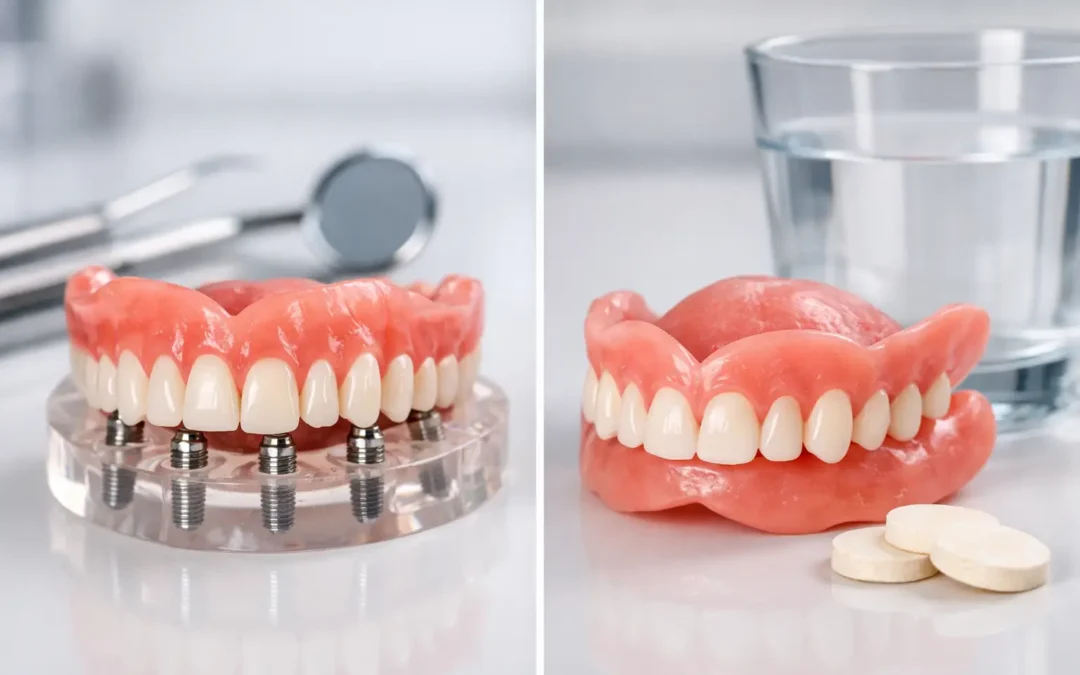
A denture that slips during lunch, clicks while speaking, or needs adhesive every morning can affect far more than your ability to eat. It can change how freely you smile, socialize, and feel in professional settings. When weighing implant dentures vs traditional dentures, the right choice depends on your oral health, priorities, lifestyle, and the kind of long-term support you want for your smile.
Both options can replace missing teeth and restore appearance. The key difference is how they stay in place. Traditional dentures rest on the gums, while implant dentures are anchored to dental implants placed in the jawbone. That distinction influences comfort, chewing ability, maintenance, treatment time, and cost.
How Traditional Dentures Work
Traditional dentures are removable appliances designed to replace a full arch of missing teeth or several teeth. Full dentures replace all teeth in the upper or lower jaw. Partial dentures fill gaps when healthy natural teeth remain.
A full denture is custom-made to fit over the gums. Upper dentures generally gain extra stability from the natural suction created against the roof of the mouth. Lower dentures sit on the gum ridge and are more likely to shift because the tongue and lower jaw move frequently. Some patients use denture adhesive for a more secure daily fit.
Traditional dentures remain a practical solution for many patients. They usually involve a shorter treatment process and a lower upfront investment than implant-based treatment. They can also be a suitable choice for patients who are not ready for surgery or who need a replacement option while considering future restorative care.
Still, dentures do not stop the jawbone from shrinking after tooth loss. As the bone and gum tissue change over time, a denture may become loose and need adjustment, relining, or replacement. Even a well-made denture can take time to get used to, especially when eating firmer foods or speaking clearly.
What Are Implant Dentures?
Implant dentures use small titanium implant posts placed in the jawbone as secure anchors for replacement teeth. After the implants integrate with the bone, they can support a removable denture that snaps into place or a fixed full-arch restoration that is only removed by a dental professional.
This is not one single treatment. An implant-supported overdenture is removable for cleaning but attaches securely to implants, often using two to six implants depending on the arch and treatment plan. A fixed implant denture, including an All-on-4-style full-arch solution when appropriate, stays in place and is designed to function more like natural teeth.
Because the restoration is supported by implants instead of resting only on the gums, it is typically more stable during eating and speaking. Implants also stimulate the jawbone, which helps preserve bone volume that would otherwise diminish after tooth loss.
Fixed vs. Removable Implant Dentures
A removable implant overdenture can be an excellent middle ground for someone who wants much more security than a conventional denture without choosing a fixed restoration. It can be taken out at home for cleaning, but it stays attached during normal daily activities.
A fixed implant denture offers the closest experience to having a non-removable set of teeth. Patients often appreciate not having to remove the restoration at night. However, it requires careful cleaning around the implants and scheduled professional maintenance to protect the gums and supporting bone.
Neither design is automatically better. The best option comes down to your dexterity, cleaning preferences, bone support, budget, and goals for comfort and appearance.
Implant Dentures vs Traditional Dentures: The Everyday Differences
The daily experience is where many patients notice the largest difference. Traditional dentures can restore a smile effectively, but they may move when chewing sticky foods or speaking with force. Implant dentures are designed to stay more firmly in place, giving many patients greater confidence with meals, conversations, and laughter.
Chewing ability is another important factor. Conventional dentures can make certain foods difficult, particularly nuts, crisp vegetables, steak, and chewy breads. With implant support, biting force and stability are often improved. That can expand food choices and make it easier to maintain a balanced diet. Individual results vary, and a gradual adjustment period is still normal.
Comfort also matters. A traditional denture puts pressure on gum tissue, which can lead to sore spots if the fit changes. Implant dentures transfer more support to the implants, reducing movement and friction on the gums. For lower dentures in particular, that added stability can be life-changing for the right patient.
On the other hand, traditional dentures avoid implant surgery and can usually be completed more quickly. Implant treatment requires planning, healing time, and a commitment to maintaining excellent oral hygiene. Patients with untreated gum disease, uncontrolled medical conditions, or significant bone loss may need additional care before implants can be placed safely.
Cost Should Be Viewed as a Long-Term Decision
Traditional dentures are generally the more affordable option at the start. They are often an appropriate choice when a patient needs to replace teeth promptly or is working within a limited budget. However, they may need periodic relines as the gums and bone change, and they will eventually need replacement.
Implant dentures require a higher initial investment because treatment includes surgery, implant components, custom restorations, and follow-up care. In some cases, bone grafting or extractions are also part of the plan. Yet their stability, longevity, and potential to preserve jawbone can make them a valuable long-term option for many patients.
The most useful question is not simply, “Which costs less?” It is, “Which option gives me the function, comfort, and confidence I need over time?” A personalized consultation can clarify available treatment paths and help you understand how to phase care if needed.
Who May Be a Good Candidate for Implant Dentures?
Many adults with missing teeth can be considered for implants, including people who have worn dentures for years. A dental examination and imaging help determine whether there is sufficient bone and where implants can be placed safely. Even when bone loss has occurred, solutions such as grafting or strategically planned full-arch treatment may be possible.
Good candidates are willing to follow aftercare instructions and keep up with routine dental visits. Implants do not get cavities, but the surrounding gums and bone still need protection. Daily brushing, cleaning beneath or around the restoration as instructed, and professional hygiene visits are essential.
Smoking, active periodontal disease, uncontrolled diabetes, and certain health conditions can affect healing and implant success. These do not always rule out treatment, but they should be discussed openly with the dental team. A responsible plan accounts for your full health history rather than promising the same solution to every patient.
How to Choose the Right Denture Option
Start by thinking about the moments that matter most to you. If you need an efficient, removable tooth-replacement solution with a lower upfront cost, traditional dentures may meet your needs well. If your biggest concern is a loose lower denture, limited food choices, or wanting a restoration that feels more secure, implant dentures may be worth exploring.
It also helps to consider your future goals. A temporary or conventional denture does not prevent you from considering implants later, although earlier planning can sometimes preserve more treatment options. If remaining teeth are failing, a full-arch evaluation can reveal whether saving individual teeth, using a partial denture, or pursuing an implant-supported solution is the healthiest path.
At United Dental Specialists, treatment planning begins with listening to what you want to change about your smile and what will make care realistic for your life. The best denture is not the most advertised option. It is the one that restores your ability to eat, speak, and smile comfortably while supporting your oral health for years ahead.
If missing teeth have made you hold back, a thoughtful consultation can turn an uncertain decision into a clear plan built around your comfort, confidence, and goals.

Recent Comments