
That small chip or cavity can turn into a bigger decision than most patients expect. When your dentist says a tooth can be repaired with either a crown or a filling, understanding dental crown vs filling differences helps you choose a treatment that protects your tooth, fits your goals, and avoids repeat dental work later.
A lot of people assume the less extensive option is always the better one. Sometimes that is true. A filling can be a simple, conservative fix that restores a tooth quickly. But if a tooth is cracked, weakened, or has lost too much structure, a crown may be the option that gives you better long-term strength and fewer problems down the road.
Dental crown vs filling differences at a glance
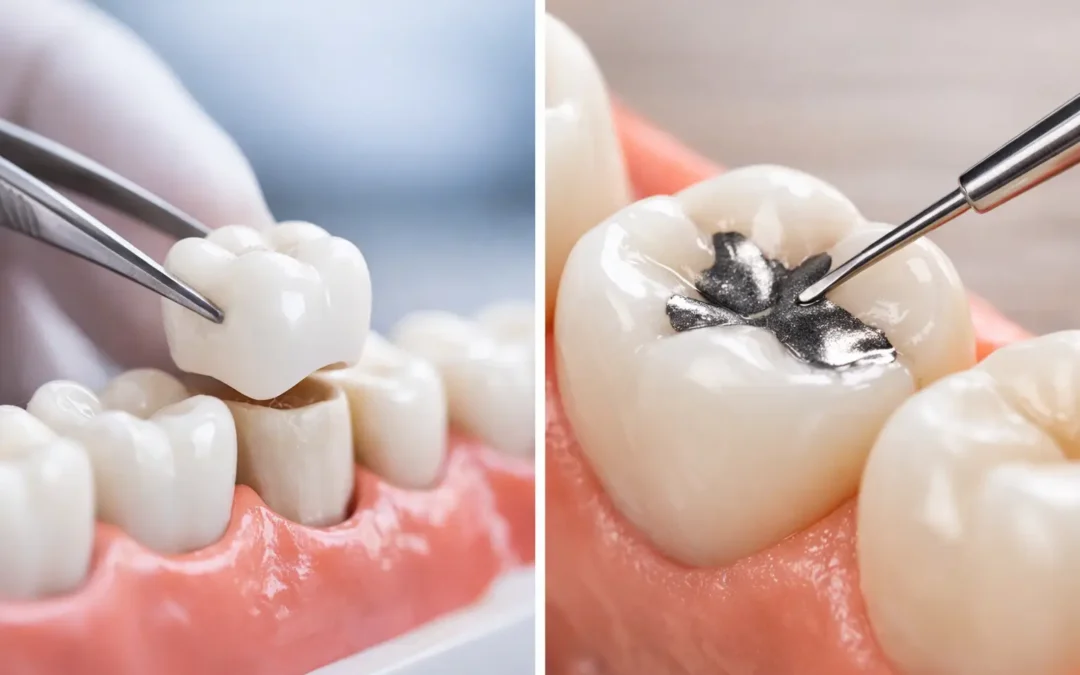
The biggest difference is how much of the tooth each treatment restores and protects. A filling repairs a smaller area of damage. It fills in a cavity or minor broken section while keeping most of the natural tooth exposed. A crown covers the entire visible portion of the tooth like a custom cap, adding support when the tooth is too damaged or fragile for a filling alone.
That difference matters because teeth do not just need to look intact. They need to handle pressure from chewing, temperature changes, and daily wear. If the remaining tooth is still strong, a filling is often enough. If the tooth is structurally compromised, a crown may be the safer choice.
When a filling makes sense
A filling is usually recommended when decay is limited, the tooth has enough healthy structure left, and the damage has not significantly weakened the tooth. This is often the case with small to moderate cavities caught before they spread too deeply.
For many patients, fillings are appealing because they are quicker, more conservative, and typically cost less upfront than crowns. Tooth-colored composite fillings also blend in well, which makes them a good option for visible teeth as well as back teeth with modest damage.
A filling may be the right choice if your tooth has a small cavity, minor wear, or a chipped edge that does not affect overall strength. It can also be a practical option when preserving as much natural tooth as possible is the main goal.
Still, there is a limit. If too much of the tooth has broken down, a filling can act more like a patch than a true reinforcement. In those cases, the tooth may continue to crack or the filling may fail under pressure.
When a crown is the better option
A crown is often recommended when a tooth has large decay, a significant fracture, an old filling that has become too large, or weakness after root canal treatment. Because the crown covers and protects the entire visible tooth, it helps distribute biting forces more evenly.
This is one of the most important dental crown vs filling differences. A crown is not just replacing missing material. It is protecting the tooth from further breakdown. That is why crowns are frequently used for molars, heavily restored teeth, and teeth that need both functional and cosmetic improvement.
Crowns are also a strong option when appearance matters. A custom porcelain or ceramic crown can improve shape, color, and symmetry while restoring strength. For patients who want a tooth to feel secure and look natural, that combination can be worth the added treatment time.
Strength, durability, and long-term protection
If you are comparing a crown and a filling, durability usually comes down to the amount of healthy tooth that remains. Fillings can last for years, especially when they are placed in smaller areas and maintained well. But they rely on the surrounding tooth structure to stay stable.
Crowns generally offer more protection for weakened teeth because they surround the tooth and reduce the risk of additional fractures. That does not mean a crown is always stronger in every situation. It means a crown is often the more protective option when the tooth itself is no longer strong enough to support a filling predictably.
Think of it this way. A filling restores part of the tooth. A crown reinforces the whole visible tooth. If your dentist is concerned about cracking, chewing pressure, or repeated repairs, that is usually a sign the tooth may need more than a filling can offer.
Cost differences and value over time
Cost is part of the conversation for almost every patient, and understandably so. Fillings usually cost less upfront because they require less material, less lab work, and often less treatment time. If the tooth qualifies for a filling, that can be the most efficient and budget-friendly solution.
Crowns usually cost more because they involve a custom restoration and more detailed preparation. But lower upfront cost is not always lower long-term cost. If a large filling fails, cracks the remaining tooth, or needs to be replaced repeatedly, the total expense over time may be higher than choosing a crown earlier.
This is where an honest evaluation matters. The right question is not just, Which costs less today? It is also, Which treatment gives this tooth the best chance to stay stable and comfortable for years?
Appearance and how natural each option looks
Both crowns and fillings can look very natural when done well. Tooth-colored fillings are designed to blend with your enamel and can be a great cosmetic choice for smaller repairs. They are especially popular for front teeth and visible areas where metal fillings are less desirable.
Crowns can provide an even more complete cosmetic upgrade because they reshape and cover the whole tooth. If a tooth is discolored, worn, misshapen, or heavily restored, a crown can create a cleaner and more uniform appearance.
For some patients, the choice is mostly functional. For others, aesthetics are a major factor. If your concern includes how the tooth looks when you smile, your dentist should weigh both health and appearance when recommending treatment.
The treatment process is different too
Fillings are usually completed in one visit. The damaged part of the tooth is removed, the area is cleaned, and the filling material is placed and shaped. For many patients, it is a straightforward appointment with minimal recovery time.
Crowns typically require more planning. The tooth is reshaped, impressions or digital scans are taken, and a custom crown is made to fit your bite and smile. Some offices offer same-day technology, while others place a temporary crown before the final one is delivered.
Neither option is automatically better because it is faster or more involved. The real question is which one fits the condition of the tooth.
It depends on the tooth, not just the cavity
One of the most common misunderstandings is thinking treatment decisions are based only on the size of a cavity. In reality, your dentist looks at several factors: how much tooth structure remains, whether there are cracks, where the tooth is located, how much biting force it handles, whether there is an old restoration already in place, and how likely the tooth is to fracture later.
A moderate cavity on a front tooth may do well with a filling. A similar-sized issue on a back molar that absorbs heavy chewing force may be a better candidate for a crown. A tooth that has already had multiple fillings can also reach a point where another filling removes more support than it preserves.
That is why treatment should be personalized. The best recommendation is the one that matches your tooth’s condition today and helps prevent a more serious problem tomorrow.
How to know what is right for you
If you are deciding between the two, ask your dentist a few direct questions. Is the tooth weak or just decayed? How much natural tooth is left? If you choose a filling now, how likely is it that the tooth will need a crown later? Are there cosmetic benefits to one option over the other? What does your bite tell us about how much stress this tooth handles?
Clear answers matter. You should understand not only what is being recommended, but why. At United Dental Specialists, that kind of personalized planning is part of helping patients feel confident in their care, whether the goal is pain relief, stronger chewing, or a more natural-looking smile.
A better restoration is the one that protects your future tooth health
The most useful way to think about crowns and fillings is not which one is bigger or more expensive. It is which one gives your tooth the support it truly needs. A filling is often the right answer for smaller, more conservative repairs. A crown is often the better investment when a tooth needs full coverage and added protection.
If you have been told you may need one or the other, do not guess based on price or convenience alone. A careful exam can show whether your tooth needs a simple repair or stronger long-term reinforcement. The right choice should leave you with a tooth that feels secure every time you bite, chew, and smile.

Recent Comments