
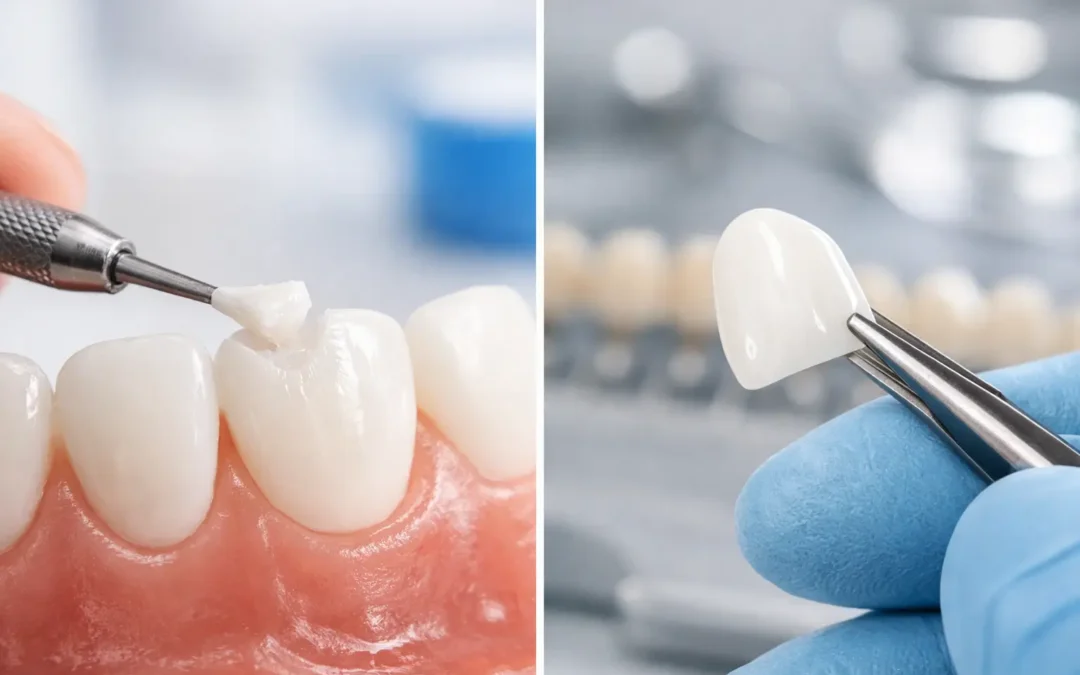
A chipped front tooth can change the way you smile, speak, and feel in photos, even when the chip is small. When comparing veneers vs bonding for chips, the right choice is not always the same for every patient. The size and location of the chip, the condition of the tooth, your bite, your cosmetic goals, and how long you want the result to last all matter.
At United Dental Specialists, we help patients make clear, personalized decisions about cosmetic dental treatment. Both bonding and porcelain veneers can create a natural-looking repair. The best option is the one that protects your tooth while helping you feel confident about your smile.
What Dental Bonding Does for a Chipped Tooth
Dental bonding uses a tooth-colored composite resin to rebuild the missing area of a tooth. Your dentist carefully matches the resin to the shade of your natural enamel, shapes it to restore the tooth’s contour, and hardens it with a curing light. The material is then polished so it blends into your smile.
For many minor chips, bonding is a conservative solution because it usually requires little to no removal of healthy enamel. Treatment can often be completed in one appointment, making it a practical option when you want to address a visible chip quickly.
Bonding is especially useful when the damage is limited to one small corner or edge, or when a tooth needs a modest cosmetic adjustment. It can also improve uneven edges, small gaps, and localized discoloration.
The trade-off is that composite resin is not as strong or stain-resistant as porcelain. Coffee, tea, red wine, and tobacco can gradually affect its color. Bonding can also chip or wear over time, particularly for patients who bite their nails, chew ice, grind their teeth, or have a heavy bite. Repairs are usually straightforward, but the restoration may need touch-ups or replacement in the future.
How Porcelain Veneers Repair Chips
A porcelain veneer is a thin, custom-crafted shell that covers the front surface of a tooth. Rather than simply filling the chipped area, a veneer can change the visible shape, color, length, and overall appearance of the tooth. It is designed to look like natural enamel while providing a polished, long-lasting cosmetic result.
Veneers are often a stronger choice when a chip is more noticeable, when the tooth has several cosmetic concerns, or when you want to improve multiple front teeth for a more balanced smile. For example, a patient may have a chipped incisor along with staining, slight unevenness, or worn edges. A veneer can address these concerns together rather than treating each one separately.
Porcelain is highly stain-resistant and reflects light in a way that closely resembles natural tooth enamel. With consistent home care and regular dental visits, veneers can maintain their appearance for many years.
Because veneers need room to fit naturally, the dentist generally removes a small amount of enamel from the front of the tooth. This preparation is conservative, but it is permanent. Veneers also require more planning than bonding and are usually completed over more than one visit. A temporary veneer may be used while your custom restoration is being made.
Veneers vs Bonding for Chips: The Key Differences
The decision often comes down to the extent of the damage and the result you want over time. Bonding focuses on replacing the missing portion of the tooth. Veneers provide a broader cosmetic transformation by covering the visible front of the tooth.
Bonding is generally the more affordable initial treatment and can be completed quickly. It is a sensible solution for a small, isolated chip on a tooth that is otherwise healthy, well-shaped, and color-matched to the rest of your smile. It can also be a good choice for patients who want a conservative first step before considering more extensive cosmetic work.
Veneers typically involve a higher investment, but they offer greater durability, color stability, and control over the final appearance. They may be worth considering if the chip is part of a larger concern, such as repeated breakage, significant tooth wear, persistent discoloration, or several front teeth that do not look even.
Neither option is automatically better. A small chip on one otherwise attractive tooth may not need a veneer. On the other hand, placing bonding on a heavily worn or repeatedly chipped tooth may lead to frequent repairs when a veneer or another restorative option would be more predictable.
Your Bite Matters More Than You May Think
A chip is not always just a cosmetic issue. It may be the result of an accident, but it can also signal a bite imbalance, nighttime teeth grinding, or enamel weakened by decay. If the cause is not addressed, a repaired tooth can chip again.
During your evaluation, your dentist will look at how your teeth meet when you bite and move your jaw. If you grind or clench, a custom nightguard may be recommended to protect bonding, veneers, and your natural teeth. If the chip is caused by crowding or alignment concerns, Invisalign treatment may be part of a longer-term plan for improving function and appearance.
A tooth with a deep crack, extensive decay, or substantial loss of structure may need a different treatment altogether. In some cases, a dental crown offers better protection than either bonding or a veneer. If the tooth is painful, sensitive, loose, or has a sharp edge that is cutting your tongue or cheek, schedule an appointment promptly rather than waiting for a cosmetic consultation.
Appearance, Longevity, and Daily Care
Both treatments can look very natural when planned and placed well. Bonding is artistically shaped directly on the tooth, and a skilled dentist can make a small repair difficult to notice. However, it may gradually lose its polish or pick up surface stains.
Porcelain veneers offer excellent color consistency and a smooth finish that resists staining better than composite resin. They are often chosen by patients who want a brighter, more uniform smile. If you are considering whitening, it is best to discuss timing before veneers are made. Porcelain does not whiten after placement, so your veneer shade should be selected to coordinate with the color you want for your natural teeth.
Whether you choose bonding or veneers, care is simple but essential. Brush twice daily with a non-abrasive toothpaste, floss every day, and keep up with professional cleanings. Avoid using your teeth to open packages or bite hard objects. If you play contact sports, wear a properly fitted mouthguard.
How to Choose With Confidence
The most useful question is not, “Which treatment is best?” It is, “Which treatment best fits this tooth and my goals?” Bring up what matters to you during your consultation: whether you need a quick repair, want to preserve as much enamel as possible, are concerned about budget, or want to improve your entire smile.
Your dentist can evaluate the chip, take digital images when appropriate, discuss your options, and explain the expected maintenance for each choice. You should leave the appointment understanding why a specific treatment is recommended, what it will look like, and how to protect your result.
A chip does not have to become the feature you notice first in the mirror. With the right diagnosis and a personalized treatment plan, you can restore a tooth that looks natural, feels comfortable, and lets you smile without holding back.

Recent Comments