by Dr. David Bennett | Jun 15, 2026 | Uncategorized |
A bright smile can change the way you show up in photos, meetings, and everyday conversations. But when patients ask about veneers vs teeth whitening, they are usually not asking for the most popular cosmetic treatment. They are asking which option will actually solve their specific concern and feel worth the investment.
That distinction matters. Teeth whitening and veneers can both improve the look of your smile, but they do very different jobs. One is designed to lift stain and brighten natural teeth. The other changes the visible front surface of the teeth themselves, which means it can address color along with shape, size, spacing, and minor cosmetic flaws.
Veneers vs teeth whitening: the real difference
Teeth whitening is the more conservative option. It works by using professional whitening agents to break up stains within the enamel and dentin, helping natural teeth look several shades brighter. If your main concern is yellowing from coffee, tea, red wine, smoking, or age-related discoloration, whitening may be all you need.
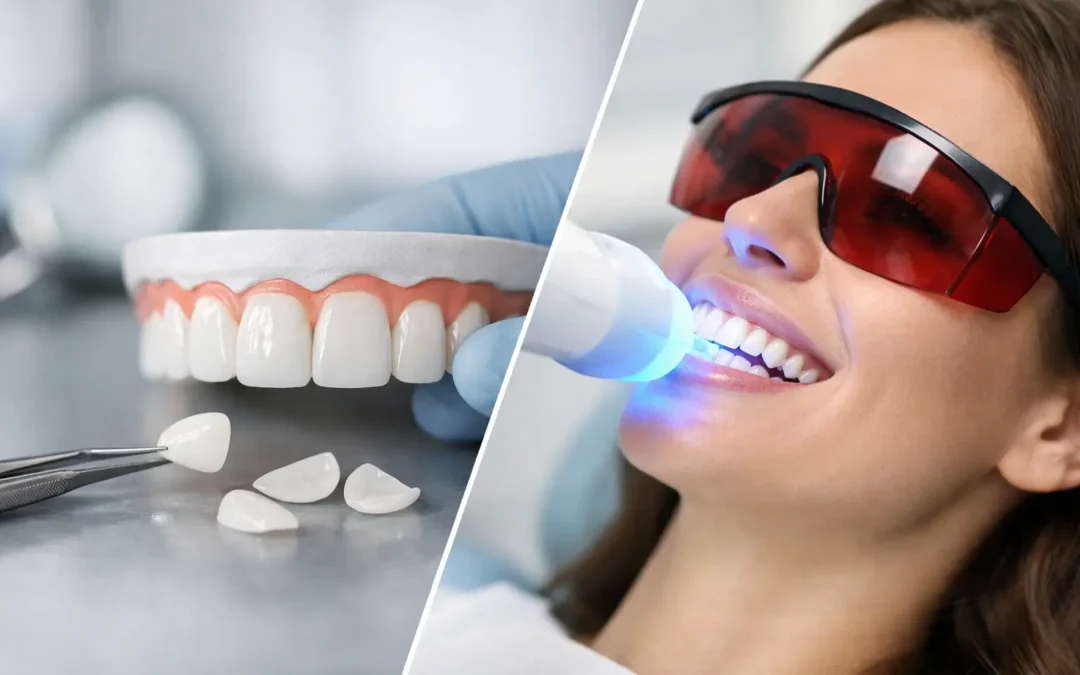
Veneers are thin shells, often made of porcelain, that are bonded to the front of the teeth. Because they cover the visible surface, they can create a more dramatic cosmetic change. Veneers are often chosen when a patient wants brighter teeth but also wants to improve chips, uneven edges, worn enamel, small gaps, or teeth that look too short or misshapen.
In simple terms, whitening improves what is already there. Veneers redesign what people see.
When teeth whitening makes the most sense
If your teeth are healthy, generally straight, and you like their overall shape, teeth whitening is usually the first place to look. It is quicker, more affordable, and less invasive than veneers. For many adults, especially those preparing for a wedding, job interview, special event, or just wanting to refresh their appearance, professional whitening can deliver noticeable results without changing the structure of the teeth.
Whitening tends to work best on external staining and natural yellow tones. It can also be an excellent option for patients who want cosmetic improvement but prefer to start with the simplest treatment available.
That said, whitening has limits. It will not change the shape of a tooth. It will not fix a chip or close a gap. It also does not work the same way on every kind of discoloration. Gray, brown, or deeply internal stains can be more resistant, and whitening will not change the color of crowns, bonding, or veneers you already have.
If you have old dental work on front teeth, your smile can end up brighter in some areas than others. That is one reason a cosmetic consultation matters before choosing a treatment.
Benefits of professional whitening
Professional whitening is popular for good reason. It is efficient, safe when supervised by a dental team, and tailored to your enamel, sensitivity level, and smile goals. Compared with over-the-counter products, in-office and dentist-guided whitening usually produces stronger and more predictable results.
It also preserves your natural tooth structure. For patients who are happy with their smile overall and only want a brighter appearance, that is a meaningful advantage.
When veneers are the better choice
Veneers make more sense when color is only part of the issue. If you look at your smile and notice multiple concerns at once, whitening alone may leave you disappointed. A tooth may still look too small. A chipped edge may still draw attention. Uneven spacing may still bother you every time you smile.
Veneers can address several cosmetic concerns in one treatment plan. They are often ideal for patients with stubborn discoloration that does not respond well to whitening, especially internal staining from medications, trauma, or enamel defects. They are also a strong option for people who want a more polished, balanced smile and are ready for a longer-lasting cosmetic upgrade.
Because veneers are custom-designed, the result can be very controlled. Your dentist can plan the shade, contour, length, and symmetry so the smile looks brighter and more refined without appearing artificial.
What veneers can fix that whitening cannot
This is where veneers stand apart. They can improve:
- Deep discoloration that resists whitening
- Chipped or worn teeth
- Small gaps between teeth
- Mildly uneven or misshapen teeth
- Teeth that appear too short or disproportionate
For the right patient, veneers are not just about making teeth whiter. They can make the whole smile look more harmonious.
Cost, longevity, and maintenance
For most patients, the veneers vs teeth whitening decision also comes down to cost and long-term value.
Teeth whitening has a lower upfront cost. It is one of the most accessible cosmetic dental treatments, which makes it attractive for patients who want visible improvement without a major commitment. However, whitening is not permanent. Results fade over time, especially if you regularly drink coffee, tea, red wine, or use tobacco. Many patients need touch-ups to maintain their preferred shade.
Veneers cost more initially because they involve custom design, preparation, and placement. But they also last much longer than whitening results when properly cared for. Porcelain veneers are stain-resistant and durable, though they are not indestructible. Biting hard objects, grinding your teeth, or poor oral hygiene can shorten their lifespan.
Maintenance matters with both options. Whitening requires periodic upkeep. Veneers require excellent brushing, flossing, routine dental visits, and habits that protect your investment.
The better value depends on your goals. If you want a simpler brightness boost, whitening often makes sense. If you want to correct several cosmetic issues at once and invest in a more transformative change, veneers may justify the higher cost.
Which treatment looks more natural?
Both can look very natural when done well. Professional whitening keeps your natural teeth, just in a brighter shade. For patients who already like their smile, this often feels the most authentic because nothing about the tooth shape changes.
Veneers can also look beautifully natural, but the planning matters. The best veneer cases are not about creating an overly white, uniform smile that looks obvious from across the room. They are about choosing proportions and shades that fit your face, lip line, and overall appearance.
This is why provider experience matters so much. Cosmetic dentistry should be personalized, not one-size-fits-all.
How to decide between veneers and whitening
If you are comparing veneers vs teeth whitening, start by asking a more useful question: what exactly bothers you about your smile?
If the answer is mainly color, whitening may be enough. If the answer includes color plus shape, chips, spacing, or uneven teeth, veneers may be the more complete solution.
It also helps to think about timing and commitment. Whitening is faster and easier to start. Veneers require planning and are a bigger decision because the treatment is more involved. Some patients are ready for that level of change right away. Others prefer to start conservatively.
There is also a middle ground. In some cases, patients whiten first and then decide whether they still want veneers on a few visible teeth. That approach can be especially helpful when you want improvement but are not sure how much treatment you actually need.
A consultation gives you the clearest answer
Online research can help you understand the basics, but it cannot evaluate your enamel, existing dental work, bite, or the type of discoloration you have. Those details shape the best recommendation.
A cosmetic consultation should feel straightforward and personal. Your dentist should listen to what you want, examine the health of your teeth and gums, explain your options clearly, and talk honestly about trade-offs. In a practice like United Dental Specialists, that conversation is built around both appearance and long-term oral health, because the best cosmetic result is one that also supports a healthy smile.
Some patients come in convinced they need veneers and learn that whitening will give them the result they wanted. Others start by asking for whitening and realize veneers would solve the issues that have bothered them for years. That is why the right plan is always individual.
The best cosmetic treatment is not the one with the biggest name or the whitest result. It is the one that fits your teeth, your goals, and the way you want to feel when you smile. If you are ready to improve your smile, start with a professional conversation and choose the option that truly matches what you see in the mirror.
by Dr. David Bennett | Jun 13, 2026 | Uncategorized |
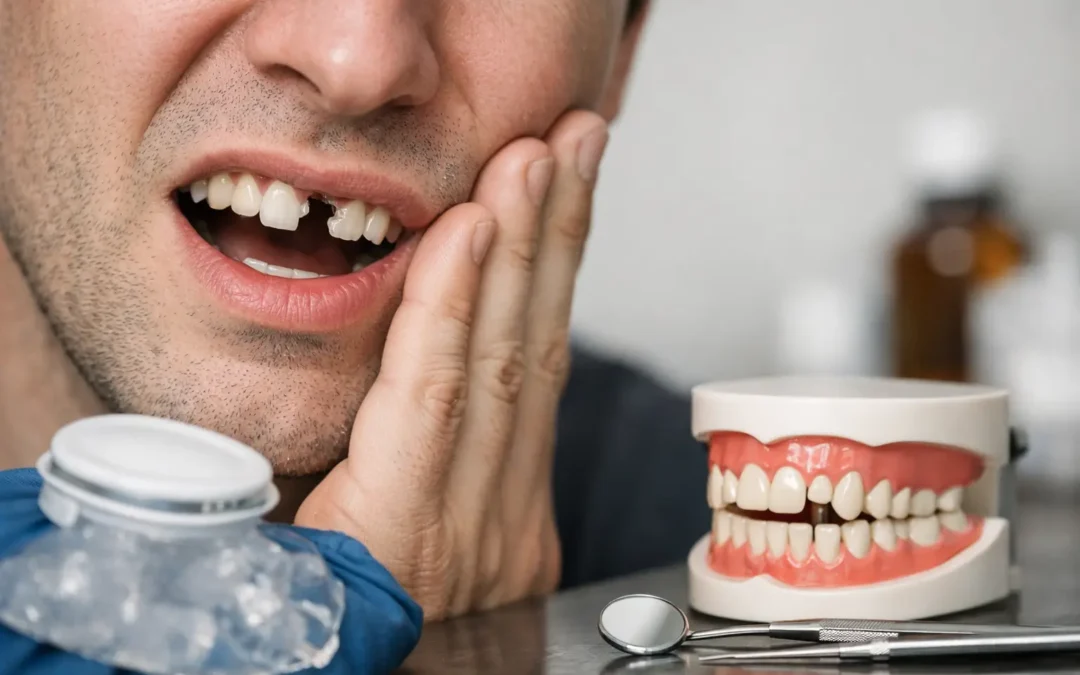
A broken tooth has a way of stopping your day cold. One bite of something hard, one accidental fall, or one old filling giving out can leave you with sharp pain, a jagged edge, or a visible chip that makes you worry every time you speak or smile. If you are wondering what to do for a broken tooth, the first priority is to protect the tooth, reduce irritation, and get professional care as soon as possible.
Some broken teeth are obvious right away. You may hear a crack, feel a rough edge with your tongue, or notice sensitivity to cold air and water. Other times, the damage is less dramatic but still serious, especially if the crack extends below the surface or exposes the inner part of the tooth. Even a small fracture can worsen if you keep chewing on it or wait too long to have it examined.
What to do for a broken tooth right away
Start by rinsing your mouth gently with warm water. This helps clear away debris and gives you a better sense of where the injury is. If there is bleeding from the gums or surrounding tissue, apply light pressure with clean gauze. If swelling begins, place a cold compress on the outside of your cheek in short intervals.
Try not to touch or test the broken area repeatedly. A rough tooth edge can cut your tongue or cheek, so covering it with dental wax can help until you are seen. If you do not have dental wax, sugar-free gum can work as a short-term barrier. Avoid using glue, household adhesives, or any DIY repair kit that is not recommended by a dental professional.
Pain can vary quite a bit. Some people feel only mild sensitivity, while others experience sharp pain when biting down. An over-the-counter pain reliever may help, but it is best to avoid placing aspirin directly on the gum or tooth. That can irritate the tissue and make things worse rather than better.
If a piece of the tooth broke off and you can find it, save it in a clean container and bring it to your appointment. It may not always be usable, but your dentist will want to see it. The more information you can provide about when the tooth broke and what symptoms started afterward, the easier it is to plan the right treatment.
When a broken tooth is a dental emergency
Not every chip is an emergency, but some situations should be treated urgently. If the break causes severe pain, significant bleeding, visible swelling, or a large missing portion of the tooth, it is best to call for emergency dental care the same day. The same goes for any broken front tooth that affects appearance and confidence in a major way, especially if the damage is sudden and noticeable.
A crack that reaches the nerve can quickly become more painful. You might notice throbbing, lingering sensitivity, or pain that gets worse when you eat. In some cases, a broken tooth also leaves the inside of the tooth exposed, which increases the risk of infection. If you see a pink or red area inside the tooth, or if the tooth feels loose after trauma, do not wait.
There is also the issue of timing. A small fracture on Monday may feel manageable, but by Friday it can become a larger break, a deeper crack, or a source of infection. Prompt care often means more conservative treatment and a better chance of saving the tooth.
What not to do for a broken tooth
Knowing what to avoid matters almost as much as knowing what to do. Do not chew on the affected side. Even soft foods can place pressure on a weakened tooth and cause more damage. Skip crunchy, sticky, very hot, or very cold foods until a dentist has evaluated the area.
Do not assume that no pain means no problem. Some cracks are painless at first, especially if the damage has not yet reached the nerve. That does not mean the tooth is stable. A tooth can still fracture further below the gumline, where treatment becomes more complex.
It is also a mistake to put off care because the break looks minor. Cosmetic damage and structural damage are not always the same thing. A tooth that appears only chipped may have an underlying crack that requires a crown or another restorative solution.
How dentists treat a broken tooth
The right treatment depends on how much tooth structure is lost, whether the nerve is involved, and where the tooth is located. For a very small chip, smoothing and bonding may be enough. Tooth-colored bonding can restore shape, improve comfort, and blend naturally with your smile.
If the tooth has a larger fracture but still has healthy structure remaining, a dental crown is often the best option. A crown covers and strengthens the tooth, which is especially important for back teeth that handle heavy chewing forces. In many cases, this is the most reliable way to protect a weakened tooth from breaking again.
If the broken tooth has exposed or damaged the nerve, root canal treatment may be needed before the tooth is restored. That sounds intimidating to some patients, but the goal is straightforward: remove the damaged tissue, stop pain, and save the tooth whenever possible.
Sometimes the damage is too severe to repair with bonding, a filling, or a crown. If the tooth is broken below the gumline or split in a way that cannot be restored, extraction may be the safest choice. When that happens, replacement matters. Leaving a gap can affect your bite, your appearance, and the health of surrounding teeth. Options such as a dental implant or bridge can restore both function and confidence.
What to do for a broken tooth if it is a front tooth
A broken front tooth tends to feel more urgent because it affects your appearance immediately. It can also make you self-conscious at work, in social settings, or even on a video call. The good news is that many front tooth injuries can be repaired very effectively with cosmetic and restorative treatments.
For a small chip, bonding may provide a fast, natural-looking fix. If the break is larger or the tooth has multiple fractures, a veneer or crown may be a better long-term solution. The choice depends on the extent of damage and whether the goal is purely cosmetic, structural, or both.
This is where experience and planning matter. A front tooth restoration needs to do more than just fill space. It has to match the surrounding teeth in color, shape, and balance. That is why prompt care from a dentist who understands both function and smile aesthetics can make a big difference.
Caring for your mouth until your appointment
Until you are seen, keep your mouth as calm and protected as possible. Eat soft foods like yogurt, eggs, soup, or pasta, and chew on the opposite side. Stay away from hard breads, nuts, ice, chips, and anything sticky that could pull at the damaged tooth.
Continue brushing gently and keeping the area clean, but do not scrub the broken section aggressively. If floss catches around the tooth, be cautious. You want to reduce the chance of irritation without trapping food and bacteria around the injury.
If swelling or discomfort increases, that is a sign to move faster, not slower. Pain that builds, swelling near the gumline, or a bad taste in the mouth can suggest infection or deeper internal damage.
Why fast treatment protects more than the tooth
A broken tooth is not just a one-tooth problem. It can affect how you chew, how your bite lines up, and how comfortable you feel speaking or smiling. If you start avoiding one side of your mouth, other teeth and jaw muscles may take on extra strain. If the tooth becomes infected, the issue can spread beyond simple repair.
There is also the confidence side of it, which matters more than many people admit. A visible broken tooth can make you cover your mouth when you laugh, hesitate in conversations, or put off photos and events. Restoring the tooth quickly is not only about function. It is also about helping you feel like yourself again.
At United Dental Specialists, patients dealing with a broken tooth are evaluated with both urgency and long-term results in mind. The goal is to relieve pain, preserve as much healthy tooth structure as possible, and recommend the treatment that fits your needs, your timeline, and your smile.
If you break a tooth, do the simple things first: rinse, protect it, avoid chewing on it, and call a dentist promptly. The sooner you act, the better your chances of keeping treatment simpler, saving the tooth, and getting back to eating, speaking, and smiling without second-guessing every bite.
by Dr. David Bennett | Jun 11, 2026 | Uncategorized |
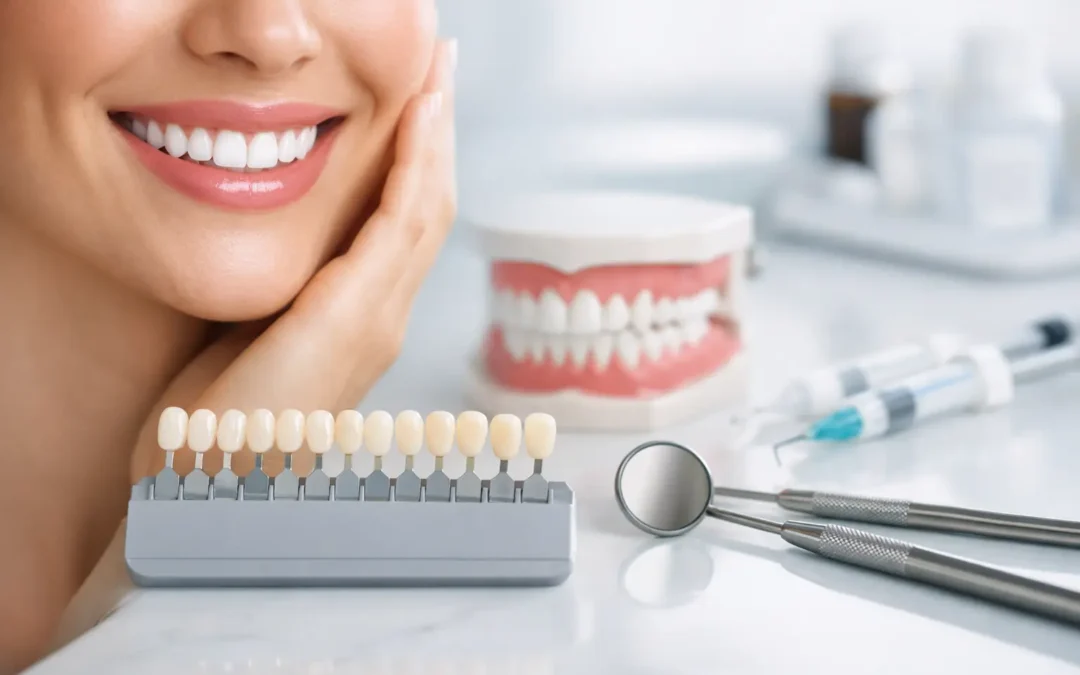
A smile makeover is rarely about just one tooth. More often, it starts with a patient noticing several things at once – stains that whitening toothpaste cannot fix, a chipped front tooth, a gap that draws the eye, or older dental work that no longer looks natural. This guide to smile makeover treatments is designed to help you understand what can be improved, which options make the biggest difference, and how to choose a plan that fits your goals, timeline, and budget.
For many adults, the right cosmetic treatment also solves functional issues. A stronger bite, better tooth alignment, or replacing missing teeth can improve comfort just as much as appearance. That is why a smile makeover should never be treated like a one-size-fits-all package. The best results come from a personalized plan built around your smile, your health, and the outcome you want to see in the mirror.
What a smile makeover really includes
A smile makeover is a customized combination of treatments used to improve the appearance of your teeth and gums. Depending on the patient, that may mean one treatment, such as professional whitening, or several coordinated services, such as Invisalign, veneers, and implant restoration.
The key idea is coordination. If a patient wants whiter teeth, straighter alignment, and a more even shape, the order of treatment matters. Whitening is usually done before choosing the shade for veneers or bonding. Orthodontic movement may need to happen before cosmetic shaping. If a tooth is unhealthy, restorative care comes before aesthetics. A makeover is not just a menu of services – it is a sequence.
Guide to smile makeover treatments: your main options
Professional teeth whitening
Whitening is often the fastest way to refresh a smile. It works best for natural teeth with surface or age-related staining from coffee, tea, wine, or tobacco. Patients who want a brighter smile before an event often start here because results can be noticeable quickly.
There are limits, though. Whitening does not change the color of crowns, veneers, or fillings, and it will not fix deep structural discoloration in every case. If one front tooth is darker due to trauma or prior treatment, whitening alone may leave the smile looking uneven.
Porcelain veneers
Veneers are thin porcelain shells placed over the front of visible teeth. They are one of the most effective options for changing tooth color, shape, minor spacing, and overall symmetry. If a patient wants a dramatic but natural-looking transformation, veneers are often part of that conversation.
They are not the right fit for every smile. Healthy enamel, a stable bite, and good habits matter. Patients who grind heavily or want major alignment correction may need other treatment first. Veneers also require planning around color, proportions, and facial balance. Done well, they look refined, not obvious.
Dental bonding
Bonding uses tooth-colored composite resin to repair chips, close small gaps, and improve shape. It is more conservative than veneers and can be a strong option for patients who want visible improvement without a larger investment.
The trade-off is longevity and stain resistance. Bonding can look excellent, but it is generally more prone to wear and discoloration over time than porcelain. For the right case, it is practical and effective. For a full smile redesign, porcelain may offer a longer-lasting result.
Invisalign and clear aligner treatment
If teeth are crowded, spaced, or slightly rotated, aligner treatment can create the foundation for a better-looking smile. Straightening first often means less reshaping later and a more natural final result.
This is where patience matters. Invisalign is not an instant fix, and treatment time depends on how much movement is needed. But for many adults, correcting alignment before cosmetic work leads to a cleaner, healthier, and more stable outcome.
Dental implants
When a missing tooth is part of the problem, cosmetic treatment alone will not complete the smile. Dental implants replace missing teeth at the root level and support a crown that looks and functions like a natural tooth. They can be central to a smile makeover because they restore both appearance and bite stability.
Implants do take time, especially if bone grafting or healing is needed. But when compared with temporary cosmetic fixes around a gap, they offer far more long-term value. For patients missing multiple teeth, full-arch options may also be part of the discussion.
Crowns and restorative upgrades
Sometimes what patients describe as a cosmetic issue is actually failing dental work. Old metal fillings, worn crowns, cracked teeth, or uneven restorations can affect the entire look of the smile. Replacing outdated restorations with modern, tooth-colored materials can create a cleaner and more balanced appearance while protecting the teeth.
In these cases, a smile makeover is not about vanity. It is about restoring health, strength, and appearance together.
How dentists build the right smile makeover plan
The most successful smile makeovers start with a conversation, not a sales pitch. A dentist should ask what bothers you, what you want to improve, and how dramatic or subtle you want the result to be. Some patients want a brighter version of their current smile. Others want a major change. Both are valid, but they require different planning.
A full evaluation also looks at gum health, bite function, enamel condition, and any untreated decay or infection. Cosmetic work placed on an unhealthy foundation usually leads to disappointment. If your gums are inflamed or a tooth has hidden damage, those issues need to be addressed first.
Photos, digital imaging, and mock-ups can help patients visualize options. This part is valuable because it brings expectations into the open. A smile that looks great on one person may feel too square, too bright, or too uniform on someone else. Good planning keeps the result personal.
What affects cost and timeline
Patients often ask for the best treatment, but the better question is the best treatment for what matters most to you. If speed is the priority, whitening and bonding may help sooner. If durability is the goal, veneers or implants may make more sense. If alignment is the main issue, clear aligners may be the smartest first step even if they take longer.
Cost depends on how many teeth are involved, whether health issues need treatment first, and whether the plan includes cosmetic, orthodontic, or restorative care. A small makeover can be straightforward. A comprehensive case takes more time and investment, but it also addresses the smile as a whole.
This is why a consultation matters. It turns a broad idea into a specific roadmap.
How to decide which treatment is right for you
If your concerns are mostly color, whitening may be enough. If your teeth are healthy but chipped, uneven, or slightly spaced, bonding or veneers may give you the result you want. If crowding or bite issues are part of the problem, orthodontic treatment should be considered before cosmetic changes. If missing teeth are affecting appearance and function, implants may be the most important step.
It also helps to think about maintenance. Whitening may need touch-ups. Bonding may need repairs. Veneers and crowns require long-term care and good habits. Orthodontic treatment usually means wearing retainers after active treatment is complete. The best option is not just the one that looks good on day one. It is the one you can maintain comfortably over time.
At United Dental Specialists, patients often appreciate having cosmetic, restorative, and general dental care coordinated in one place because it simplifies planning and keeps treatment focused on the full picture.
Questions to ask at your consultation
A worthwhile cosmetic consultation should leave you with clarity. Ask what treatments are necessary versus optional, how long results typically last, what maintenance is involved, and whether there are alternatives at different price points. You should also ask to see realistic examples of the type of result being discussed.
Most importantly, ask what needs to happen first. If a treatment plan skips over gum health, bite concerns, or damaged teeth, it may not be the right plan. Cosmetic dentistry should improve confidence, but it should also respect function and long-term oral health.
A smile makeover can be life-changing when it is done thoughtfully. The right plan does not chase perfection. It gives you a smile that feels healthy, looks natural, and fits your life well enough that showing it becomes easy again.
by Dr. David Bennett | Jun 9, 2026 | Uncategorized |
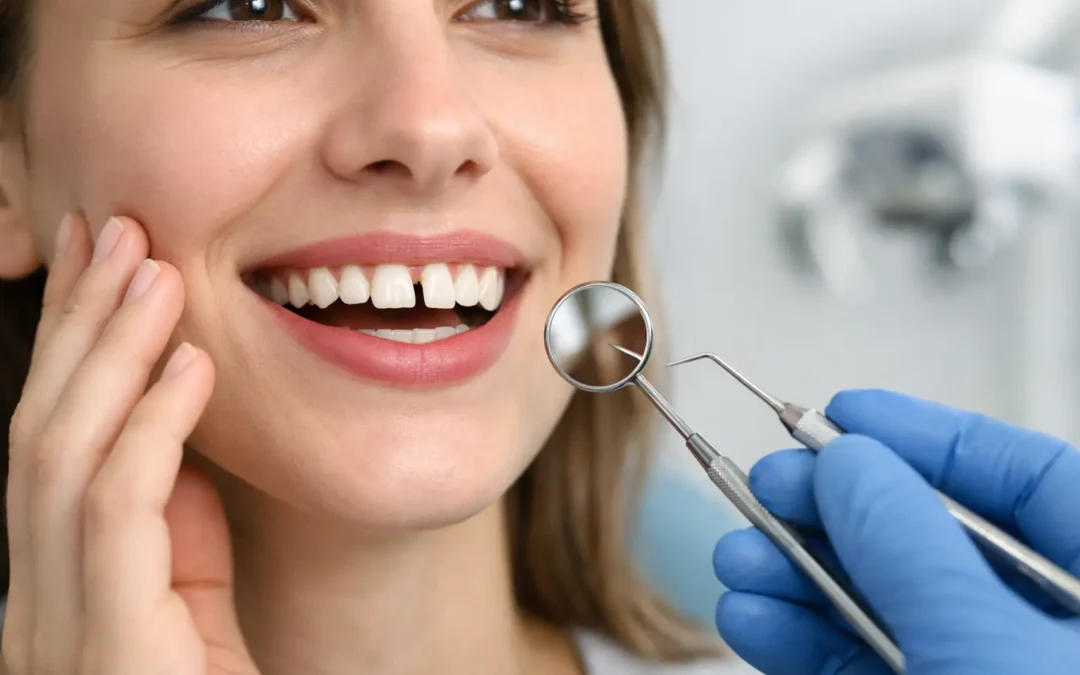
A chipped front tooth can change your whole day in seconds. Maybe you bit into something hard, took an elbow during a game, or noticed a small crack that suddenly became impossible to ignore in the mirror. If you are wondering how to fix chipped front tooth damage, the right answer depends on how deep the chip is, whether you have pain, and how quickly you can get it evaluated.
Front teeth matter for more than appearance. They help you bite, support clear speech, and shape the way your smile looks when you talk or laugh. That is why even a small chip deserves attention. Some cases are mostly cosmetic. Others involve exposed inner tooth structure, sensitivity, or a higher risk of further breakage if treatment is delayed.
How to fix chipped front tooth damage safely
The first step is not trying to repair it yourself. Store-bought temporary materials may seem convenient, but they can hide the problem without addressing the actual damage. A chipped tooth should be examined by a dentist so you know whether the enamel alone is affected or whether the dentin or nerve may be involved.
Until you are seen, rinse your mouth with warm water and avoid biting with that tooth. If the edge feels sharp, dental wax can help protect your lips or tongue. If there is swelling, a cold compress on the outside of the face can reduce discomfort. Over-the-counter pain relief may help, but persistent pain, bleeding, or a large missing piece should be treated as urgent.
If you saved the broken fragment, bring it with you. In some situations, the dentist may be able to use it as part of the repair. Even when that is not possible, seeing the size and shape of the missing piece can help guide treatment.
What treatment is used for a chipped front tooth?
There is no one-size-fits-all fix. The best treatment depends on the size of the chip, your bite, the health of the tooth, and how much of the front edge is missing. Cosmetic goals matter too, especially with front teeth where color and shape are highly visible.
Dental bonding for small to moderate chips
Dental bonding is one of the most common ways to repair a chipped front tooth. Tooth-colored resin is shaped directly onto the tooth and polished to blend with the surrounding enamel. For many patients, bonding is a fast and conservative option that can restore the look of the tooth in a single visit.
Bonding works especially well for minor chips and edge wear. It is more affordable than some other cosmetic treatments, but it is not as strong or stain-resistant as porcelain. If you grind your teeth, bite your nails, or use your front teeth to open packages, bonding may chip again sooner.
Veneers for cosmetic refinement
If the chip is part of a bigger cosmetic concern, such as uneven edges, discoloration, or shape differences, a porcelain veneer may be recommended. A veneer covers the front surface of the tooth and can create a very natural, polished result.
This option is often chosen when appearance is the main priority and the patient wants a long-lasting cosmetic improvement. The trade-off is that veneers usually involve more planning and tooth preparation than bonding. They are excellent for the right case, but they are not always the first choice for a very small, simple chip.
Dental crowns for larger breaks
When a significant part of the tooth is missing or the remaining tooth structure is weak, a crown may be the better solution. A crown covers the entire visible portion of the tooth above the gumline, helping restore strength as well as appearance.
For front teeth, the goal is a crown that looks natural and fits comfortably with your bite. Crowns are often used when the damage goes beyond a clean edge chip and there is concern about the tooth breaking further. They can be a strong long-term option, though they require more treatment than bonding.
Root canal treatment if the nerve is affected
If the chip is deep enough to expose or irritate the pulp inside the tooth, you may need root canal treatment before the tooth is restored. Signs can include lingering sensitivity, strong pain, or discoloration after trauma.
That sounds intimidating to many patients, but the purpose is straightforward – remove the damaged inner tissue, relieve pain, and preserve the tooth. Once the tooth is stable, it can be rebuilt with bonding, a veneer, or a crown depending on how much structure remains.
When a chipped front tooth is a dental emergency
Some chips can wait a day or two for a scheduled appointment. Others should be seen right away. If the tooth is painful, loose, bleeding, visibly cracked deep into the tooth, or broken near the gumline, do not put it off.
The same is true if your bite feels different or the tooth was injured in an accident. Trauma can affect more than the visible chip. The root, surrounding bone, or neighboring teeth may also need evaluation. Quick treatment can improve the chances of saving the tooth and avoiding more extensive care later.
Can a chipped front tooth heal on its own?
No. Enamel does not grow back, and a chipped tooth will not repair itself. In very minor cases, a rough edge can sometimes be smoothed if there is no structural concern. But if part of the tooth is missing, it will need professional treatment to restore its shape and protect it from additional damage.
This is one reason patients should avoid the wait-and-see approach. What starts as a small cosmetic issue can become a larger fracture if the tooth keeps taking pressure during eating or grinding.
How dentists decide the best fix
A proper exam usually includes looking at the size and location of the chip, checking the tooth’s response to cold or pressure, and sometimes taking X-rays. This helps your dentist answer the key questions: Is the tooth healthy inside, is the root intact, and what repair will hold up best in your bite?
For example, a small corner chip on a healthy tooth may be ideal for bonding. A larger break on a tooth with previous fillings may need a crown. A patient who wants to improve several visible front teeth at once may be a better candidate for veneers. The right treatment is not just about covering the damage. It is about choosing a repair that looks right and lasts.
What to expect after treatment
Most patients want to know two things – will it look natural, and will I be able to eat normally again? In most cases, yes. Modern restorative materials are designed to blend well with natural teeth, especially when front-tooth repairs are carefully matched for shade and contour.
You may need to avoid very hard foods for a short period, depending on the treatment. If you have a habit of clenching or grinding, your dentist may recommend a night guard to protect the repair. Long-term success also depends on avoiding habits like chewing ice, biting pens, or using your teeth as tools.
Routine dental visits matter here too. Even excellent cosmetic repairs benefit from periodic checks so small issues can be caught early.
How to fix chipped front tooth problems and prevent another one
Once your tooth is repaired, prevention becomes part of the plan. If the chip happened because of an accident, there may not have been much you could do. But if it happened while eating, grinding, or because the tooth had already been weakened, it is worth addressing the underlying cause.
A custom night guard can protect teeth from grinding forces while you sleep. If your bite places too much stress on one front tooth, small adjustments or orthodontic treatment may help. If the tooth had previous decay or an old filling, treating those issues supports the repair and helps prevent a repeat problem.
For patients in Doral and Miami Lakes who want both quick relief and a natural-looking result, working with a dental team that offers emergency care and cosmetic treatment under one roof can make the process much easier. At United Dental Specialists, treatment planning is built around both function and appearance, so the repair feels comfortable and looks like your smile.
If you chip a front tooth, try not to panic. The most important move is getting it evaluated promptly, because the best repair is the one that protects the tooth now and keeps your smile confident later.
by Dr. David Bennett | Jun 7, 2026 | Uncategorized |
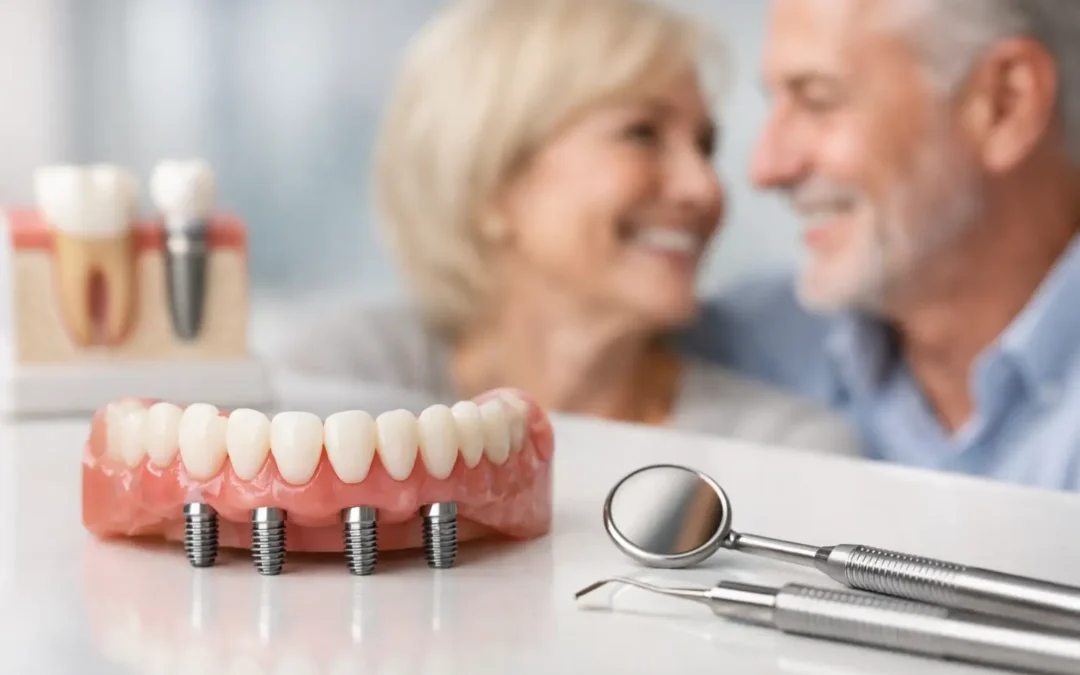
If you have ever dealt with dentures that slip when you eat, click when you talk, or leave sore spots by the end of the day, the appeal of implant dentures benefits becomes very real very quickly. For many adults, this treatment is not just about replacing missing teeth. It is about getting back everyday comfort, stronger bite function, and the confidence to smile without second-guessing every movement.
What makes implant dentures different?
Traditional dentures rest on the gums. Implant dentures are supported by dental implants placed in the jawbone, which gives the denture a much more stable foundation. Depending on your needs, the denture may snap into place for removal at home or be fixed more securely for a longer-wear solution.
That difference in support changes the day-to-day experience in a major way. Instead of relying mainly on suction or adhesive, implant dentures are anchored. Patients often notice the biggest improvement when eating, speaking, and simply moving through the day without worrying that their teeth will shift.
The biggest implant dentures benefits for daily life
When patients ask whether implant dentures are worth considering, the answer depends on their goals, oral health, and budget. Still, several benefits come up again and again because they affect real routines, not just dental charts.
Better stability when eating and speaking
One of the most common frustrations with traditional dentures is movement. Even well-made dentures can loosen over time as the shape of the gums and jaw changes. That can make it harder to chew certain foods or speak naturally.
Implant-supported dentures usually feel more secure. Many patients find they can eat a wider variety of foods with more confidence, including foods that are harder to manage with a loose denture. Speech often improves too, especially for people who have been compensating for slipping teeth with changes in tongue or lip movement.
More comfort and fewer pressure points
Because implants help support the denture, there is often less rubbing and less direct pressure on the gums. That can reduce sore spots and irritation. Comfort is one of those benefits people sometimes underestimate until they experience the difference for themselves.
This does not mean there is never an adjustment period. There usually is. But once the denture is properly fitted and the implants have integrated well, many patients describe the result as more natural and less tiring to wear.
Stronger confidence in social settings
Missing teeth can affect self-esteem. So can dentures that feel unreliable. Many adults avoid certain foods at restaurants, cover their mouths when laughing, or feel distracted during conversations because they are thinking about whether their denture is moving.
A more secure smile can change that. Implant dentures often help patients feel more at ease at work, at dinner, in photos, and in everyday interactions. That emotional benefit matters just as much as function for many people.
Less dependence on adhesive
A practical advantage that patients appreciate is the reduced need for denture adhesive. Traditional dentures often require daily products to help with hold, especially as the fit changes over time. Implant-supported options can cut down on that hassle significantly.
For some people, that means a simpler morning routine. For others, it just means more peace of mind during the day.
Implant dentures benefits for long-term oral health
The cosmetic and comfort improvements get most of the attention, but the long-term health side matters too.
Support for jawbone preservation
When teeth are missing, the jawbone in that area no longer receives the same stimulation from chewing forces. Over time, bone loss can occur. Traditional dentures do not stop that process. In some cases, they can become looser as the jaw changes.
Dental implants help stimulate the bone, which can slow that pattern of bone loss. That is one of the most important implant dentures benefits because it supports the structure of the mouth over time. It can also help maintain facial shape better than a denture that rests on the gums alone.
A more secure fit as years go on
Because the implants provide anchorage, implant dentures are generally less likely to shift the way conventional dentures can as bone and gum tissue change. That does not mean maintenance stops. Relines, adjustments, and routine dental visits still matter. But the added support often makes the overall experience more predictable.
For patients who have struggled with repeat denture looseness, this can be a major quality-of-life improvement.
Are implant dentures always the best option?
Not always, and a trustworthy dental team should say that clearly. Implant dentures are an excellent solution for many people, but the right choice depends on several factors.
Your bone level, gum health, medical history, current denture fit, and treatment goals all play a role. Some patients are strong candidates for implant-supported dentures right away. Others may need preliminary care, such as extractions, periodontal treatment, or bone grafting. Some may do better with a different restorative option depending on how many teeth are missing and what kind of stability they want.
Budget matters too. Implant dentures usually cost more upfront than traditional dentures. But they can provide more comfort, better function, and greater satisfaction over time. For many patients, that trade-off feels worthwhile. For others, a phased treatment plan may make more sense.
What treatment can look like
The process starts with a consultation, imaging, and a detailed conversation about your goals. This is where a personalized treatment plan matters. Some patients want an option they can remove for cleaning. Others want the closest feel possible to fixed teeth. Those are different conversations and should be planned carefully.
If implants are placed, the jaw needs time to heal and integrate with them. In some cases, a temporary denture is worn during healing. Once the implants are ready, the final denture is designed to attach securely.
Treatment timing varies. Some cases move faster than others depending on bone quality, the number of implants, and whether extra procedures are needed. The best experience usually comes from planning that prioritizes both function and appearance rather than rushing to the finish line.
Who tends to benefit most?
Adults who are missing multiple teeth or all teeth in an arch often see the greatest improvement, especially if they have been frustrated with removable dentures. Patients who value comfort, social confidence, and a stronger bite tend to be especially happy with implant-supported solutions.
This treatment can also be appealing for people who are tired of denture movement but are not candidates for individual implants on every missing tooth. Implant dentures can offer a middle ground between a conventional denture and a more extensive full-arch restoration.
At the same time, expectations should stay realistic. Implant dentures can dramatically improve stability and quality of life, but they still require good home care, routine follow-up, and professional maintenance. They are durable, not effortless.
Choosing a provider matters
With implant dentistry, planning is everything. The benefits of the final result depend on careful diagnostics, proper implant placement, and a denture design that fits your bite, smile, and facial support. Experience matters, and so does communication.
Patients should feel comfortable asking direct questions about how many implants are recommended, whether the denture is removable or fixed, what the maintenance looks like, and what kind of healing timeline to expect. A good provider will explain the trade-offs clearly and help you compare options without pressure.
For patients in Doral, Miami Lakes, and nearby communities, working with a practice that combines implant expertise, restorative planning, and patient-centered care can make the process feel much more straightforward. At United Dental Specialists, that means building a treatment plan around your health, goals, comfort, and budget rather than forcing a one-size-fits-all answer.
Is it time to consider implant dentures?
If your current dentures are affecting how you eat, speak, or feel about your smile, it may be time to look at what a more stable solution could offer. The right treatment can do more than replace teeth. It can help restore daily ease and confidence in a way that feels meaningful from the first meal to the next conversation.
The next best step is a consultation with a dental team that will assess your needs honestly and explain your options clearly. When treatment is planned well, implant dentures can feel less like a dental appliance and more like getting an important part of your life back.

Recent Comments