by Dr. David Bennett | Jun 25, 2026 | Uncategorized |
A tooth that throbs when you bite, keeps you up at night, or flares up with hot coffee usually leaves you with one urgent question – can this tooth be saved, or does it need to come out? When patients ask about root canal vs extraction options, they are usually balancing pain, cost, timing, and long-term health all at once.
The right answer depends on the tooth, the level of damage, your overall oral health, and what happens after treatment. In many cases, saving a natural tooth is the better path. In others, removing the tooth and replacing it may be the more predictable choice. What matters most is getting a clear diagnosis and a treatment plan that protects both your comfort now and your smile later.
Root canal vs extraction options: what each one means
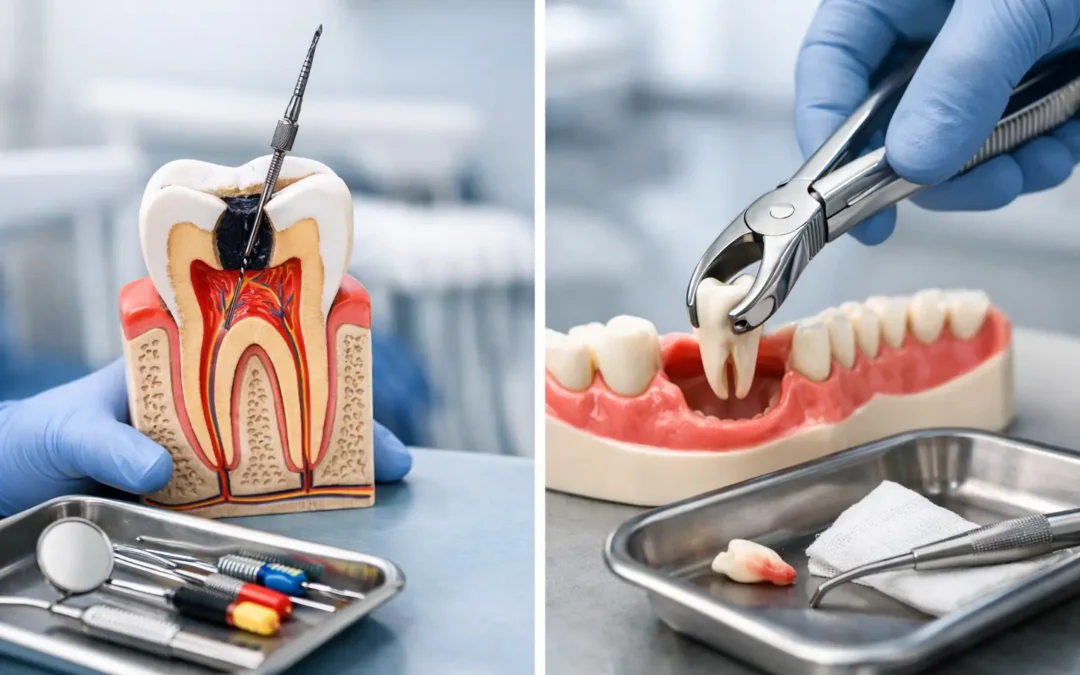
A root canal is designed to save a tooth that has infected or inflamed pulp inside. During treatment, the damaged tissue is removed, the inside of the tooth is cleaned and sealed, and the tooth is usually restored with a filling or crown. The goal is simple – eliminate infection while keeping your natural tooth in place.
An extraction removes the tooth entirely. This may be necessary when a tooth is too broken down, split below the gumline, severely loose from bone loss, or damaged in a way that makes long-term repair unrealistic. Extraction can stop pain and infection, but it also creates a gap that often needs to be addressed with a dental implant, bridge, or another replacement option.
That distinction matters more than many patients realize. One treatment preserves what you already have. The other starts a replacement process.
Why saving the tooth is often the first choice
Whenever a tooth can be predictably saved, most dentists prefer that route. Natural teeth help maintain normal bite force, support jaw alignment, and keep chewing comfortable and efficient. Even the best tooth replacement is still a replacement.
A successful root canal can let you keep your own tooth for many years, especially when the tooth is restored properly and maintained with regular care. For patients who want the most conservative option, this is often appealing. You keep the tooth, avoid an empty space, and usually return to normal function quickly.
There is also a cosmetic advantage in many cases. If the treated tooth is restored with a well-made crown, the result can look natural and blend into your smile. For image-conscious adults, that can be a major benefit.
Still, saving a tooth is not always the right answer just because it is possible. The condition of the tooth structure around the infection is what guides the decision.
When extraction may be the better option
Some teeth are simply too compromised to deliver a reliable long-term result. If most of the visible tooth is gone, if decay extends deep below the gums, or if the tooth has a vertical fracture, a root canal may not solve the real problem. You might remove the infection, but still be left with a tooth that cannot hold a restoration well.
Extraction can also make sense when gum disease has severely reduced bone support, or when repeated treatment has already failed. In these situations, removing the tooth may spare you additional discomfort, added expense, and more time spent trying to rescue a tooth with a poor prognosis.
For some patients, extraction is also part of a bigger restorative plan. If a damaged tooth is being replaced with an implant, and the surrounding bite and bone support make that option more stable long term, removing the tooth may be the smartest move rather than the most aggressive one.
Pain, timing, and recovery
Many patients assume a root canal is the more painful option. In reality, modern root canal treatment is typically done with local anesthesia and is often no more uncomfortable than getting a filling. In fact, most people seek treatment because the tooth is already painful, and the procedure is what relieves that pain.
An extraction can also be straightforward, especially for a tooth that is accessible and not impacted. But recovery is often more noticeable afterward because the body is healing an open socket where the tooth used to be. Soreness, swelling, and temporary chewing limitations are common.
The next question is usually timing. A root canal may require the procedure itself plus a final crown if the tooth needs extra protection. An extraction may feel faster at first, but if you plan to replace the tooth, that timeline becomes longer. Implant treatment, for example, can involve healing periods and multiple appointments.
So if you compare root canal vs extraction options only by the first visit, extraction may look simpler. If you compare the full treatment journey, saving the tooth is often less disruptive.
The cost question patients really want answered
Patients are right to ask about cost, but the fair comparison is not root canal versus extraction alone. It is root canal plus restoration versus extraction plus replacement.
A root canal usually needs a crown on a back tooth to protect it from fracture. That adds to the total cost. But extraction often leads to additional treatment if you do not want a missing tooth, and most patients do not. A dental implant, abutment, and crown can cost significantly more than saving the tooth in the first place. A bridge may be another option, but it has its own maintenance needs and may involve neighboring teeth.
If the extracted tooth is not replaced, there can still be a cost over time. Nearby teeth may drift. Opposing teeth may move. Bite changes can create uneven wear or make chewing less comfortable. What starts as a one-time fix can lead to larger restorative needs later.
This is why a personalized exam matters. The least expensive option today is not always the most cost-effective option over the next five or ten years.
Function, appearance, and long-term health
Your decision should not be based on pain relief alone. It should also reflect how you want your mouth to function in daily life.
Keeping a natural tooth usually helps preserve normal chewing and bite balance. That matters whether you are speaking in meetings, eating with family, or simply trying to avoid dental problems that snowball over time. Root canal treatment supports that goal when the tooth is structurally restorable.
Extraction has a different long-term consideration: bone loss. Once a tooth is removed, the jawbone in that area can begin to shrink over time because it no longer receives stimulation from the tooth root. That can affect facial support, neighboring teeth, and future replacement planning. Dental implants help address this by replacing the root function, which is one reason they are often the preferred replacement after extraction.
Aesthetics matter too. In visible areas of the smile, the urgency to replace an extracted tooth is often much higher. In those cases, treatment planning should consider both health and appearance from the start, not as an afterthought.
How dentists decide between root canal and extraction
The decision comes down to a few practical questions. Is the infection treatable? Is there enough healthy tooth left to restore? Is the bone support strong enough? Is there a crack that makes the tooth unreliable? And what does the patient want in terms of timeline, investment, and long-term goals?
X-rays, an exam, and sometimes additional imaging help answer these questions. What patients often describe as a simple cavity or toothache can turn out to be a deep infection, hidden fracture, or advanced structural damage. That is why guessing is risky, especially when pain comes and goes.
At a comprehensive practice like United Dental Specialists, this evaluation can also include what comes next if the tooth cannot be saved. That matters because treatment should not stop at removing pain. It should restore stability, comfort, and confidence.
The best option depends on the whole picture
If the tooth has a strong foundation and can be restored well, a root canal is often the best way to preserve your smile. If the tooth is beyond repair, extraction may be the healthier and more predictable choice, especially when paired with a well-planned replacement.
Neither option is automatically better in every case. The better option is the one that resolves the problem fully, protects your long-term oral health, and fits your needs without leaving bigger issues behind.
If you are dealing with tooth pain, swelling, or a damaged tooth, do not wait for the problem to decide for you. The earlier you get it evaluated, the more treatment choices you usually have – and the easier it is to move forward with confidence.
by Dr. David Bennett | Jun 23, 2026 | Uncategorized |
If you avoid photos because your front teeth overlap, or you have a hard time flossing between tight spaces, you may be asking a very practical question: can Invisalign fix crowded teeth? In many cases, yes. Clear aligners can correct mild to moderate crowding and, in some situations, even more complex cases. The real answer depends on how crowded your teeth are, how your bite fits together, and whether your teeth have enough room to move safely.
Crowding is more than a cosmetic concern. When teeth overlap or rotate out of position, they can be harder to clean, which raises the risk of plaque buildup, cavities, and gum irritation. For many adults, treatment is not just about a straighter smile. It is also about making daily oral care easier and protecting long-term dental health.
Can Invisalign fix crowded teeth in every case?
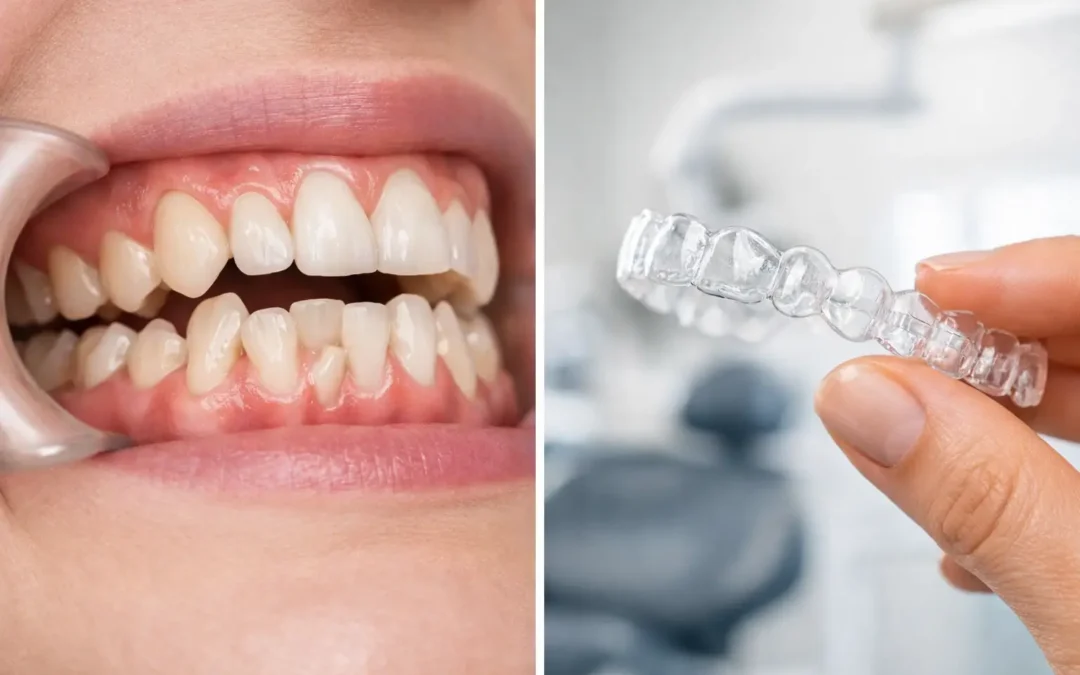
Not every crowded smile should be treated the same way. Invisalign works by using a series of custom-made clear aligners that gradually move teeth into better alignment. This approach is often very effective for patients with mild to moderate crowding, especially when the goal is to create a more even smile line and improve spacing for cleaning.
That said, severe crowding can be more complicated. If there is not enough space in the arch, or if crowding is tied to a significant bite issue, treatment may require additional planning. Some patients may still be candidates for Invisalign, but they might need attachments, enamel reshaping, or other techniques to create space. In the most complex cases, traditional braces may offer more control.
This is why a consultation matters. Two people can both say their teeth are crowded, but their treatment plans may look very different.
What makes someone a good candidate for Invisalign?
A good candidate usually has healthy teeth and gums, realistic expectations, and crowding that can be corrected with controlled tooth movement. Adults often do especially well with Invisalign because they are motivated to wear the aligners consistently. Since aligners need to be worn about 20 to 22 hours a day, patient commitment plays a major role in the final result.
Your dentist will also look at the full picture, not just the front teeth. Crowding may be visible in the smile, but the position of the back teeth and the way your bite closes are just as important. If the bite is unstable, simply straightening the front teeth without addressing function can create problems later.
Patients with gum disease, untreated cavities, or significant jaw discrepancies may need other dental care before starting Invisalign. In those cases, the right first step is to stabilize oral health and then move forward with alignment if appropriate.
How Invisalign creates space for crowded teeth
One of the biggest questions patients have is how teeth can straighten if there does not seem to be enough room. Invisalign treatment does not magically shrink teeth or expand the mouth without limits. Instead, it uses planned movement to make better use of available space.
Sometimes this means gently widening the arch. In other cases, it means rotating teeth so they sit more efficiently. For some patients, small amounts of enamel can be reshaped between selected teeth to create the room needed for alignment. This process is conservative and carefully planned. It is not used in every case, but it can be very helpful when crowding is mild to moderate.
Attachments may also be placed on certain teeth. These small tooth-colored shapes help the aligners grip the teeth more effectively and guide difficult movements. They are a normal part of many Invisalign cases and can make a big difference in the outcome.
Invisalign vs braces for crowded teeth
If you are comparing options, the biggest advantage of Invisalign is convenience. The aligners are removable, nearly invisible, and easier to live with during work, social events, and everyday meals. For many adults in Doral and Miami Lakes, that matters. You can straighten your teeth without the look of metal braces, and brushing and flossing are much simpler because you remove the aligners before cleaning.
Braces, however, still have an important place in orthodontic care. They can be a better choice for severe crowding, major bite problems, or cases where highly precise movement is needed from the start. Because braces stay on 24 hours a day, they also remove the compliance factor. You do not have to remember to wear them.
This is where honest guidance matters. The best treatment is not the one that sounds easiest. It is the one that matches your dental needs, timeline, and goals.
How long does Invisalign take for crowded teeth?
Treatment time depends on the complexity of the case. Mild crowding may improve in as little as several months, while moderate or more involved cases often take 12 to 18 months. Some patients need refinements after the first series of aligners, which means additional trays are used to fine-tune the result.
What speeds treatment up or slows it down is not just biology. It is also consistency. If aligners are worn as directed, teeth tend to move on schedule. If they are left out too often, progress can stall and treatment may take longer than expected.
Most patients change to a new set of aligners every one to two weeks and come in for periodic check-ins. These visits are typically straightforward and shorter than many orthodontic appointments with braces, which is one reason busy adults appreciate the process.
What Invisalign can and cannot do
Invisalign can be excellent for correcting overlapping teeth, mild to moderate crowding, rotated teeth, and certain bite concerns. It can improve smile appearance, reduce hard-to-clean overlaps, and support better oral hygiene. For many adults, it offers a balance of comfort, discretion, and strong results.
Still, there are limits. If crowding is severe, if teeth need major vertical movement, or if there are skeletal jaw issues behind the alignment problem, clear aligners may not be the ideal stand-alone solution. Some patients need a different orthodontic approach, while others benefit from a combined treatment plan.
That does not mean Invisalign is off the table. It means your treatment should be based on clinical reality, not a one-size-fits-all promise.
Why crowded teeth should not be ignored
Many adults assume crowded teeth are just a cosmetic issue they have lived with for years. But even mild crowding can create daily challenges. Tight contact points trap food. Overlapping teeth are harder to brush and floss thoroughly. Some patients notice uneven wear, gum inflammation, or recurring buildup in the same areas.
There is also the confidence factor. When patients feel self-conscious about their smile, they often hide it. Straightening crowded teeth can improve appearance, but the benefit usually goes beyond that. Patients often describe feeling more comfortable speaking, smiling, and showing up confidently in personal and professional settings.
Can Invisalign fix crowded teeth for adults?
Yes, and adults are some of the most common Invisalign patients. Teeth can be moved safely at many ages as long as the surrounding bone and gum tissue are healthy. In fact, many adults seek treatment after years of postponing orthodontic care because they want a less noticeable option.
Adult treatment does require thoughtful planning. Existing dental work like crowns, veneers, implants, or bridges can affect how teeth move and what kind of result is realistic. That is why a personalized exam is so important. A custom plan can account for your current dental health, cosmetic goals, and any restorative work you may need now or in the future.
At United Dental Specialists, that kind of planning matters because the goal is not just straighter teeth. It is a healthier, more confident smile that fits your overall dental needs.
What to expect at your consultation
A consultation should give you clarity, not pressure. Your dentist will examine your teeth, bite, and gums, discuss your goals, and determine whether Invisalign is a strong option for your specific case. Imaging and digital scans may be used to map tooth movement and show what treatment could realistically achieve.
This visit is also the time to talk about concerns such as treatment length, appearance, comfort, and budget. If Invisalign is a good fit, you should leave with a clear sense of the process and what your next steps would be. If it is not the best option, a trustworthy provider will tell you that too.
If you have been wondering whether crowded teeth can be corrected without braces, the best answer starts with a professional evaluation. A smile that looks crowded on the surface may be very treatable with clear aligners, and a custom plan can show you what is possible before you commit. Sometimes the most valuable first step is simply getting a clear, honest answer.
by Dr. David Bennett | Jun 21, 2026 | Uncategorized |
A dental implant is designed to be a long-term solution, so hearing that something went wrong can feel unsettling. The short answer is yes, can dental implants fail is a real question, and while failure is not common, it can happen. The more helpful answer is that implant problems usually have a reason behind them, and in many cases, they can be prevented or treated.
For patients in Doral, Miami Lakes, and the surrounding Miami area, this matters because dental implants are both a health investment and a confidence investment. You want them to feel stable, look natural, and last. Understanding what affects success can help you make better decisions before treatment and respond quickly if something does not feel right afterward.
Can dental implants fail after placement?
Yes, they can fail either soon after placement or years later. Early failure usually happens before the implant fully bonds with the jawbone. Late failure tends to happen after the implant has already been functioning well for some time.
That distinction matters because the causes are often different. An implant that never integrates with the bone may be affected by healing issues, infection, or lack of stability during recovery. An implant that fails later may be dealing with bone loss, gum disease around the implant, bite pressure, or wear on the restoration.
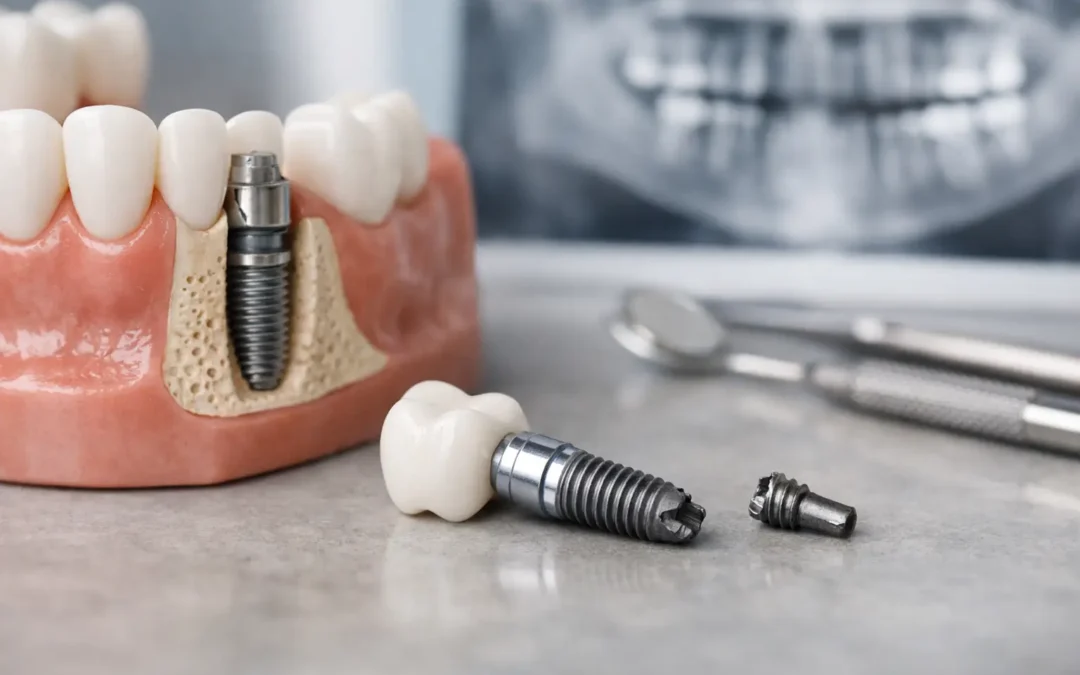
Even so, failure does not always mean the entire treatment was a mistake. Sometimes the implant itself is the issue. In other situations, the crown, bridge, or surrounding tissue is the problem while the implant remains healthy. A proper exam is what separates a true implant failure from a repairable complication.
Why dental implants can fail
Dental implants have high success rates, but success depends on planning, health history, bone support, and aftercare. This is why a personalized treatment plan matters so much.
One of the most common reasons for early failure is poor integration with the jawbone. The implant needs time to fuse with the bone in a process called osseointegration. If that bond does not happen correctly, the implant may feel loose or fail to support a restoration.
Infection is another major concern. Bacteria can affect the tissue around the implant, especially if oral hygiene is difficult or inflammation is already present. A more advanced form of this problem, often called peri-implantitis, can lead to bone loss and threaten the implant over time.
Smoking also raises the risk. Tobacco can slow healing, reduce blood flow, and make infection more likely. That does not automatically disqualify someone from treatment, but it does mean the conversation should be honest and the aftercare needs to be taken seriously.
Excess pressure can also create trouble. Grinding, clenching, or an imbalanced bite can overload an implant and the surrounding bone. This is one reason careful placement and restoration design are so important. The implant has to be in the right position, and the final tooth has to distribute force properly.
Then there are health and lifestyle factors. Uncontrolled diabetes, certain medications, autoimmune conditions, and poor oral hygiene can all affect healing and long-term stability. None of these automatically rules out implants, but they can change the treatment approach.
Signs a dental implant may be failing
Some implant issues are obvious, while others start subtly. If an implant feels loose, painful, or different from the way it felt before, it deserves attention.
A healthy implant should feel secure. It should not wobble when you chew or brush. If there is movement, that can point to a problem with the implant, the abutment, or the restoration.
Persistent discomfort is another warning sign. Mild soreness after surgery is expected, but pain that worsens, returns, or lingers beyond the normal healing window should be evaluated. Swelling, bleeding, pus, or a bad taste in the mouth can also suggest infection.
Changes in the gums matter too. Receding tissue around an implant, deep pockets, or redness that does not go away can signal inflammation. Some patients also notice trouble chewing or a bite that suddenly feels off.
Not every symptom means failure, but waiting rarely helps. The earlier a problem is diagnosed, the more options you usually have.
What causes late implant failure?
When an implant has been stable for years and then starts having problems, the cause is often related to the surrounding tissue rather than the original surgery alone. Bone loss is a leading factor. If the bone around the implant begins to shrink, support is reduced and the implant can become compromised.
Peri-implantitis is one of the most common reasons this happens. It is similar to gum disease around natural teeth, but around an implant. Plaque buildup, inflammation, and untreated infection can slowly damage the bone and soft tissue.
Nighttime grinding is another factor that is easy to underestimate. Even a well-placed implant can be stressed by repeated heavy force. A custom night guard may be recommended if clenching or grinding is part of the picture.
Restorations can wear down too. A loose crown or damaged component does not always mean the implant itself has failed, but it can create instability or allow bacteria to collect if left untreated. That is why long-term maintenance is part of implant care, not an extra.
Can a failed dental implant be fixed?
Often, yes. The next step depends on what actually failed.
If the issue is with the crown, abutment, or a loose component, the implant may still be healthy and the restoration can be repaired or replaced. If infection is caught early, treatment may focus on controlling bacteria, improving cleaning access, and protecting the surrounding bone.
If the implant itself has failed and cannot be saved, it may need to be removed. That sounds discouraging, but it does not always mean you are out of options. In many cases, the area can be treated, allowed to heal, and prepared for another implant later. Some patients may need bone grafting first to rebuild support.
This is where experience and planning make a difference. A failed implant case should not be approached with guesswork. The right evaluation looks at the implant, the bite, the gums, the bone, and your overall health before deciding what comes next.
How to lower the risk of implant failure
Good outcomes start before the implant is placed. A comprehensive consultation should assess bone quality, gum health, bite function, medical history, and whether any preparatory treatment is needed. Rushing past those details can create problems later.
After placement, follow healing instructions closely. That includes keeping the area clean, avoiding smoking, sticking to the recommended diet during recovery, and showing up for follow-up visits. Those appointments are not just routine. They help confirm that healing is progressing the way it should.
Long-term care matters just as much. Brush and floss consistently, keep regular dental cleanings, and let your dentist know if anything feels different. If you grind your teeth, wear the appliance recommended for you. If you have a condition like diabetes, keeping it well managed can support better healing and better implant stability.
For patients considering implants, choosing a provider with strong diagnostic technology and a personalized approach can make a real difference. At United Dental Specialists, that means looking at the full picture, not just the missing tooth.
When to call your dentist
If you have an implant and notice looseness, pain, swelling, gum changes, or trouble chewing, do not wait to see if it passes. Some issues are minor when they begin and harder to treat when they are ignored.
The good news is that dental implants remain one of the most reliable ways to replace missing teeth. Most patients do very well with them, especially when treatment is planned carefully and maintained properly. If you are worried about an existing implant or thinking about getting one, the best next step is a professional evaluation that gives you clear answers and a plan you can feel confident about.
A strong smile should feel dependable, and when something seems off, getting help early can protect both your oral health and your peace of mind.

by Dr. David Bennett | Jun 19, 2026 | Uncategorized |
That sharp throb that wakes you up at 2 a.m. is not something to brush off and hope disappears by morning. If you are wondering when is a tooth pain emergency, the answer depends on more than how much it hurts. The location of the pain, how suddenly it started, whether swelling is involved, and whether you can eat, sleep, or function normally all matter.
Tooth pain can come from a cavity, a cracked tooth, gum infection, grinding, a failed filling, or even a problem that started quietly and only now feels unbearable. Some cases can wait for the next available dental appointment. Others need same-day care because the issue can worsen quickly, increase the risk of infection, or put the tooth at risk.
When is a tooth pain emergency and when can it wait?
A useful way to think about it is this: tooth pain becomes an emergency when it is severe, persistent, associated with swelling or fever, caused by trauma, or making it difficult to eat, speak, sleep, or go about your day. Pain is your bodys warning signal. When that warning comes with visible changes or signs of infection, it deserves urgent attention.
Mild sensitivity to cold that goes away quickly may not be an emergency. A dull ache that responds to over-the-counter pain relief and does not worsen may still need treatment, but not necessarily immediate treatment. On the other hand, pain that pulses, spreads to the jaw or ear, or comes with facial swelling should not be delayed.
The challenge is that dental emergencies do not always look dramatic at first. A tooth infection can begin as soreness and become a much larger problem within a day or two. That is why it is better to call and ask than to wait and hope.
Signs your tooth pain needs urgent dental care
Some symptoms raise the level of concern right away. If your tooth pain comes with swelling in the gums, cheek, or jaw, there may be an infection that needs prompt treatment. If you have a fever, a bad taste in your mouth, pus near the tooth, or swollen lymph nodes, that concern increases.
Pain after an injury is another clear reason to seek care quickly. A cracked, loose, or knocked-out tooth has a better chance of being saved when treated promptly. Even if the tooth looks intact, trauma can damage the root or internal nerve.
Bleeding that does not stop, pain that becomes intense suddenly, or a toothache that keeps you from sleeping are also strong signals that you should contact a dentist as soon as possible. If the pain is so severe that you cannot concentrate, eat normally, or get relief with basic measures, it has moved beyond routine discomfort.
Difficulty opening your mouth, swallowing, or breathing requires immediate medical attention. Those symptoms can point to a serious infection that has spread beyond the tooth itself.
Swelling is one of the biggest red flags
Patients often focus on the pain level, but swelling is sometimes the more urgent sign. A small amount of tenderness can still reflect a significant infection if the gumline, face, or jaw begins to swell. Infections in the mouth can spread into deeper tissues, and that is not something to monitor at home for long.
If one side of your face looks puffy, your gum appears raised, or the area feels warm and tight, call for emergency dental care. The goal is not just to stop pain. It is to control the source before it becomes more complicated.
Severe pain after dental work should be checked
Some soreness after a filling, crown, extraction, or deep cleaning can be normal. Severe pain that is getting worse instead of better is not. If a recent procedure leaves you with throbbing pain, swelling, a foul taste, or pressure that feels intense, let your dental team know right away.
There are times when a bite needs adjustment, a restoration is irritating the tooth, or an infection is developing. Early treatment is usually simpler and more comfortable than waiting.
Common causes of emergency tooth pain
The most common urgent cause is infection. When bacteria reach the inner pulp of the tooth, pain can become sharp, lingering, and difficult to ignore. These infections may require root canal treatment, drainage, or other care to save the tooth and protect your health.
Cracks are another major cause. A tooth can crack from chewing something hard, grinding at night, or an old filling that weakens the structure. Cracks are tricky because they may not always be visible, but they can create sudden pain with biting or temperature changes.
Advanced decay, gum abscesses, exposed roots, broken restorations, and impacted wisdom teeth can also cause urgent symptoms. Sometimes the pain is constant. Sometimes it comes in waves. Either pattern can point to a problem that should be evaluated quickly.
What to do while you wait to be seen
If you think you may be dealing with a dental emergency, call a dental office first. Explain your symptoms clearly, including whether there is swelling, fever, trauma, or difficulty swallowing. That information helps the team determine how quickly you should come in.
While you wait, rinse gently with warm salt water to help keep the area clean. A cold compress on the outside of the cheek can help reduce swelling and make you more comfortable. Over-the-counter pain relievers may help if you are able to take them safely.
Do not place aspirin directly on the gum or tooth. It can irritate the tissue and cause a chemical burn. Avoid chewing on the painful side, and stay away from very hot, very cold, or sugary foods if they trigger the pain.
If a tooth has been knocked out, handle it by the crown, not the root. Keep it moist and seek care immediately. Time matters a great deal in that situation.
When to go to the ER instead of the dentist
A dentist is usually the right first call for tooth pain, but there are exceptions. If you have trouble breathing, trouble swallowing, rapid swelling, uncontrolled bleeding, or signs of a severe infection with fever and facial swelling, go to the emergency room right away.
The ER can help manage serious infection, swelling, and pain when your overall health may be at risk. In many cases, you will still need follow-up dental treatment to address the source of the problem, but emergency medical care comes first if breathing or swallowing is affected.
Why waiting can cost you more than comfort
It is easy to delay when life is busy or when the pain seems to come and go. The problem is that tooth pain rarely resolves on its own if the source is decay, infection, or structural damage. What starts as a treatable cavity can become nerve pain. What starts as a small crack can become a broken tooth. What starts as localized infection can spread.
There is also a financial side to waiting. Earlier treatment is often less invasive and less expensive than emergency intervention after the problem has worsened. More importantly, prompt care can often preserve more of your natural tooth and prevent avoidable stress.
How emergency dental care helps
The first priority is relief. Emergency care focuses on reducing pain, identifying the cause, and stabilizing the tooth or surrounding tissue. Depending on the situation, treatment may include draining an abscess, placing a temporary restoration, adjusting a bite, prescribing medication when appropriate, or planning immediate restorative care.
For patients in Doral and Miami Lakes, having access to a practice that combines urgent care with comprehensive treatment matters. If the tooth pain is tied to decay, a crack, gum disease, or a failing restoration, the next step should not feel confusing. You want a team that can move from emergency relief to a clear treatment plan that protects both your oral health and your smile.
Trust your symptoms and act early
A lot of patients second-guess themselves. They wonder if the pain is bad enough, if they should wait one more day, or if they are overreacting. Most of the time, if you are asking when is a tooth pain emergency, your body is already telling you something is wrong.
You do not need to diagnose the problem at home. You only need to recognize the signs that it should be seen quickly: severe pain, swelling, fever, trauma, bleeding, or any symptom that is escalating instead of easing. At United Dental Specialists, prompt evaluation can make the difference between temporary relief and lasting protection for your tooth.
If your tooth pain feels different, stronger, or more disruptive than a minor ache, trust that instinct and reach out. Getting answers early is one of the best ways to protect your health, your comfort, and your confidence.

by Dr. David Bennett | Jun 17, 2026 | Uncategorized |
A toothache rarely waits for a convenient time. It can start in the middle of a workday, wake you up at night, or hit right before a weekend event. When that happens, people usually want one thing first – fast relief. The good news is that several emergency toothache relief options can reduce pain at home while you arrange prompt dental care. The key is knowing what may help, what can make things worse, and when the situation needs immediate attention.
What a toothache is really telling you
Tooth pain is a symptom, not the problem itself. In some cases, the cause is relatively minor, such as food trapped between teeth or gum irritation. In others, the pain points to decay, a cracked tooth, an infection, a lost filling, or pressure from grinding. The type of pain matters too. Sharp pain when biting can suggest a crack or damaged restoration. Throbbing pain may point to inflammation or infection. Sensitivity to hot or cold can be tied to enamel wear, cavities, or exposed roots.
That is why home relief should be seen as temporary support, not a substitute for treatment. Pain can calm down even when the underlying issue is still progressing.
Emergency toothache relief options you can try right away
The best first step is often the simplest one. Rinse your mouth gently with warm salt water. This can help reduce irritation, loosen debris, and soothe inflamed tissue. If something is stuck between your teeth, use floss carefully. Many people are surprised by how much pressure trapped food can create.
A cold compress on the outside of the cheek can also help, especially if swelling is present. Apply it in short intervals rather than keeping ice against the skin continuously. Cold can numb the area and reduce inflammation, but it works better for some causes than others. If the pain is related to nerve irritation from heat or pressure inside the tooth, cold may bring limited relief.
Over-the-counter pain relievers are another common option. When used as directed on the label, they can help control pain while you wait for your appointment. They do not treat infection, repair damage, or stop a crack from worsening, but they can make the situation more manageable for a few hours. If you have any medical condition, take blood thinners, are pregnant, or have medication restrictions, it is smart to check with your physician or pharmacist before taking anything new.
If the tooth is sensitive, avoiding very hot, very cold, sugary, or acidic foods may reduce flare-ups. Soft foods and chewing on the opposite side can also help for the short term. Sometimes the biggest difference comes from not aggravating the area further.
What to avoid when you have a severe toothache
Some popular home remedies create more problems than relief. Do not place aspirin directly on the gum or tooth. It will not fix the source of the pain and can irritate or burn soft tissue. Be cautious with clove oil or other topical products as well. Some people find them soothing, while others experience more irritation, especially if the gum tissue is already inflamed.
It is also best not to ignore swelling, fever, a bad taste in the mouth, or pain that keeps intensifying. Those signs can indicate infection. Waiting too long can turn a treatable issue into a more urgent one.
When tooth pain becomes a dental emergency
Not every toothache needs after-hours treatment, but some situations should be addressed quickly. If you have facial swelling, difficulty swallowing, trouble breathing, fever, or pus near the tooth, do not delay. These symptoms may signal an infection that needs prompt professional care.
A broken tooth, a knocked-out tooth, heavy bleeding, or severe pain after dental work also deserves urgent attention. Even if the pain comes and goes, a tooth that hurts when you bite down or one that suddenly becomes extremely sensitive may have structural damage that should be evaluated right away.
For patients in Doral or Miami Lakes, having a local dental office you can call matters. Fast access can mean faster pain relief, less risk of complications, and a better chance of saving the tooth.
Why relief depends on the cause
This is where treatment gets more specific. A cavity that reaches the inner part of the tooth may need a filling, root canal treatment, or crown, depending on how far the damage has progressed. A cracked tooth may require bonding, a crown, or other restorative care. If a filling or crown has come loose, replacing it may solve the problem quickly.
If infection is present, the plan may involve draining the area, treating the tooth, or removing the source of infection. When gum disease is contributing to pain, the right solution may focus more on the gums than the tooth itself. That is why self-diagnosing can be misleading. Two toothaches can feel similar but need very different treatment.
Emergency toothache relief options for specific situations
If your pain started after biting something hard, avoid chewing on that side and seek an exam. A cracked tooth may not always be visible in the mirror, but pressure often makes it obvious. If a filling fell out, keep the area clean and avoid sticky or very cold foods. If a crown came off and you still have it, store it safely and bring it with you to your appointment.
If swelling is your main concern, cold compresses may help more than heat. If sensitivity is the main issue, avoiding triggers may matter most until the tooth is treated. If the ache feels constant and deep, the nerve may be involved, and home care will likely have limited effect. In that situation, professional treatment is usually the fastest path to real relief.
How a dental visit helps you feel better faster
When patients are in pain, they often worry that the visit will be complicated. In reality, the first goal is usually straightforward – identify the cause and get you comfortable. That may include an exam, digital imaging, and immediate steps to reduce pain and stabilize the tooth.
A good emergency appointment should give you clarity as well as relief. You should know what is causing the pain, what treatment is recommended, and whether care can be completed the same day or in stages. For many patients, the biggest comfort comes from finally understanding what is going on and having a plan.
At United Dental Specialists, emergency dental care is designed around that need for prompt answers and practical next steps. Patients want responsive care, clear communication, and treatment options that protect both oral health and peace of mind.
How to lower the chance of another toothache
Not every emergency is preventable, but many are. Routine exams and cleanings often catch decay, worn fillings, bite issues, and gum problems before they become painful. If you grind your teeth, a night guard may help reduce stress on enamel and dental work. If you play sports, a mouthguard can lower the risk of fractures and trauma.
Small symptoms are also worth attention. Sensitivity, occasional discomfort, or a rough spot on a tooth may seem easy to postpone, but they can be early signs of a bigger problem. Treating an issue early is usually simpler, less invasive, and more comfortable than waiting for severe pain.
The bottom line when a toothache hits
The most effective emergency toothache relief options are the ones that protect you while you get proper care. Warm salt water rinses, gentle flossing, a cold compress, and over-the-counter pain relief may help temporarily. But if the pain is severe, swelling appears, or the tooth is damaged, the right move is to get evaluated as soon as possible.
Tooth pain has a way of taking over your day, your sleep, and your focus. The sooner you act, the sooner you can move from temporary relief to a real solution and get back to feeling like yourself again.
by Dr. David Bennett | Jun 15, 2026 | Uncategorized |
A bright smile can change the way you show up in photos, meetings, and everyday conversations. But when patients ask about veneers vs teeth whitening, they are usually not asking for the most popular cosmetic treatment. They are asking which option will actually solve their specific concern and feel worth the investment.
That distinction matters. Teeth whitening and veneers can both improve the look of your smile, but they do very different jobs. One is designed to lift stain and brighten natural teeth. The other changes the visible front surface of the teeth themselves, which means it can address color along with shape, size, spacing, and minor cosmetic flaws.
Veneers vs teeth whitening: the real difference
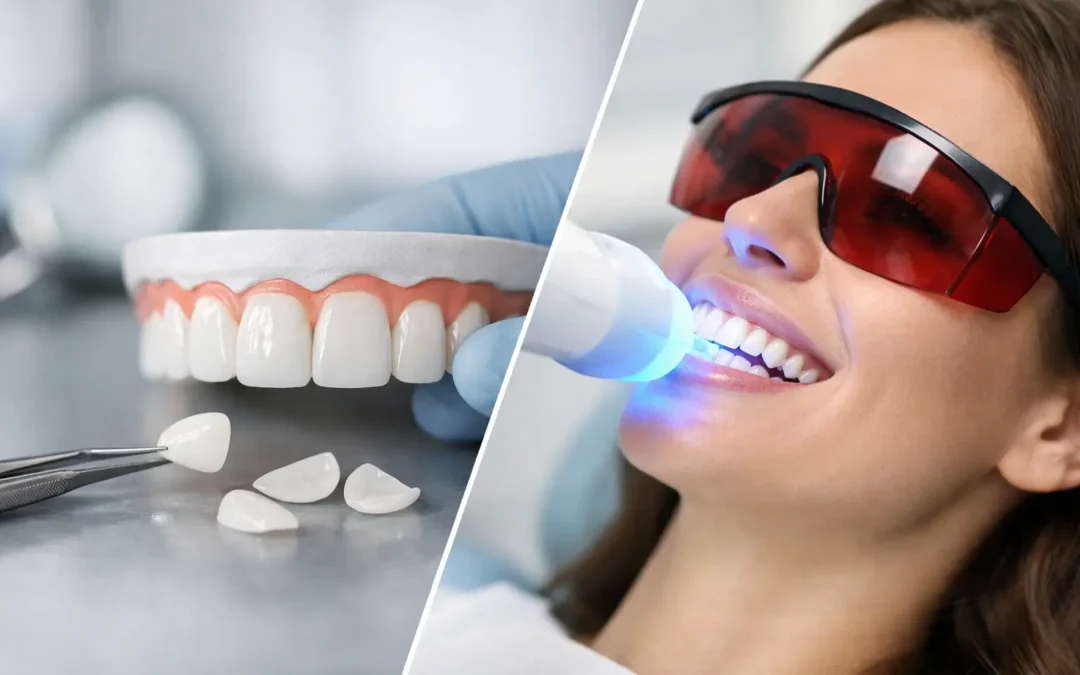
Teeth whitening is the more conservative option. It works by using professional whitening agents to break up stains within the enamel and dentin, helping natural teeth look several shades brighter. If your main concern is yellowing from coffee, tea, red wine, smoking, or age-related discoloration, whitening may be all you need.
Veneers are thin shells, often made of porcelain, that are bonded to the front of the teeth. Because they cover the visible surface, they can create a more dramatic cosmetic change. Veneers are often chosen when a patient wants brighter teeth but also wants to improve chips, uneven edges, worn enamel, small gaps, or teeth that look too short or misshapen.
In simple terms, whitening improves what is already there. Veneers redesign what people see.
When teeth whitening makes the most sense
If your teeth are healthy, generally straight, and you like their overall shape, teeth whitening is usually the first place to look. It is quicker, more affordable, and less invasive than veneers. For many adults, especially those preparing for a wedding, job interview, special event, or just wanting to refresh their appearance, professional whitening can deliver noticeable results without changing the structure of the teeth.
Whitening tends to work best on external staining and natural yellow tones. It can also be an excellent option for patients who want cosmetic improvement but prefer to start with the simplest treatment available.
That said, whitening has limits. It will not change the shape of a tooth. It will not fix a chip or close a gap. It also does not work the same way on every kind of discoloration. Gray, brown, or deeply internal stains can be more resistant, and whitening will not change the color of crowns, bonding, or veneers you already have.
If you have old dental work on front teeth, your smile can end up brighter in some areas than others. That is one reason a cosmetic consultation matters before choosing a treatment.
Benefits of professional whitening
Professional whitening is popular for good reason. It is efficient, safe when supervised by a dental team, and tailored to your enamel, sensitivity level, and smile goals. Compared with over-the-counter products, in-office and dentist-guided whitening usually produces stronger and more predictable results.
It also preserves your natural tooth structure. For patients who are happy with their smile overall and only want a brighter appearance, that is a meaningful advantage.
When veneers are the better choice
Veneers make more sense when color is only part of the issue. If you look at your smile and notice multiple concerns at once, whitening alone may leave you disappointed. A tooth may still look too small. A chipped edge may still draw attention. Uneven spacing may still bother you every time you smile.
Veneers can address several cosmetic concerns in one treatment plan. They are often ideal for patients with stubborn discoloration that does not respond well to whitening, especially internal staining from medications, trauma, or enamel defects. They are also a strong option for people who want a more polished, balanced smile and are ready for a longer-lasting cosmetic upgrade.
Because veneers are custom-designed, the result can be very controlled. Your dentist can plan the shade, contour, length, and symmetry so the smile looks brighter and more refined without appearing artificial.
What veneers can fix that whitening cannot
This is where veneers stand apart. They can improve:
- Deep discoloration that resists whitening
- Chipped or worn teeth
- Small gaps between teeth
- Mildly uneven or misshapen teeth
- Teeth that appear too short or disproportionate
For the right patient, veneers are not just about making teeth whiter. They can make the whole smile look more harmonious.
Cost, longevity, and maintenance
For most patients, the veneers vs teeth whitening decision also comes down to cost and long-term value.
Teeth whitening has a lower upfront cost. It is one of the most accessible cosmetic dental treatments, which makes it attractive for patients who want visible improvement without a major commitment. However, whitening is not permanent. Results fade over time, especially if you regularly drink coffee, tea, red wine, or use tobacco. Many patients need touch-ups to maintain their preferred shade.
Veneers cost more initially because they involve custom design, preparation, and placement. But they also last much longer than whitening results when properly cared for. Porcelain veneers are stain-resistant and durable, though they are not indestructible. Biting hard objects, grinding your teeth, or poor oral hygiene can shorten their lifespan.
Maintenance matters with both options. Whitening requires periodic upkeep. Veneers require excellent brushing, flossing, routine dental visits, and habits that protect your investment.
The better value depends on your goals. If you want a simpler brightness boost, whitening often makes sense. If you want to correct several cosmetic issues at once and invest in a more transformative change, veneers may justify the higher cost.
Which treatment looks more natural?
Both can look very natural when done well. Professional whitening keeps your natural teeth, just in a brighter shade. For patients who already like their smile, this often feels the most authentic because nothing about the tooth shape changes.
Veneers can also look beautifully natural, but the planning matters. The best veneer cases are not about creating an overly white, uniform smile that looks obvious from across the room. They are about choosing proportions and shades that fit your face, lip line, and overall appearance.
This is why provider experience matters so much. Cosmetic dentistry should be personalized, not one-size-fits-all.
How to decide between veneers and whitening
If you are comparing veneers vs teeth whitening, start by asking a more useful question: what exactly bothers you about your smile?
If the answer is mainly color, whitening may be enough. If the answer includes color plus shape, chips, spacing, or uneven teeth, veneers may be the more complete solution.
It also helps to think about timing and commitment. Whitening is faster and easier to start. Veneers require planning and are a bigger decision because the treatment is more involved. Some patients are ready for that level of change right away. Others prefer to start conservatively.
There is also a middle ground. In some cases, patients whiten first and then decide whether they still want veneers on a few visible teeth. That approach can be especially helpful when you want improvement but are not sure how much treatment you actually need.
A consultation gives you the clearest answer
Online research can help you understand the basics, but it cannot evaluate your enamel, existing dental work, bite, or the type of discoloration you have. Those details shape the best recommendation.
A cosmetic consultation should feel straightforward and personal. Your dentist should listen to what you want, examine the health of your teeth and gums, explain your options clearly, and talk honestly about trade-offs. In a practice like United Dental Specialists, that conversation is built around both appearance and long-term oral health, because the best cosmetic result is one that also supports a healthy smile.
Some patients come in convinced they need veneers and learn that whitening will give them the result they wanted. Others start by asking for whitening and realize veneers would solve the issues that have bothered them for years. That is why the right plan is always individual.
The best cosmetic treatment is not the one with the biggest name or the whitest result. It is the one that fits your teeth, your goals, and the way you want to feel when you smile. If you are ready to improve your smile, start with a professional conversation and choose the option that truly matches what you see in the mirror.

Recent Comments