by Dr. David Bennett | Jul 21, 2026 | Uncategorized |
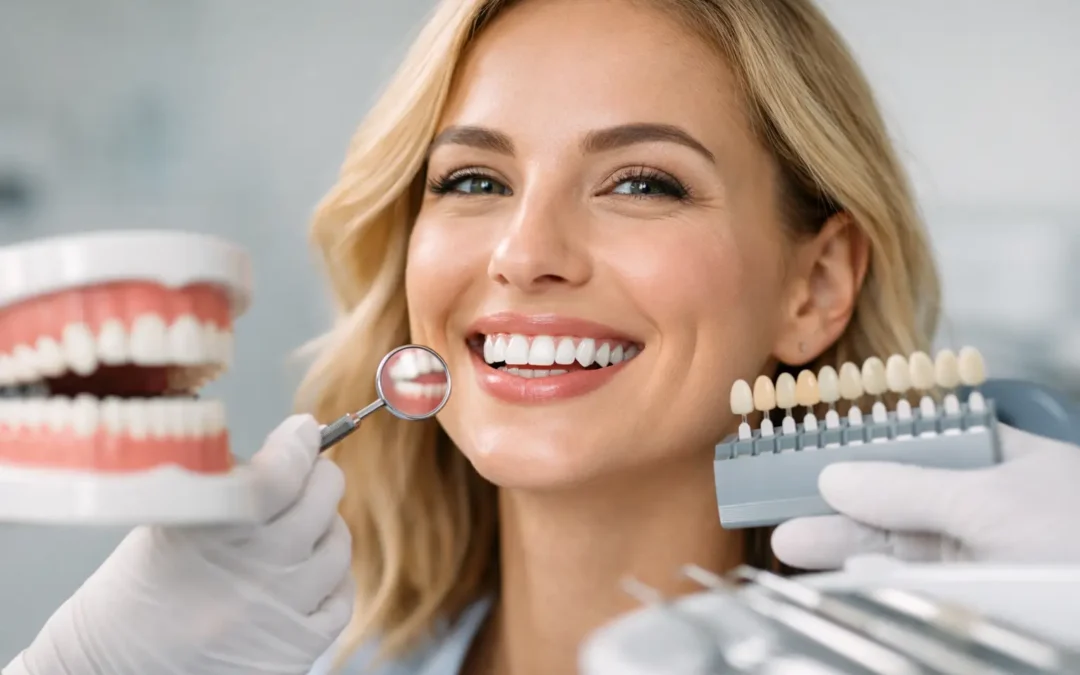
A brighter smile can change how you feel in photos, meetings, and everyday conversations. But the best cosmetic dental procedures are not the same for every patient. The right option depends on what you would like to improve, the health of your teeth and gums, your timeline, and how long you want your results to last.
Cosmetic dentistry should never be about creating a one-size-fits-all smile. A thoughtful plan starts with listening to your goals, examining your oral health, and choosing treatments that look natural while supporting comfortable, lasting function.
How to Choose the Best Cosmetic Dental Procedures
It helps to start with the concern that bothers you most. Surface stains, for example, may respond beautifully to professional whitening. Crooked teeth may be better addressed with Invisalign. Chipped, worn, or uneven teeth may need bonding or porcelain veneers. When missing teeth are affecting your smile and bite, dental implants can restore both appearance and function.
Your dentist will also consider factors that are easy to overlook at home. Existing fillings or crowns do not whiten like natural enamel. Gum inflammation may need treatment before cosmetic work begins. Teeth grinding can affect the lifespan of veneers, bonding, and restorations unless it is managed with a protective nightguard.
The goal is not simply whiter or straighter teeth. It is a healthy smile that fits your face, feels comfortable, and gives you confidence to use it.
Professional Teeth Whitening for Noticeable Brightness
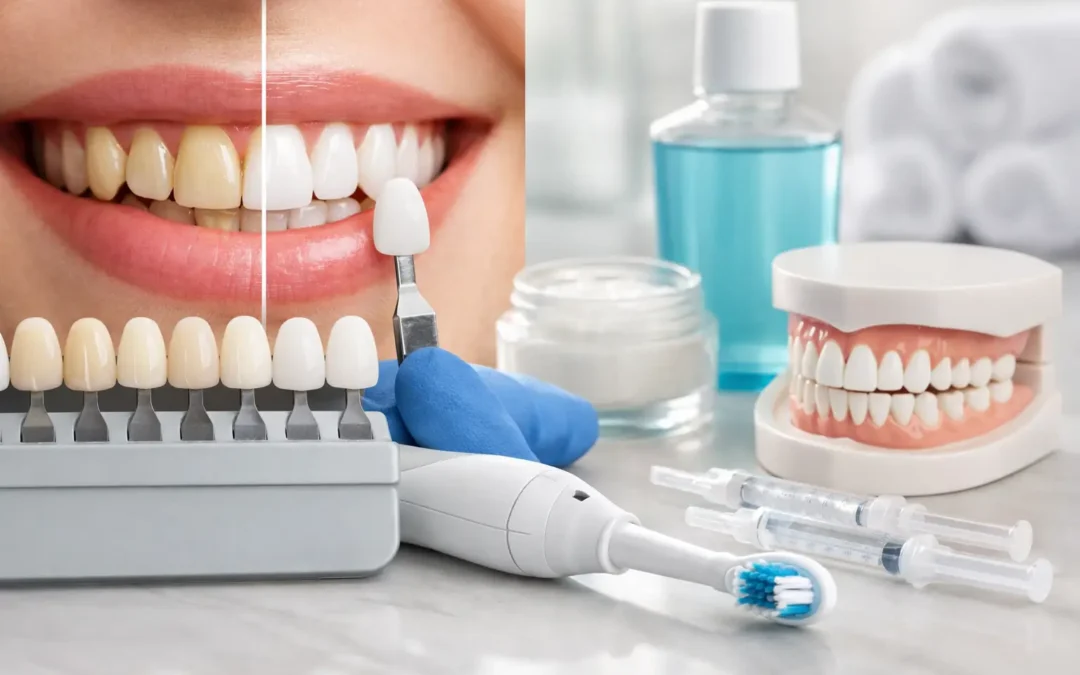
Professional teeth whitening is often the most direct choice for patients whose teeth are healthy but look dull or stained. Coffee, tea, red wine, tobacco, aging, and certain medications can all deepen tooth color over time. Professional treatment uses carefully selected whitening products and a supervised process to brighten natural enamel more predictably than store-bought options.
This treatment can be an excellent first step before a special event, a job change, or a cosmetic makeover. It is also conservative because it does not require removing tooth structure.
Whitening does have limits. It will not change the color of crowns, veneers, fillings, or bonding. Some patients also experience temporary sensitivity. If you have several visible restorations, your dentist may recommend whitening first, then matching new cosmetic work to your improved shade.
Best for
Professional whitening is ideal for healthy teeth with yellowing or surface stains, especially when you want a noticeable improvement without changing tooth shape or alignment.
Porcelain Veneers for Shape, Color, and Symmetry
Porcelain veneers are thin, custom-made shells placed over the front of teeth. They can improve the appearance of chips, discoloration that does not respond to whitening, small gaps, uneven edges, and teeth that appear short or misshapen.
For many patients, veneers create the most dramatic cosmetic change because they address several concerns at once. The porcelain is designed to reflect light much like natural enamel, allowing your dentist to create a polished result that still looks believable and balanced.
Veneers are a long-term investment, not a quick fix. Preparing teeth for veneers may involve removing a small amount of enamel, and the treatment is generally irreversible. They also require consistent brushing, flossing, and regular dental care. Patients who clench or grind their teeth may need a nightguard to protect their investment.
Best for
Veneers work well for patients seeking a comprehensive smile enhancement when tooth color, shape, spacing, or minor wear are all concerns.
Dental Bonding for Small, Targeted Improvements
Dental bonding uses tooth-colored composite resin to repair or reshape a tooth. It is commonly used to smooth a chipped edge, close a small gap, lengthen a worn tooth, or conceal minor discoloration. Because bonding can often be completed with little to no enamel removal, it is one of the more conservative cosmetic options.
Bonding is typically more affordable upfront than veneers, making it appealing for patients who want a focused improvement. The trade-off is durability. Composite resin can stain, chip, or wear sooner than porcelain, particularly for patients who bite their nails, chew ice, or grind their teeth.
With good care, bonding can still provide a natural, meaningful enhancement. It is especially useful when one or two teeth need attention rather than a full smile transformation.
Invisalign for a Straighter, More Comfortable Smile
Crowded teeth, gaps, and mild to moderate bite concerns can affect more than appearance. When teeth overlap or sit out of position, they can be harder to clean and may wear unevenly over time. Invisalign uses a series of clear, removable aligners to gradually move teeth into a healthier, more balanced position.
Many adults prefer clear aligners because they are discreet and can be removed for meals and brushing. That convenience comes with responsibility. Aligners must be worn as directed, often about 20 to 22 hours daily, to keep treatment on schedule.
Invisalign may be the better cosmetic choice when your main concern is alignment rather than tooth color or shape. Some patients choose whitening or bonding after orthodontic treatment to put the finishing touches on their smile.
Best for
Clear aligner treatment is a strong option for adults and teens who want to improve spacing, crowding, or alignment without the appearance of traditional braces.
Dental Implants for Missing Teeth
A missing tooth can make you feel self-conscious, but the effects can go beyond your smile. Nearby teeth may shift, chewing can become less comfortable, and bone in the jaw can gradually diminish after tooth loss. Dental implants replace the root of a missing tooth with a stable post that supports a custom crown, bridge, or full-arch restoration.
From a cosmetic perspective, implants can restore the appearance of a complete, natural-looking smile. From a functional perspective, they can help you eat and speak with more confidence. Unlike a removable option, an implant restoration stays securely in place and is designed to blend with surrounding teeth.
Implant treatment requires careful planning and sufficient bone support. Healing time and treatment timelines vary, and some patients may need preparatory care before implant placement. For patients missing most or all teeth, All-on-4 dental implants may offer a fixed full-arch solution using a strategic implant design.
Gum Contouring When the Gumline Is the Concern
Sometimes teeth look short or uneven because of the gumline, not the teeth themselves. Gum contouring gently reshapes excess gum tissue to create more balanced proportions. It may be used on its own or paired with veneers, crowns, or whitening as part of a broader cosmetic plan.
The right candidate has healthy gums and a stable periodontal foundation. Your dentist will first determine whether the appearance of a gummy smile is related to gum tissue, tooth position, lip movement, or another underlying factor. Treating the cause matters as much as improving the look.
Combining Treatments for a Personalized Result
The most successful smile makeovers often combine treatments in the right sequence. Whitening may come before veneers or bonding so new materials can be matched to your preferred shade. Invisalign may come first to place teeth in a better position before cosmetic reshaping. Implants may be planned before final veneers or crowns so the entire smile is balanced.
This is why an in-person cosmetic consultation is valuable. Rather than choosing a procedure from photos alone, you can discuss what you like about your smile, what you would change, and what fits your schedule and budget. At United Dental Specialists, treatment planning is built around those conversations, with modern options that support both smile aesthetics and long-term oral health.
Caring for Cosmetic Dental Work
Cosmetic results last longer when daily habits support them. Brush twice daily with a soft-bristled toothbrush, floss consistently, and keep regular dental appointments. If you have veneers, bonding, or crowns, avoid using teeth to open packages and limit habits that can chip restorations.
Coffee and red wine can still stain natural enamel and composite bonding. A straw, rinsing with water after dark beverages, and periodic professional cleanings can help maintain brightness. If you grind your teeth or wake with jaw soreness, ask about a custom nightguard before damage becomes visible.
A smile you love should also be a smile you can maintain comfortably. Schedule a cosmetic consultation to talk through your goals, see which treatment fits your needs, and take a confident next step toward the healthy, natural-looking result you want.
by Dr. David Bennett | Jul 19, 2026 | Uncategorized |
A bright smile can make a meaningful difference at work, in photos, and in everyday conversations. But stains are not all the same, which is why the best treatments for stained teeth depend on what caused the discoloration, where it sits in the tooth, and the condition of your enamel. The right plan should improve your smile without creating unnecessary sensitivity or overlooking an underlying dental concern.
Coffee, tea, red wine, tobacco, aging, certain medications, and past dental trauma can all change the color of teeth. Some discoloration responds beautifully to whitening. Other stains require a cosmetic restoration, such as bonding or porcelain veneers, for a natural-looking result. A professional examination is the best starting point because it helps identify the treatment that fits your goals, oral health, and budget.
Why Teeth Become Stained
Surface stains, also called extrinsic stains, develop on the outer enamel. Dark drinks, richly colored foods, tobacco use, and inadequate plaque removal are common contributors. These stains are often the most responsive to a professional cleaning and whitening treatment.
Intrinsic discoloration begins inside the tooth. It can be related to aging, a childhood illness, certain antibiotics taken while teeth were developing, excess fluoride exposure, tooth decay, or an injury that affected the tooth’s nerve. A tooth that turns gray, brown, or noticeably darker than the teeth around it deserves a dental evaluation. Whitening may help in some cases, but it will not always address the source of the color change.
It is also common for dental work to create a color mismatch over time. Crowns, fillings, bonding, and veneers do not whiten with bleaching gel. If your natural teeth become brighter, an older restoration may stand out more clearly and may need to be replaced for a balanced smile.
The Best Treatments for Stained Teeth
Professional Dental Cleaning for Surface Buildup
Sometimes what looks like deep discoloration is a combination of plaque, tartar, and surface staining. A professional cleaning removes hardened buildup that brushing cannot remove at home and can noticeably refresh the appearance of teeth.
Cleaning is an essential first step, particularly if it has been a while since your last visit. It does not change the natural shade of enamel, so it will not produce the same result as whitening. Still, it can make teeth look cleaner and brighter while supporting healthier gums and fresher breath.
Professional Teeth Whitening for Overall Yellowing
Professional whitening is one of the most effective options for healthy teeth with generalized yellowing or staining from foods, drinks, and tobacco. Dentists use carefully selected whitening agents and protect the gums and soft tissues during treatment. Depending on your needs, whitening may be completed in the office, with custom take-home trays, or through a combination of both.
In-office whitening is a good choice for patients who want a faster visible change before a wedding, job interview, vacation, or important event. Custom take-home trays offer more gradual whitening and can be convenient for patients who prefer to brighten their smile on their own schedule. Both approaches are more predictable than over-the-counter strips because the treatment is tailored to your teeth and monitored by a dental team.
Sensitivity is the main trade-off. It is usually temporary, but people with exposed roots, worn enamel, cracks, cavities, or gum recession may need treatment for those concerns before whitening. A dentist can adjust the plan, recommend a desensitizing product, or use a gentler approach to help keep you comfortable.
Whitening for a Single Dark Tooth
One dark tooth should not be treated like a full-smile cosmetic concern until its cause is understood. Trauma or infection can affect the nerve inside a tooth, leading to a gray or brown appearance. If root canal treatment is needed or has already been completed, internal bleaching may be an option to lighten the tooth from within.
This treatment is different from standard whitening and is performed only after a dentist confirms that the tooth is healthy enough for the procedure. In other cases, a crown or veneer may be the better solution, especially if the tooth is also weak, cracked, or heavily restored.
Composite Bonding for Small, Localized Stains
Composite bonding uses tooth-colored resin to cover a stubborn spot or improve the appearance of a small area of discoloration. It can also correct minor chips, uneven edges, and small gaps, making it a practical choice for patients who want several subtle improvements at once.
Bonding is generally more conservative and less costly than veneers. However, resin can stain over time, particularly with coffee, tea, red wine, or tobacco exposure. It may require polishing, repair, or replacement in the future. For the right case, it provides an attractive improvement with minimal alteration of the natural tooth.
Porcelain Veneers for Deep or Resistant Discoloration
Porcelain veneers are thin, custom-made shells placed on the front of teeth. They are often recommended when discoloration is severe, internal, uneven, or resistant to whitening. Veneers can also improve the shape, size, spacing, and symmetry of teeth, which makes them a strong option for patients seeking a more comprehensive smile transformation.
Porcelain is highly stain resistant and can be customized to complement your facial features and desired level of brightness. The trade-off is that veneers are a more involved cosmetic treatment than whitening or bonding, and some enamel preparation is often needed. A careful consultation helps determine whether veneers are appropriate and ensures the final shade looks bright but still natural.
Crowns When Color and Strength Both Need Attention
A dental crown covers the entire visible portion of a tooth. It may be recommended when a tooth is dark and also has significant decay, a large filling, a fracture, or structural weakness. While a veneer focuses on the front surface for cosmetic enhancement, a crown is designed to restore both appearance and function.
Crowns are not the first option for every stained tooth. When the tooth is otherwise healthy, a more conservative treatment may be preferable. But when damage is present, restoring the tooth’s strength is just as important as improving its color.
What About Store-Bought Whitening Products?
Whitening toothpaste, strips, pens, and rinses can help with mild surface stains, but they have limits. Whitening toothpaste mainly works by polishing away surface discoloration and may be abrasive if used too aggressively. Strips can lighten teeth for some people, yet they may not fit evenly, can irritate gums, and do not address cavities, sensitivity, or a dark tooth caused by trauma.
Over-the-counter products are not necessarily wrong for every patient. They may be reasonable for mild staining and healthy teeth. Still, professional guidance is valuable if you have crowns or veneers, gum recession, tooth sensitivity, uneven color, or a stain that appeared suddenly.
How to Keep Your Smile Brighter After Treatment
Whitening and cosmetic treatments look their best when supported by consistent care. Brush twice daily with fluoride toothpaste, clean between teeth every day, and keep regular dental cleaning appointments. If you enjoy coffee, tea, or red wine, rinsing with water afterward can reduce the time pigments stay on enamel. Using a straw for cold dark beverages can also limit contact with front teeth.
Tobacco is one of the most persistent causes of tooth staining and can affect gum health as well. Reducing or stopping use protects both your cosmetic results and your long-term oral health. If you have porcelain veneers, bonding, or crowns, regular professional care also helps preserve the polish and allows your dentist to monitor the surrounding teeth and gums.
Choose a Plan That Matches Your Smile
The most effective treatment is not always the strongest whitening product or the most dramatic cosmetic procedure. It is the option that addresses the actual cause of discoloration while protecting your teeth and giving you a result that feels like you. At United Dental Specialists, a personalized cosmetic consultation can help you compare whitening, bonding, veneers, and restorative options with clarity and confidence.
A stained smile does not have to be something you hide. With a thoughtful evaluation and a treatment plan built around your goals, you can move toward a healthier-looking smile that feels comfortable to share.
by Dr. David Bennett | Jul 17, 2026 | Uncategorized |
A chipped front tooth can change the way you smile, speak, and feel in photos, even when the chip is small. When comparing veneers vs bonding for chips, the right choice is not always the same for every patient. The size and location of the chip, the condition of the tooth, your bite, your cosmetic goals, and how long you want the result to last all matter.
At United Dental Specialists, we help patients make clear, personalized decisions about cosmetic dental treatment. Both bonding and porcelain veneers can create a natural-looking repair. The best option is the one that protects your tooth while helping you feel confident about your smile.
What Dental Bonding Does for a Chipped Tooth
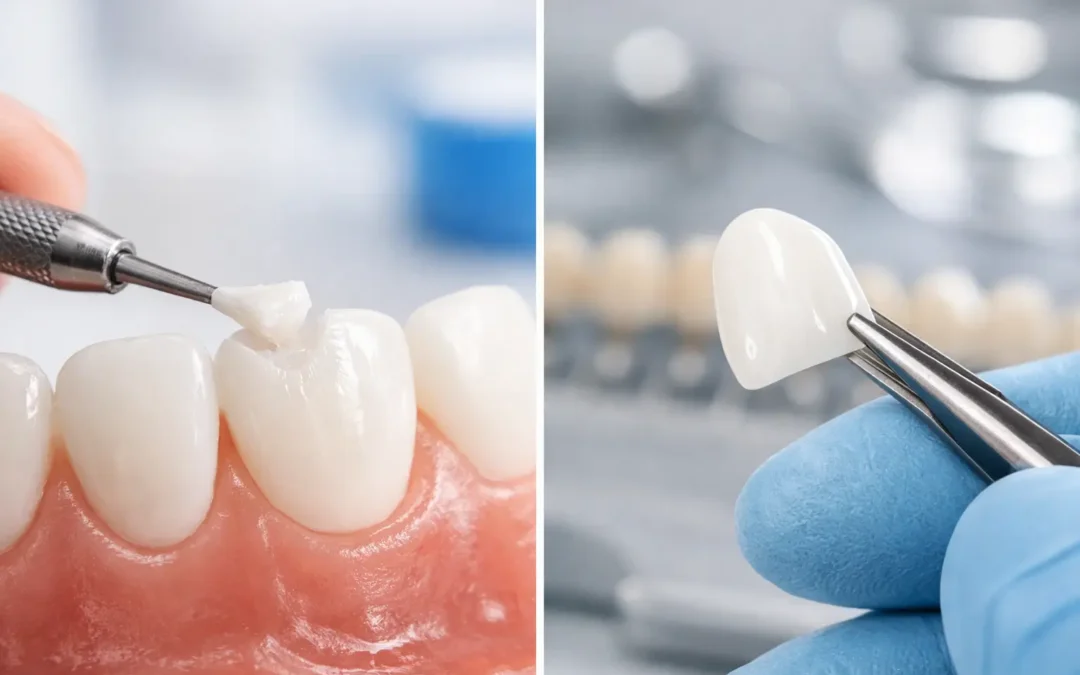
Dental bonding uses a tooth-colored composite resin to rebuild the missing area of a tooth. Your dentist carefully matches the resin to the shade of your natural enamel, shapes it to restore the tooth’s contour, and hardens it with a curing light. The material is then polished so it blends into your smile.
For many minor chips, bonding is a conservative solution because it usually requires little to no removal of healthy enamel. Treatment can often be completed in one appointment, making it a practical option when you want to address a visible chip quickly.
Bonding is especially useful when the damage is limited to one small corner or edge, or when a tooth needs a modest cosmetic adjustment. It can also improve uneven edges, small gaps, and localized discoloration.
The trade-off is that composite resin is not as strong or stain-resistant as porcelain. Coffee, tea, red wine, and tobacco can gradually affect its color. Bonding can also chip or wear over time, particularly for patients who bite their nails, chew ice, grind their teeth, or have a heavy bite. Repairs are usually straightforward, but the restoration may need touch-ups or replacement in the future.
How Porcelain Veneers Repair Chips
A porcelain veneer is a thin, custom-crafted shell that covers the front surface of a tooth. Rather than simply filling the chipped area, a veneer can change the visible shape, color, length, and overall appearance of the tooth. It is designed to look like natural enamel while providing a polished, long-lasting cosmetic result.
Veneers are often a stronger choice when a chip is more noticeable, when the tooth has several cosmetic concerns, or when you want to improve multiple front teeth for a more balanced smile. For example, a patient may have a chipped incisor along with staining, slight unevenness, or worn edges. A veneer can address these concerns together rather than treating each one separately.
Porcelain is highly stain-resistant and reflects light in a way that closely resembles natural tooth enamel. With consistent home care and regular dental visits, veneers can maintain their appearance for many years.
Because veneers need room to fit naturally, the dentist generally removes a small amount of enamel from the front of the tooth. This preparation is conservative, but it is permanent. Veneers also require more planning than bonding and are usually completed over more than one visit. A temporary veneer may be used while your custom restoration is being made.
Veneers vs Bonding for Chips: The Key Differences
The decision often comes down to the extent of the damage and the result you want over time. Bonding focuses on replacing the missing portion of the tooth. Veneers provide a broader cosmetic transformation by covering the visible front of the tooth.
Bonding is generally the more affordable initial treatment and can be completed quickly. It is a sensible solution for a small, isolated chip on a tooth that is otherwise healthy, well-shaped, and color-matched to the rest of your smile. It can also be a good choice for patients who want a conservative first step before considering more extensive cosmetic work.
Veneers typically involve a higher investment, but they offer greater durability, color stability, and control over the final appearance. They may be worth considering if the chip is part of a larger concern, such as repeated breakage, significant tooth wear, persistent discoloration, or several front teeth that do not look even.
Neither option is automatically better. A small chip on one otherwise attractive tooth may not need a veneer. On the other hand, placing bonding on a heavily worn or repeatedly chipped tooth may lead to frequent repairs when a veneer or another restorative option would be more predictable.
Your Bite Matters More Than You May Think
A chip is not always just a cosmetic issue. It may be the result of an accident, but it can also signal a bite imbalance, nighttime teeth grinding, or enamel weakened by decay. If the cause is not addressed, a repaired tooth can chip again.
During your evaluation, your dentist will look at how your teeth meet when you bite and move your jaw. If you grind or clench, a custom nightguard may be recommended to protect bonding, veneers, and your natural teeth. If the chip is caused by crowding or alignment concerns, Invisalign treatment may be part of a longer-term plan for improving function and appearance.
A tooth with a deep crack, extensive decay, or substantial loss of structure may need a different treatment altogether. In some cases, a dental crown offers better protection than either bonding or a veneer. If the tooth is painful, sensitive, loose, or has a sharp edge that is cutting your tongue or cheek, schedule an appointment promptly rather than waiting for a cosmetic consultation.
Appearance, Longevity, and Daily Care
Both treatments can look very natural when planned and placed well. Bonding is artistically shaped directly on the tooth, and a skilled dentist can make a small repair difficult to notice. However, it may gradually lose its polish or pick up surface stains.
Porcelain veneers offer excellent color consistency and a smooth finish that resists staining better than composite resin. They are often chosen by patients who want a brighter, more uniform smile. If you are considering whitening, it is best to discuss timing before veneers are made. Porcelain does not whiten after placement, so your veneer shade should be selected to coordinate with the color you want for your natural teeth.
Whether you choose bonding or veneers, care is simple but essential. Brush twice daily with a non-abrasive toothpaste, floss every day, and keep up with professional cleanings. Avoid using your teeth to open packages or bite hard objects. If you play contact sports, wear a properly fitted mouthguard.
How to Choose With Confidence
The most useful question is not, “Which treatment is best?” It is, “Which treatment best fits this tooth and my goals?” Bring up what matters to you during your consultation: whether you need a quick repair, want to preserve as much enamel as possible, are concerned about budget, or want to improve your entire smile.
Your dentist can evaluate the chip, take digital images when appropriate, discuss your options, and explain the expected maintenance for each choice. You should leave the appointment understanding why a specific treatment is recommended, what it will look like, and how to protect your result.
A chip does not have to become the feature you notice first in the mirror. With the right diagnosis and a personalized treatment plan, you can restore a tooth that looks natural, feels comfortable, and lets you smile without holding back.
by Dr. David Bennett | Jul 15, 2026 | Uncategorized |
A missing molar can change more than the way you chew. It can make you favor one side of your mouth, avoid certain foods, and feel self-conscious when you laugh or speak. The best treatments for missing molars restore dependable chewing power while helping protect the teeth, jawbone, and bite around the open space.
Molars do the heavy work of grinding food, so replacing one is not simply a cosmetic decision. The right choice depends on where the tooth is missing, the health of nearby teeth and gums, the amount of available jawbone, and your goals for comfort, longevity, and budget. A personalized dental evaluation is the clearest way to decide what will serve your smile well for years to come.
Why a Missing Molar Deserves Attention
When a back tooth is gone, it may be tempting to leave the space alone, especially if it is not visible when you smile. But teeth are designed to work together. Over time, neighboring teeth can drift or tip toward the gap, while the tooth above may begin moving downward because it no longer has an opposing tooth.
That movement can alter your bite and make brushing and flossing more difficult. A missing molar can also put extra pressure on teeth on the other side of your mouth. For some patients, that leads to uneven wear, jaw discomfort, or a greater risk of damaging already stressed teeth.
The jawbone beneath a missing tooth also receives less stimulation. Gradual bone loss may occur after extraction, which can affect the support available for a future restoration. Acting early often gives you more treatment options, but even if the tooth has been missing for years, solutions may still be available.
Best Treatments for Missing Molars
There is no single answer for every patient. A strong treatment plan balances function, oral health, appearance, treatment time, and cost. These are the most common options your dentist may discuss.
Dental implants
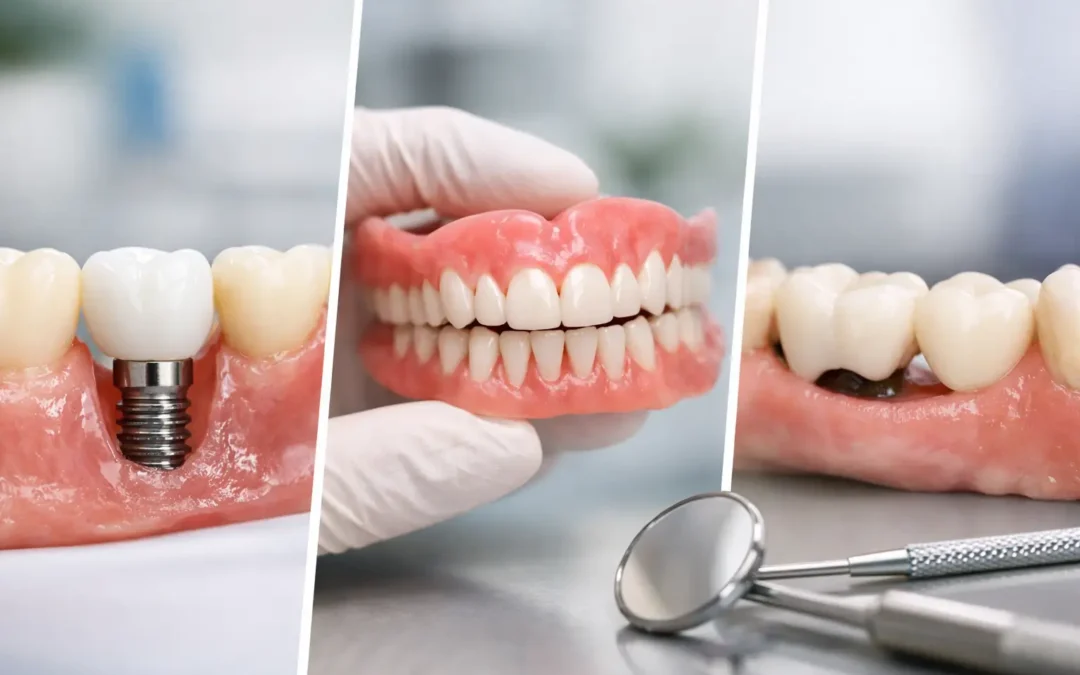
For many adults, a dental implant is the closest replacement for a natural molar. The implant is a small post placed in the jawbone to replace the missing root. After healing, it supports a custom crown designed to blend with your surrounding teeth.
Because an implant stands independently, it does not require the dentist to reshape healthy neighboring teeth. It also helps stimulate the jawbone, which is a meaningful advantage for long-term oral health. Implant crowns are made to handle normal chewing forces, allowing many patients to enjoy a broad range of foods with confidence.
Implant treatment does require adequate bone support and healthy gums. Healing time is part of the process, although some cases may qualify for an immediate temporary tooth. If bone has diminished, a grafting procedure may be recommended before or during implant placement. This adds time and cost, but it can create a stronger foundation for a lasting result.
For patients replacing one missing molar, an implant is often an excellent long-term investment. It is particularly appealing when the teeth on either side of the space are healthy and do not need crowns themselves.
A fixed dental bridge
A traditional dental bridge replaces a missing tooth by connecting a replacement crown to crowns placed on the teeth next to the gap. It is fixed in place, so you do not remove it at home, and it can restore chewing ability and the appearance of a complete smile relatively quickly.
A bridge may be a practical choice when the neighboring teeth already have large fillings, existing crowns, or damage that makes crown coverage beneficial. It can also be a good option for patients who are not candidates for implant surgery or who prefer not to undergo a surgical procedure.
The main trade-off is that a conventional bridge requires shaping the supporting teeth. It also does not replace the root below the gumline, so it cannot preserve jawbone in the same way an implant can. With attentive brushing, flossing beneath the bridge, and routine dental visits, a well-made bridge can provide many years of reliable service.
Removable partial dentures
A removable partial denture uses replacement teeth attached to a custom base that rests against the gums and connects to remaining teeth. It can replace one molar or several missing teeth and is generally a more affordable starting point than fixed options.
For a patient missing multiple back teeth, a partial denture may restore daily function without requiring treatment on every space at once. Modern designs can be more natural-looking and comfortable than many people expect. Still, a removable appliance may feel less stable than an implant or bridge, especially when chewing firm foods.
Partial dentures require daily removal and cleaning. They also need periodic adjustments as your gums and bone change over time. This option can be a helpful solution when budget, health history, or the number of missing teeth makes a fixed restoration less suitable.
Implant-supported bridges and full-arch options
When several molars are missing in the same area, placing an individual implant for every tooth may not always be necessary. An implant-supported bridge can use strategically placed implants to support multiple replacement teeth. This provides greater stability than a removable partial denture while avoiding the need to use natural teeth as supports.
For patients with extensive tooth loss or failing teeth across an entire arch, full-arch implant treatment, including All-on-4 options, may be considered. This is a more comprehensive solution designed to restore a full set of functional teeth. It is not the standard treatment for one missing molar, but it can be life-changing when missing back teeth are part of a larger pattern of dental problems.
When Leaving the Space May Be Reasonable
Not every missing molar requires immediate replacement. For example, if a wisdom tooth was removed and it does not affect your bite, replacement is rarely needed. In a few cases, the very last molar may be missing while the remaining bite is stable and functional.
Even then, the decision should be based on an exam and digital imaging rather than guesswork. Your dentist can assess whether teeth are shifting, whether the opposing tooth is over-erupting, and whether the space is affecting chewing or jaw health. Monitoring may be appropriate, but it should be an intentional plan with regular follow-up.
How to Choose the Right Molar Replacement
Start with the condition of the teeth beside the gap. Healthy adjacent teeth often make an implant especially attractive because they can remain untouched. If those teeth already need crowns, a bridge may make more sense.
Next, consider your health history and timeline. Implant treatment takes planning and healing, while a bridge can often be completed sooner. Gum disease must be treated and controlled before either option can succeed long term. If you clench or grind your teeth, a protective nightguard may also be recommended to protect your new restoration.
Your budget matters, too. The least expensive option upfront is not always the most economical over decades of care. Ask about expected maintenance, potential future replacement, and the long-term effect each option may have on surrounding teeth and bone. Clear conversations about cost and priorities help create a plan that feels realistic, not rushed.
What to Expect From Your Consultation
A thorough consultation should include an examination of your bite, gums, remaining teeth, and jawbone. Digital X-rays or 3D imaging may be used to evaluate the implant site and identify concerns that are not visible during a routine exam.
You should leave with a clear explanation of your options, the expected treatment sequence, healing time, and how to care for the final restoration. At United Dental Specialists, treatment planning is centered on your comfort, function, and confidence, so you can understand the path forward before making a decision.
A missing molar does not have to limit what you eat or how confidently you live. Schedule a consultation to find a replacement option that fits your health, your priorities, and the future of your smile.
by Dr. David Bennett | Jul 13, 2026 | Uncategorized |
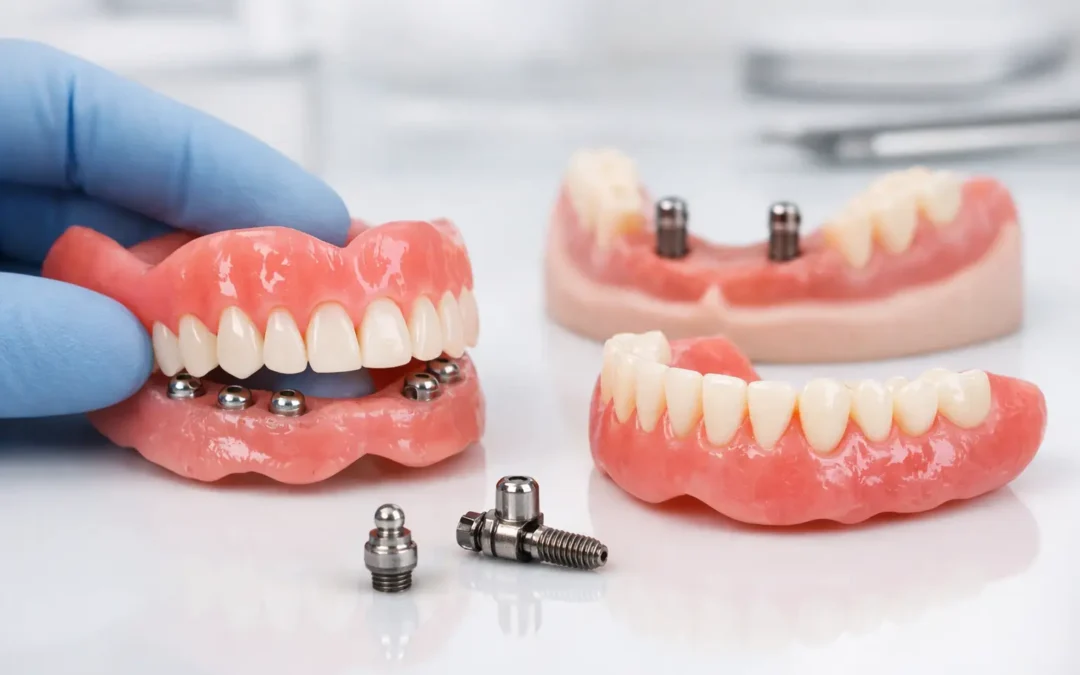
A loose lower denture can turn ordinary moments – ordering lunch, speaking in a meeting, laughing with family – into situations you would rather avoid. A thoughtful snap in dentures comparison starts with the everyday issues that matter most: how securely your teeth stay in place, how natural they feel, what care they require, and whether the treatment fits your health and goals.
Snap-in dentures are a removable tooth-replacement option supported by dental implants. They can offer a meaningful improvement over conventional dentures, but they are not the same as fixed implant bridges or All-on-4 treatment. The right choice depends on your jawbone, the number of teeth you are replacing, your priorities, and the type of smile experience you want each day.
Snap In Dentures Comparison: The Main Options
The most useful comparison is between traditional removable dentures, implant-supported snap-in dentures, and fixed full-arch implant teeth. Each solves missing teeth differently.
Traditional dentures
Traditional dentures rest directly on the gums. A full upper denture often gains some suction from the palate, while a lower denture relies more heavily on the shape of the jaw and surrounding muscles. Adhesives can improve retention for some people, but they do not stop the gradual bone changes that occur after teeth are lost.
This option is usually the least expensive starting point and does not require implant surgery. It can be appropriate for patients who need an immediate solution, have medical limitations, or prefer to avoid surgery. The trade-off is that dentures may shift during meals or conversation, especially on the lower jaw. Some patients also find the bulky palate coverage of an upper denture affects taste or comfort.
Implant-supported snap-in dentures
Snap-in dentures, also called implant-supported overdentures, attach to implants placed in the jaw. Depending on your treatment plan, the denture may connect through locator-style attachments, a bar, or another secure system. You remove it at home for cleaning, but it stays much more firmly in place while worn.
For many patients, this is the balance point between affordability and stability. Implants help anchor the denture so it is less likely to lift, rock, or slip. Because the appliance remains removable, cleaning around the implants and under the denture is generally straightforward.
A lower snap-in denture is often supported by two or more implants. Upper dentures frequently need additional support because the upper jawbone is typically less dense. The exact number is not a one-size-fits-all decision. A clinical examination and 3D imaging help determine what your bone can safely support.
Fixed full-arch implant teeth
Fixed full-arch restorations, including All-on-4 treatment when appropriate, are attached to implants by the dental team. They are not taken out at home. They are designed to feel closer to natural teeth in daily use and may be an excellent choice for patients who want the greatest possible stability and a more streamlined smile design.
Fixed teeth can offer strong chewing function and eliminate the need to remove a denture at night. They also require a greater financial investment and diligent hygiene around the bridge and implants. Specialized brushes, flossing tools, and regular professional maintenance are part of long-term success.
How Snap-In Dentures Feel in Daily Life
The primary advantage of snap-in dentures is stability. Instead of relying only on gum tissue and denture adhesive, the appliance clicks into place on implants. That added retention can make speaking feel more secure and can reduce the worry that your teeth will move at an inconvenient moment.
Chewing is often more comfortable as well. However, snap-in dentures are still a removable prosthesis, and they do not function exactly like natural teeth. Most patients can enjoy a broader range of foods after adapting, but very hard, sticky, or chewy foods may still require care. Fixed implant teeth may be better suited to someone whose top priority is the closest possible experience to having natural teeth.
Comfort also depends on fit. A well-designed denture should distribute pressure evenly and support your facial appearance without creating sore areas. It is normal to have an adjustment period, particularly if you have worn loose dentures for years. Follow-up visits allow your dentist to refine the fit and address pressure points promptly.
Cost: Look Beyond the Denture Itself
A snap-in denture costs more than a traditional denture because it includes implant placement, imaging, surgical planning, attachments, and the restoration itself. Yet comparing only the upfront number can be misleading. A conventional denture may need relines, adhesives, repairs, and eventual replacement as the jaw changes over time.
The cost of implant-supported dentures varies based on the number of implants, whether extractions are needed, the condition of the bone, the attachment system, sedation needs, and whether you are restoring one arch or both. Bone grafting can be necessary in some cases, although it is not required for every patient.
A clear consultation should give you a personalized treatment plan rather than a generic price. Ask what is included in the estimate, what ongoing maintenance may be expected, and what alternatives are clinically appropriate for your smile and budget. Phasing treatment may also be possible for some patients.
Care and Maintenance Requirements
Snap-in dentures require daily care, but the routine is manageable. Remove the denture as directed, brush it with a denture-safe brush and cleaner, and clean the implant attachments, gums, and tongue thoroughly. Your dentist may recommend an oral irrigator or other tools based on the attachment type and your dexterity.
Attachments are durable, but the small retention inserts can wear over time. If the denture begins to feel loose or no longer clicks in as securely, it may simply need maintenance rather than a completely new appliance. Regular dental visits are essential to check the implants, gum health, bite, and condition of the denture.
Fixed implant bridges also need consistent care, but they are cleaned in the mouth. Traditional dentures are removed for cleaning too, though they lack implant components to maintain. No option is maintenance-free. The best option is one you can care for reliably for years.
Who May Be a Good Candidate?
You may be a candidate for snap-in dentures if you are missing most or all teeth in an arch, are frustrated by a loose denture, and have sufficient bone or can safely receive the preparation needed for implants. Healthy gums and good oral hygiene habits support better outcomes.
Certain health conditions, medications, smoking habits, and previous radiation therapy can affect implant planning and healing. That does not automatically rule out treatment. It means your dentist should review your medical history carefully and tailor the plan to protect your health.
Patients who want a removable solution with significantly better retention often find snap-in dentures compelling. Patients who strongly prefer teeth that remain in place at all times may want to discuss a fixed full-arch option. For someone with a limited budget or who cannot undergo implant surgery, a well-made conventional denture can still restore appearance and basic function.
Questions Worth Asking at Your Consultation
A productive consultation should leave you with practical answers, not pressure. Ask how many implants are recommended and why, whether you need bone grafting, what type of attachment will be used, and how long the process may take. It is also reasonable to ask what your temporary teeth will be like during healing and what maintenance costs to anticipate.
Most importantly, discuss what you want to change. Is your biggest concern a lower denture that moves? Do you miss eating certain foods? Are you focused on a more natural-looking smile? Those answers help shape treatment around your life instead of forcing your needs into a standard package.
At United Dental Specialists, a personalized implant consultation can clarify whether snap-in dentures, fixed full-arch teeth, or another restorative option best supports your health, comfort, and confidence. The right replacement teeth should let you focus less on your denture and more on the people and moments in front of you.

Recent Comments